





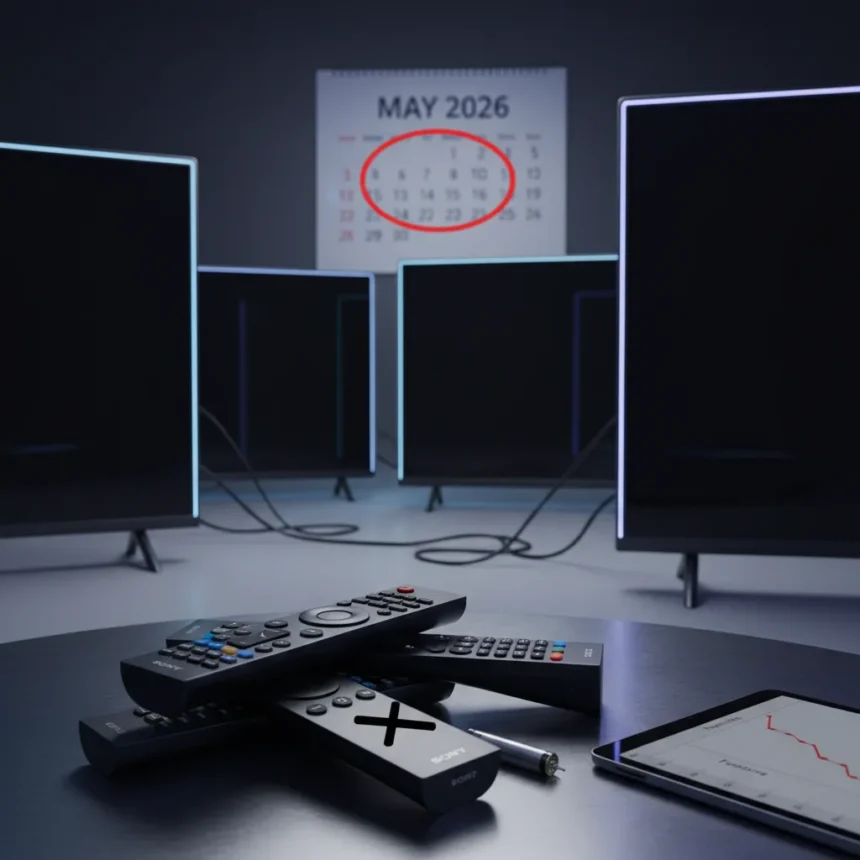
Sony BRAVIA feature removals are hitting owners across multiple TV generations, and the company’s approach to cutting functionality raises serious questions about long-term value. Sony is systematically eliminating features from BRAVIA televisions—some models have already lost capabilities, while newer premium sets will see critical functions disappear starting late May 2026.
Key Takeaways
- 2013-2014 BRAVIA models lost search, TrackID, and YouTube/Netflix casting as of April 30, 2024
- 2023-2025 premium models (BRAVIA 9, 8, 7, A95L) will lose program guides and channel logos starting May 2026
- 2015+ models had Media Play content and related recommendations removed
- Sony BRAVIA feature removals suggest cost-cutting across the entire product line, not just legacy support
- Owners face diminished functionality despite paying premium prices for newer models
What Sony Is Actually Removing from BRAVIA TVs
Sony BRAVIA feature removals span three distinct waves affecting different model years. The oldest hit came in April 2024, when 2013-2014 BRAVIA models lost Related Search, Text Search, TrackID, Guide and Search, channel lineup setup, and screen casting from YouTube and Netflix apps. Home Menu thumbnails and Fast Zapping in YouTube and BBC iPlayer also vanished. For owners of these older sets, the TV became noticeably less useful overnight.
2015 and newer models faced a quieter cut: Media Play Research results were emptied, and the Related content tab was removed. This stripped away recommendation features that made content discovery easier. But the most aggressive Sony BRAVIA feature removals target the company’s newest premium televisions. Starting late May 2026, 2023-2025 BRAVIA 9, BRAVIA 8, BRAVIA 7, and A95L series models will lose program information for antenna TV channels (ATSC), with only recently watched channels displayed. Channel logos will disappear from program guides, and thumbnail images in program descriptions will no longer appear. The Set Top Box menu will be replaced entirely with a Control menu.
What makes this pattern particularly troubling is that Sony BRAVIA feature removals are not limited to budget models or legacy hardware. Premium 2023-2025 sets—the models owners paid top dollar for just months ago—are losing core television functionality. This is not about sunsetting ancient technology; it is about cutting costs on current-generation products.



Why Sony BRAVIA Feature Removals Matter to Owners
The scope of Sony BRAVIA feature removals reveals a company willing to degrade the user experience to reduce backend costs. Removing search functionality, casting capabilities, and program guide features transforms a smart TV into something less useful than when purchased. Owners of 2013-2014 models who relied on YouTube casting or TrackID music identification suddenly lost those tools. The feature elimination was not optional—Sony simply disabled the functionality server-side.
For 2023-2025 BRAVIA owners, the situation is worse. These are not budget televisions. The BRAVIA 9 and A95L represent Sony’s premium positioning, yet they will lose program guide information and channel logos—basic features that make a television easy to navigate. An owner who bought a new premium BRAVIA in 2024 can expect diminished antenna TV functionality by 2026, despite the TV being brand new when purchased. That is a compressed product lifecycle that feels deliberately engineered to frustrate rather than serve customers.



Sony BRAVIA feature removals also suggest the company views its smart TV platform as a cost center rather than a value-add. Competitors like LG and Samsung maintain richer feature sets on comparable models, and their software typically ages more gracefully. By comparison, Sony’s aggressive pruning makes BRAVIA sets feel like a depreciating asset the moment they leave the store.
How Sony BRAVIA Feature Removals Compare to Competitors
Sony is not alone in sunsetting smart TV features—LG and Samsung have also deprecated older services. However, the scope and speed of Sony BRAVIA feature removals stand out. Removing casting from YouTube and Netflix on 2013-2014 models is reasonable legacy support. Removing program guides and channel information from 2023-2025 premium models is aggressive cost-cutting that competitors have not matched to this degree. LG and Samsung typically maintain core television functions (program guides, basic search, casting) across a broader range of model years before deprecation.
The timing of Sony BRAVIA feature removals also differs. Sony is removing features from current-generation models within 1-2 years of purchase, while competitors typically allow 5-7 years of feature parity before significant cuts. This compressed timeline makes Sony’s approach feel less like responsible legacy management and more like planned obsolescence disguised as backend optimization.
What Owners Should Do About Sony BRAVIA Feature Removals
If you own a 2013-2014 BRAVIA, the damage is done. YouTube casting, Netflix casting, and search features are already gone as of April 30, 2024. Consider external devices like Roku, Apple TV, or Amazon Fire Stick to restore casting functionality. These are inexpensive workarounds that restore usability without replacing the television.



For 2015+ BRAVIA owners, the Media Play and Related content removals are less critical—these were convenience features, not core television functions. Your TV still works as a television. However, stay alert: if Sony continues this pattern, more features may disappear in future updates.
For 2023-2025 BRAVIA buyers, the May 2026 program guide removal is a genuine concern. Before purchasing, research whether your specific model will be affected and whether you rely heavily on antenna TV. If you do, consider LG or Samsung alternatives that have demonstrated longer feature support windows. If you have already purchased, document which features matter most to you and prepare backup solutions (external tuners, streaming apps) before the cuts take effect.
Will Sony BRAVIA Feature Removals Continue?
There is no public statement from Sony indicating where the removals stop. The pattern suggests the company will continue cutting backend services whenever it determines the cost savings justify the user experience hit. Sony BRAVIA feature removals appear driven by server maintenance costs and licensing fees for third-party integrations—not by technical necessity. As long as those costs exceed Sony’s willingness to absorb them, features will keep disappearing.
FAQ
What specific features did Sony BRAVIA TVs lose in 2024?
2013-2014 BRAVIA models lost Related Search, Text Search, TrackID, Guide and Search, YouTube and Netflix casting, and Home Menu thumbnails as of April 30, 2024. 2015+ models lost Media Play Research results and the Related content tab.
When will Sony BRAVIA feature removals affect newer models?
Starting late May 2026, 2023-2025 BRAVIA 9, 8, 7, and A95L models will lose antenna TV program information, channel logos, and thumbnail images in program guides.
Are there workarounds for Sony BRAVIA feature removals?
Yes. For casting, external devices like Roku, Apple TV, or Fire Stick restore functionality. For program guides, external tuners or streaming apps can supplement lost antenna TV features. These are not ideal solutions, but they restore usability without replacing the television.
Sony BRAVIA feature removals expose a troubling pattern: the company prioritizes cost reduction over customer experience, even on premium models purchased recently. Owners deserve better, and potential buyers should factor this aggressive deprecation cycle into their purchasing decision. A television that loses core functionality within two years of purchase is a poor long-term investment, regardless of its initial picture quality.
Where to Buy
Sony Bravia 8 II 55-inch QD-OLED TV
Edited by the All Things Geek team.
Source: TechRadar




