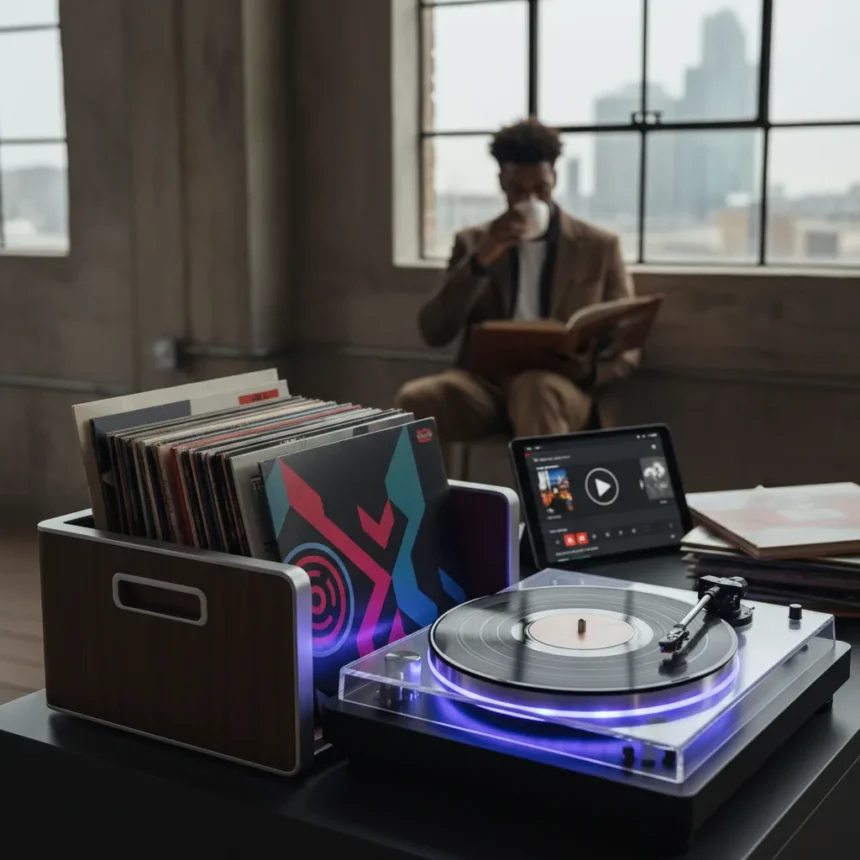
Vinyl records cultural shift is reshaping how people consume music in 2025. It is not nostalgia driving this resurgence—it is a fundamental cultural preference for ownership, tactile experience, and sound quality that streaming cannot replicate. According to the UK’s largest independent music distributor, vinyl has moved from a niche format to a core business pillar, with sales volumes rivaling or exceeding CDs in certain categories.
Key Takeaways
- Vinyl shipments reached 29% of total physical retail value, their highest share since the mid-1980s.
- Vinyl albums generated $182 million in revenue with a 3% increase, while CDs dropped 3% to $431 million.
- Record Store Day 2025 is set for April 12, supporting independent retailers and physical formats.
- Cultural demand for ownership and analog warmth, not pure nostalgia, sustains vinyl’s growth.
- Streaming services license over 40 million tracks, yet vinyl persists due to tangible appeal and investment value.
Why Vinyl Records Cultural Shift Matters Now
The vinyl records cultural shift reflects something deeper than a temporary comeback. Streaming platforms dominate music consumption—85% of YouTube visitors use the service for music monthly, 76% specifically for known tracks. Yet vinyl continues to grow. This paradox reveals a critical truth: convenience and unlimited access do not satisfy every listener. Some people want to own their music, hold the album art, read the liner notes, and experience the ritual of dropping a needle on wax. The UK’s largest independent music distributor recognizes this shift as permanent, not cyclical. Vinyl is no longer fighting for relevance; it is claiming a permanent place in a hybrid listening ecosystem.
The numbers validate this cultural pivot. Vinyl albums saw a 3% revenue increase to $182 million in the first half of the year, while CD shipments declined 3% to $431 million. More striking: vinyl now represents 29% of total physical shipments at retail value—their highest share since the mid-1980s. These figures do not describe a niche hobby. They describe a format with genuine market momentum.
Vinyl Records Cultural Shift Beyond Nostalgia
Dismissing vinyl as nostalgia misses the point entirely. Yes, some buyers are chasing memories of their parents’ record collections. But the primary drivers are different: sound quality, investment potential, and the psychological satisfaction of owning something tangible in an increasingly digital world. A major UK music distributor’s managing director explicitly rejects the nostalgia narrative, viewing vinyl instead as a cultural investment reflecting deeper values around authenticity and ownership.



Compare this to streaming‘s value proposition. Streaming offers infinite choice and instant access, but ownership is illusory—you are renting access to a catalog that changes monthly. Vinyl offers the opposite: limited choice, but genuine ownership and a physical object you can sell, gift, or pass down. For collectors, audiophiles, and casual listeners alike, that trade-off increasingly feels worth making. The vinyl records cultural shift is fundamentally about control and permanence in an age of algorithmic curation and subscription uncertainty.
Record Store Day 2025 and the Physical Format Renaissance
Record Store Day 2025 is scheduled for April 12 in the UK, continuing a tradition that celebrates independent record retailers and physical formats. These events matter because they create cultural moments—reasons for people to visit local shops, discover new artists, and reinvest in the ritual of buying music. Record Store Day does not create demand for vinyl; it channels and amplifies demand that already exists. The fact that independent retailers continue to thrive and expand in the streaming era suggests that vinyl’s resurgence is not a marketing phenomenon but a genuine shift in how people value music.



The broader industry context matters too. Music distributors now license over 40 million tracks to hundreds of digital services, underscoring streaming’s dominance in sheer catalog size. Yet that scale has not eliminated vinyl—it has coexisted with it. This coexistence proves that the vinyl records cultural shift is not about rejecting digital music. It is about maintaining choice. Listeners can stream for discovery and convenience, then buy vinyl for their favorite albums. That hybrid model is now the norm.
Is the vinyl records cultural shift permanent?
Yes. The vinyl records cultural shift reflects structural changes in how people value music ownership and experience, not temporary nostalgia. Sustained growth in revenue and market share, combined with distributor validation and cultural events like Record Store Day, indicate that vinyl is a permanent format in a diversified music ecosystem.
Why are vinyl records more expensive than CDs or streaming?
Vinyl production involves physical manufacturing, pressing, and distribution costs that streaming and digital downloads avoid. Additionally, vinyl’s premium positioning as a collectible and high-quality format allows retailers and labels to price accordingly. Buyers accept higher costs because they value ownership, sound quality, and the tangible product itself.
Can streaming services compete with vinyl’s appeal?
Streaming excels at convenience and discovery but cannot replicate vinyl’s tactile experience, ownership, or investment value. The vinyl records cultural shift shows that listeners want both—streaming for exploration and vinyl for their most-loved albums. These formats serve different psychological and practical needs rather than competing directly.


The vinyl records cultural shift is not a comeback story. It is a recognition that physical music ownership satisfies needs that streaming alone cannot meet. As long as people value ownership, ritual, and tangible objects, vinyl will thrive. The UK’s largest independent music distributor understands this truth, and the market data confirms it. Vinyl is not returning to the past—it is defining the future.
Edited by the All Things Geek team.
Source: What Hi-Fi?