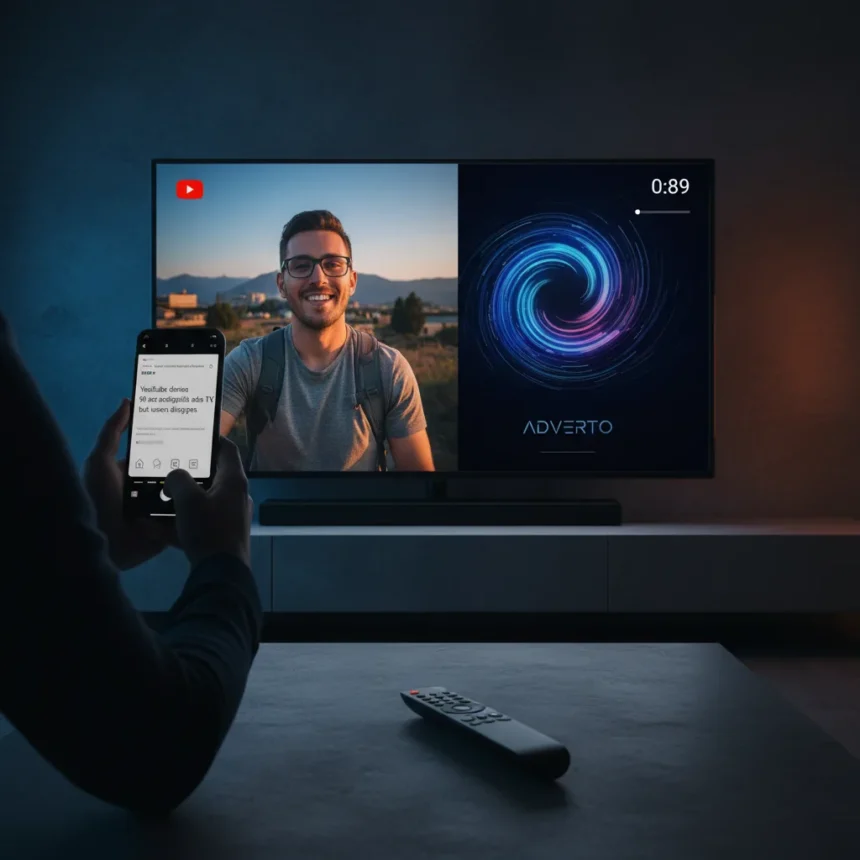
YouTube unskippable ads are getting longer, and the company is caught in a contradiction. Users reported encountering 90-second unskippable ad blocks on YouTube’s connected TV app in early April 2026, but YouTube’s official statements deny the format exists at all.
Key Takeaways
- Users reported 90+ second unskippable ads on YouTube’s CTV app, contradicting YouTube’s denial
- YouTube’s official documentation caps non-skippable CTV ads at 30 seconds
- The company issued multiple statements claiming it is not testing or implementing 90-second formats
- In March 2026, YouTube replaced dual 15-second CTV ads with a single 30-second unskippable ad globally
- Nearly identical user screenshots suggest a potential bug or unintended rollout
The contradiction is stark. On April 9, 2026, YouTube stated via X (Twitter) that it is “not currently testing 90-second unskippable ads” and is “exploring the origin of this rumor”. The next day, YouTube told Android Authority it “doesn’t have any 90-second ad format and is looking into why users are seeing these spots”. Yet Reddit user Ok_Neat1652 posted a screenshot showing a 90+ second countdown timer with no skip option while watching a 40-minute video on the CTV app.
What YouTube’s official policy actually says
YouTube unskippable ads have documented length limits, and a 90-second format violates them. According to YouTube’s own support documentation, the maximum length for non-skippable in-stream ads is 60 seconds generally, but specifically 30 seconds for connected TV. This policy was reinforced in March 2026 when YouTube replaced two back-to-back 15-second CTV ads with a single 30-second unskippable ad as part of a global rollout. The move was designed to streamline the viewing experience while still capturing advertiser value—a modest expansion, not a doubling of ad length.
So how did users encounter 90-second blocks? YouTube unskippable ads at that length should not exist. Yet multiple users reported identical or similar experiences, sharing screenshots that raised questions about whether the company deployed an unintended test, a bug, or something else entirely.



The gap between YouTube’s denials and user reality
YouTube issued three separate public statements denying the 90-second format. On April 9, the company tweeted it was “exploring the origin of this rumor.” On April 10, it clarified to Android Authority that it “does not have a 90-second non-skippable ad format and neither is it testing this at the moment” and is “looking into this matter further”. The language was definitive: no testing, no format, no rollout. Yet users continued reporting encounters with the exact thing YouTube denied.
This discrepancy matters because YouTube unskippable ads are already a pain point for viewers. The company has been gradually extending ad lengths on connected TV to compete with traditional television and other streaming platforms. A 30-second unskippable ad is frustrating but within documented policy. A 90-second ad without a skip button crosses into territory that feels punitive, especially on longer videos where users expect brief interruptions, not minute-long forced watches.



Bug, test, or something else?
The most likely explanation is a bug or unintended rollout. Multiple users reported nearly identical interfaces and timing, suggesting a systematic issue rather than isolated glitches. YouTube unskippable ads could have been deployed to a subset of CTV users through a failed rollout, a testing infrastructure error, or a configuration mistake. The fact that YouTube is “looking into this matter” suggests the company itself does not fully understand why users are seeing these ads.
Alternatively, the 90-second blocks could represent a test that YouTube did not want to publicly acknowledge while it was gathering data. Companies often run limited tests without announcing them, especially on connected TV where user bases are fragmented and less visible than mobile or desktop. If that is the case, YouTube’s denials are technically truthful (“we are not currently testing”) but misleading (“we were not testing when you saw this”). The distinction matters to users trying to understand what happened.
How this differs from other YouTube ad tactics
YouTube unskippable ads are not the company’s only aggressive monetization move. The platform also deploys super-long ad blocks—sometimes up to an hour—but only when it detects ad blockers. Those ads serve as a punishment mechanism and are separate from standard formats. The 90-second reports are different: they appeared to regular users without ad blockers, suggesting either a mistake or a deliberate expansion of standard policy.
The connected TV environment is where YouTube is most aggressive with ads. Mobile users get 15-second skippable or non-skippable formats. Desktop users see similar limits. But CTV viewers—people watching on large screens in their living rooms—are treated differently. YouTube unskippable ads on connected TV have been creeping upward in length, and the 90-second reports suggest the company may be testing how far it can push before users revolt.



Why YouTube’s denial matters less than the user experience
Whether YouTube was officially testing the 90-second format is almost irrelevant to the thousands of users who encountered it. YouTube unskippable ads at that length feel broken, whether they are a bug, an accident, or a denied test. The company’s credibility takes a hit either way: either it is losing control of its ad delivery systems, or it is denying something users clearly experienced. Neither scenario inspires confidence.
For CTV viewers, the larger concern is where YouTube unskippable ads are headed. The company is clearly willing to extend ad lengths on connected TV. The 30-second standard is already double what mobile users tolerate. A 90-second block, if it becomes official policy, would make YouTube CTV less attractive than traditional TV for many viewers—which is precisely why YouTube would want to test it quietly before deciding whether to roll it out.
Did YouTube accidentally test 90-second unskippable ads?
Most likely. The timing, the user reports, and YouTube’s frantic denials all point to an unintended deployment. If the company had planned a 90-second format, it would have announced it as a feature, not scrambled to deny it exists. YouTube unskippable ads at that length are controversial enough that YouTube would face immediate backlash—which is probably why the company pulled the ads and began investigating.
What happens next with YouTube unskippable ads?
YouTube will likely continue expanding ad lengths on connected TV, but it will probably do so incrementally and with better testing. The 90-second incident revealed that users notice and resist aggressive ad policies. If YouTube unskippable ads creep toward two-minute blocks, expect the same outrage. The company’s best move is transparency: announce ad format changes in advance, explain the reasoning, and give users options like premium subscriptions to avoid them entirely.
The core issue is that YouTube unskippable ads are becoming harder to justify as viewing experiences improve everywhere else. Streaming platforms compete on content and convenience, not on how many minutes of ads they can force-feed viewers. YouTube’s denial of the 90-second format might be technically true, but it misses the real story: the company is testing the limits of how much advertising users will tolerate on connected TV, and when those tests break, it denies they ever happened.
Edited by the All Things Geek team.
Source: TechRadar