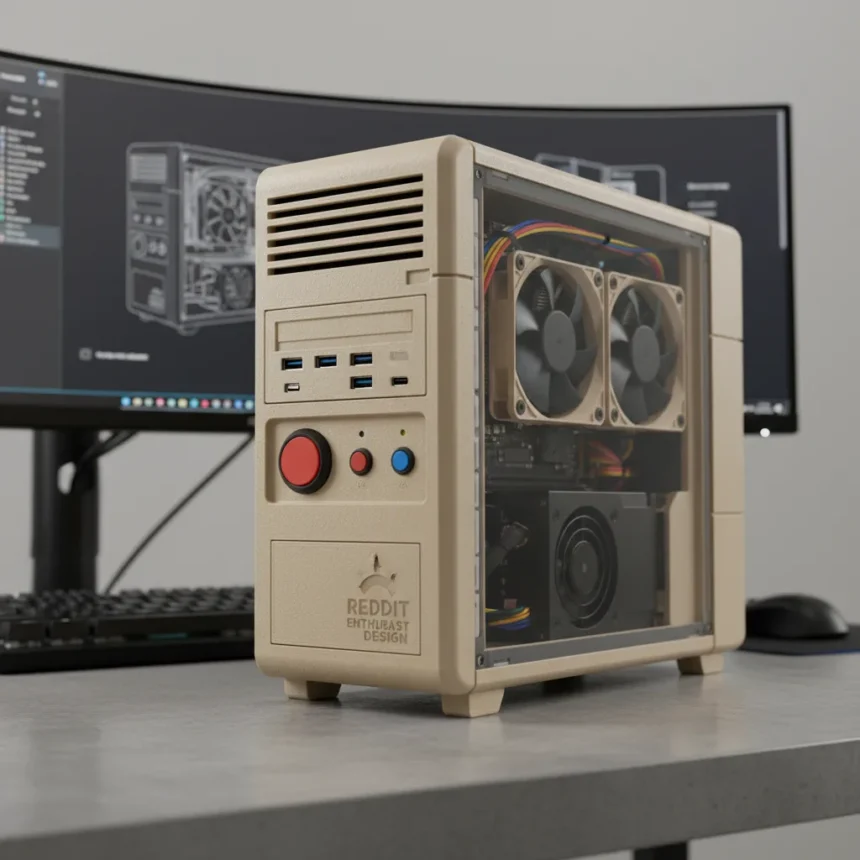
A 3D-printed retro PC case designed by Reddit user u/Potatozeng marries vintage aesthetics with modern hardware compatibility, supporting ITX motherboards and standard ATX power supplies. The designer has released the complete 3D files and a PDF assembly guide for free, enabling anyone with a 3D printer to build their own retro-styled enclosure in under 100 hours.
Key Takeaways
- Designer u/Potatozeng created a 3D-printed retro PC case supporting ITX motherboards and ATX PSUs
- Build time is under 100 hours with proper tools and materials
- Front 3.5-inch bay can accommodate USB hubs or other accessories
- Complete 3D files and PDF assembly guide are free to download
- Design revives vintage PC aesthetics without commercial manufacturing costs
What Makes This 3D-Printed Retro PC Case Stand Out
The 3D-printed retro PC case solves a genuine problem for enthusiasts who want nostalgic design without sacrificing modern component support. Most vintage cases were engineered for older hardware, forcing builders to either compromise on cooling, cable management, or aesthetics. Potatozeng’s design flips this: it wraps contemporary ITX and ATX components in a retro shell, letting you build a machine that looks like it belongs in a 1990s computer room but runs today’s software.
The front panel’s 3.5-inch bay is particularly clever. Rather than leaving it empty or forcing an awkward adapter, Potatozeng designed it as a functional space for USB hubs, allowing builders to add connectivity without cluttering the desk. This transforms a nostalgic detail into genuine utility, bridging the gap between form and function.
Design Specifications and Compatibility
The case supports Mini-ITX motherboards paired with full-size ATX power supplies, a combination that covers most compact builds without requiring exotic PSU sizes. The ITX form factor keeps the overall footprint small while the ATX PSU support means you’re not hunting for rare 300W units. This flexibility makes the design practical for a wider range of builders.


The assembly process is documented through a PDF guide with pictures, created by Potatozeng to walk users through printing, post-processing, and final assembly. The under-100-hour estimate assumes you have the necessary tools and materials on hand, meaning print time, curing, and assembly combined. Your actual timeline depends on printer speed, filament type, and how much finishing work you want to do on the printed parts.
Why Free Files Matter for PC Case Design
Commercial case manufacturers lock designs behind tooling costs and retail markups. By sharing the 3D files publicly, Potatozeng bypasses that entire structure. Anyone with access to a 3D printer—whether personal, at a makerspace, or through a printing service—can now build a custom retro case for just the cost of filament and their time. This democratizes case design in a way that traditional manufacturing never could.



The retro aesthetic has real appeal for builders tired of aggressive RGB lighting and tempered glass. Vintage case designs emphasize simplicity and durability, qualities that translate well to 3D printing. Unlike commercial retro cases that command premium prices, this design removes the financial barrier entirely.
Printing and Assembly Considerations
Building a 3D-printed retro PC case requires more than just clicking print. You’ll need to calibrate your printer for consistent layer adhesion, plan print orientation to minimize support material, and likely spend time sanding and finishing the parts for a polished look. The PDF guide handles these steps, but success depends on your printer’s capabilities and your willingness to iterate if early prints don’t fit perfectly.
Post-processing is where most builders either nail the aesthetic or abandon the project. Sanding layer lines smooth, filling gaps with epoxy, and potentially painting or staining the case can transform rough prints into something genuinely impressive. The under-100-hour estimate likely assumes moderate finishing; going for a showpiece finish could easily double that time.
How This Compares to Other Case Solutions
Traditional retro cases are either expensive boutique items or require finding genuine vintage hardware that may not accommodate modern components safely. 3D printing sits between those extremes: it costs less than a premium commercial retro case but demands more effort than buying off-the-shelf. The ITX and ATX compatibility makes it more practical than most vintage cases, which were often designed for specific form factors that no longer exist.



For builders who already have access to 3D printing—either owning a printer or using a local service—this design offers genuine value. The free files remove licensing costs, and the modular nature of 3D printing means you can customize dimensions or add features without starting from scratch.
Can I really print a PC case in under 100 hours?
Yes, but that timeline assumes you have a working 3D printer, appropriate filament, and all necessary tools ready to go. The estimate includes printing all parts, basic finishing, and assembly. Actual time varies based on printer speed, print settings, and how much post-processing you do. If you’re using a printing service instead of your own printer, turnaround time depends on their queue.
What filament should I use for the 3D-printed retro PC case?
The research brief does not specify recommended filament types. Standard PLA or PETG are common choices for structural parts, though the PDF guide included with the files likely addresses material selection. Your choice affects durability, finish quality, and how well the case tolerates heat from internal components.
Where can I download the 3D files for this retro PC case?
The files are shared publicly by u/Potatozeng, likely through Reddit or a linked repository. Check the original Tom’s Hardware article for the direct download link or search Reddit communities focused on 3D printing and PC building for the designer’s post.
The 3D-printed retro PC case represents a meaningful shift in how enthusiasts approach case design. By removing manufacturing barriers and sharing files freely, Potatozeng has created something more valuable than a single product: a template for others to build on. If you have access to a 3D printer and patience for finishing work, this design offers a genuinely unique way to build a machine that looks retro but runs modern. For everyone else, it’s proof that the best PC innovations often come from the community, not corporations.
Edited by the All Things Geek team.
Source: Tom's Hardware