





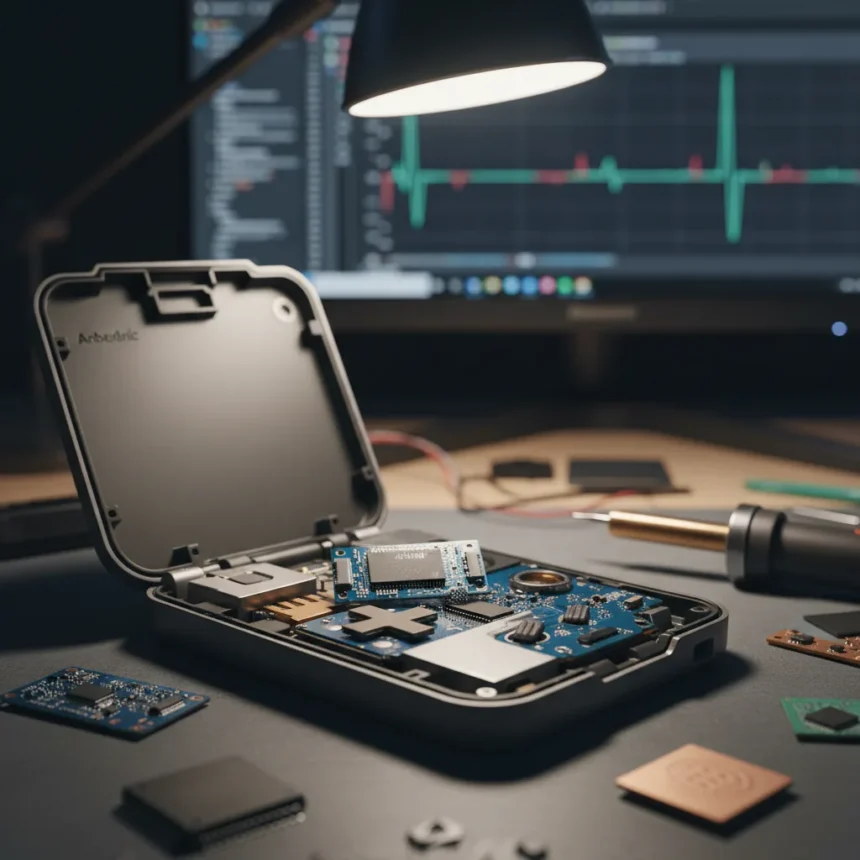
The Anbernic RG34XXSP RAM downgrade represents a troubling shift in how hardware makers communicate with buyers when supply chains tighten. The retro handheld, which launched in 2025 with 2GB of LPDDR4 RAM, is now shipping with just 1GB—a 50% reduction—yet Anbernic made no public announcement of the change.
Key Takeaways
- Anbernic silently reduced the RG34XXSP’s RAM from 2GB LPDDR4 to 1GB between January 19 and 21, 2026.
- The company cited component shortage and rising costs as the reason for the downgrade.
- Anbernic claims the reduction has no impact on Linux-based performance, though heavier emulation workloads may be affected.
- No price adjustment accompanied the memory cut, leaving buyers paying full price for reduced specs.
- The downgrade raises transparency concerns across the retro handheld market during a period of tight component supply.
How the Anbernic RG34XXSP RAM Downgrade Happened
Anbernic updated the RG34XXSP specification sheet quietly between January 19 and January 21, 2026, dropping the RAM from 2GB to 1GB without any official announcement. The shift became visible only when users and reviewers checked the product listing and discovered the change had already been implemented in new units. When contacted by Android Authority, Anbernic support confirmed the updated specification as correct.
The company’s statement acknowledged the move: “The upgrade of the RG34XXSP’s RAM from its original configuration to 1GB was implemented in response to the component shortage in the market”. The word “upgrade” in this context appears to refer to the manufacturing process change rather than a performance improvement. Anbernic added that “this update has no impact on the performance of Linux-based systems, and all core functionality remains fully intact and reliable”.
What makes this particularly frustrating is the absence of a corresponding price cut. Buyers received no discount despite the hardware being objectively less capable than what was originally advertised, creating a transparency problem that undermines trust in the brand.


Why This Matters for Retro Gaming Handhelds
The Anbernic RG34XXSP RAM downgrade is not an isolated incident but a symptom of broader market pressure. Component shortages and rising RAM costs are forcing manufacturers to make difficult decisions, but the way Anbernic handled it—silently and without explanation—sets a troubling precedent. Other handheld makers face similar pressures, yet how they communicate those changes to customers defines their reputation.
For users, 1GB versus 2GB matters more on a retro handheld than it might on a phone. These devices run Linux-based emulation systems where available RAM directly affects which titles run smoothly and which stutter. While Anbernic claims core functionality remains intact, community commentary suggests heavier 3D titles and certain PortMaster games may experience performance degradation on the reduced memory configuration.



The broader context here is that the retro handheld market has exploded in popularity over the past few years, driving up component demand just as global RAM supply has tightened. Manufacturers are caught between maintaining promised specs and managing costs in a constrained supply environment. Anbernic’s choice to downgrade silently rather than delay shipments or raise prices reflects how acute the pressure has become.
Anbernic’s Response and What It Reveals
Anbernic’s official statement to Android Authority included an apology: “We sincerely apologize for any confusion or concern this change may have caused”. The company framed the downgrade as a necessary response to external market conditions rather than a design choice. Whether that explanation satisfies buyers depends largely on whether they feel they were given a fair opportunity to accept or reject the reduced specification before purchase.
The silence around the change is the real issue. Anbernic could have announced the downgrade publicly, explained the supply chain situation, and given buyers the option to cancel orders or wait for units with the original specs. Instead, customers discovered the change after it had already been implemented. This approach prioritizes shipping timelines and cost management over customer communication—a short-term win that damages long-term credibility.
The company’s claim that Linux-based performance is unaffected may be technically accurate for basic emulation, but it glosses over the real-world experience of users who want to run demanding games or multiple emulation systems simultaneously. 1GB is tight for those use cases.



What This Means for Buyers Considering Retro Handhelds
If you are thinking about buying an Anbernic RG34XXSP, verify the RAM specification at the point of purchase. Check the product listing immediately before buying and confirm the seller’s stock matches current specs. The device may still be worth buying depending on your use case—casual retro gaming and lighter emulation titles will run fine on 1GB—but you should make that decision with full knowledge of what you are getting.
The Anbernic RG34XXSP RAM downgrade also highlights a broader lesson: in a supply-constrained market, check the fine print and verify specs directly with the seller rather than relying on marketing materials or older reviews. Component shortages are real, and manufacturers will adapt their products to meet them. How transparently they communicate those changes separates trustworthy brands from ones that hope nobody notices.
Is the RAM downgrade a permanent change or temporary?
Anbernic framed the downgrade as a response to current component shortage conditions, suggesting it could be reversed if supply improves. However, no timeline or commitment to restoring 2GB was provided. Until the company explicitly states otherwise, assume the 1GB specification is the new standard for the RG34XXSP.
Will the 1GB RAM affect emulation performance noticeably?
For basic retro gaming and lighter emulation systems, 1GB is adequate. Heavier 3D titles and demanding PortMaster games may experience frame drops or stuttering compared to the original 2GB configuration. Your experience depends entirely on which games and emulators you plan to use.
Should I buy the Anbernic RG34XXSP given this downgrade?
That depends on your budget and use case. If you want a capable retro handheld for classic 8-bit and 16-bit games, the RG34XXSP with 1GB is still functional. If you plan to push demanding 3D emulation or run multiple systems, the reduced RAM is a meaningful compromise. Shop around and verify current specs before committing to any purchase.
The Anbernic RG34XXSP RAM downgrade is a reminder that in hardware markets, transparency matters more than specs. A company that communicates openly about supply chain challenges and gives customers real choices builds loyalty. One that silently reduces specifications and hopes nobody notices destroys it. For retro handheld buyers, that lesson is worth remembering as the market continues to evolve.
Edited by the All Things Geek team.
Source: Tom's Hardware




