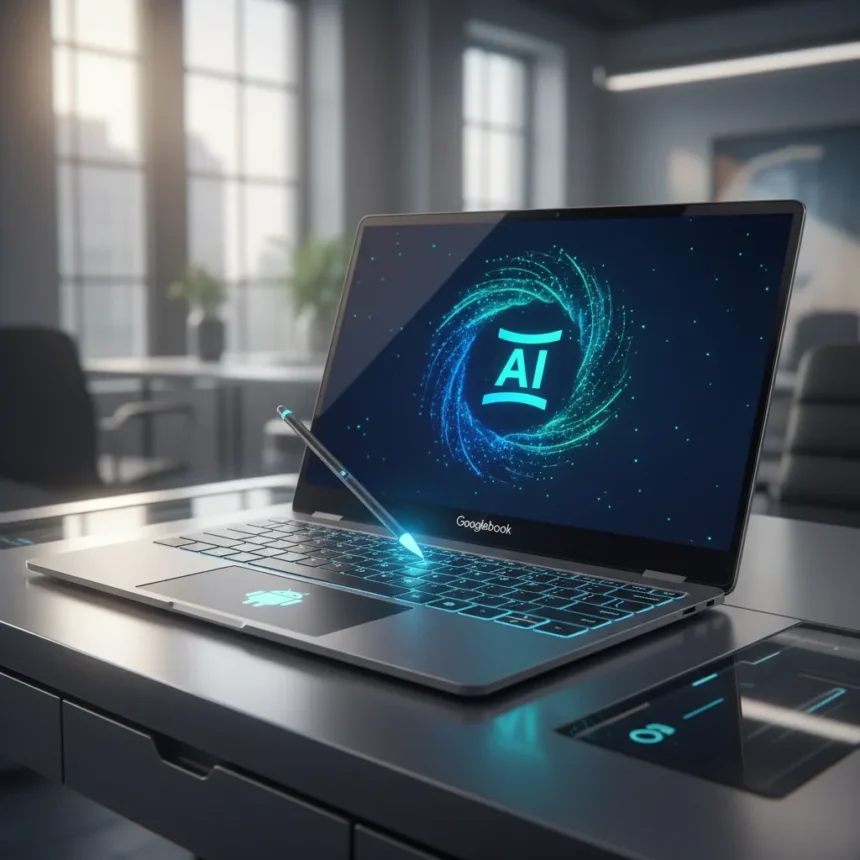
Google’s Googlebook AI laptop is a new category of premium laptops built from the ground up for Gemini intelligence, designed to replace the traditional Chromebook approach with AI-centric features and tighter Android ecosystem integration. Rather than iterating on existing Chromebook hardware, Google is positioning Googlebook as a fundamentally different class of device—one where artificial intelligence shapes how users interact with their computer, not as an afterthought but as the core architecture.
Key Takeaways
- Googlebook is a new AI-first laptop category launching this fall, not a Chromebook refresh.
- Magic Pointer uses Gemini to provide contextual suggestions and actions at the cursor.
- Custom widgets let users prompt Gemini to organize apps into a personalized dashboard.
- Googlebook integrates smoothly with Android phones, enabling instant access to apps and files.
- A distinctive glowbar design element distinguishes Googlebook from traditional laptops.
What Makes Googlebook Different From Chromebooks
Chromebooks have long been lightweight, cloud-first laptops running Chrome OS, optimized for simplicity and affordability. Googlebook abandons that formula entirely. Google describes Googlebook as designed with Gemini’s helpfulness at its core, shifting the focus from browser-based simplicity to AI-powered productivity. Where a Chromebook asks you to open an app or navigate a menu, Googlebook’s Magic Pointer lets you point at any element on screen and receive intelligent suggestions from Gemini—without typing a command. This isn’t a feature bolted onto an existing platform; it’s the foundational interaction model.
The distinction matters because Googlebook targets a different buyer. Chromebooks appeal to students, budget-conscious consumers, and organizations seeking low-cost, low-maintenance devices. Googlebook is explicitly positioned as premium hardware, designed for users who want AI to actively shape their workflow. Google has not announced exact pricing, but the premium positioning signals a price point well above typical Chromebook offerings.
Googlebook AI Laptop Features That Drive Productivity
The Googlebook AI laptop’s standout feature is Magic Pointer, which surfaces Gemini intelligence contextually as you navigate your screen. Hover over a date, and Gemini might suggest calendar actions. Highlight text, and the AI could offer summarization or rephrasing. This transforms the cursor from a simple pointer into an intelligence layer woven into every interaction.


Custom widgets represent another departure from Chromebook design. Instead of manually organizing your desktop, you can prompt Gemini to create a personalized dashboard that groups apps and information according to your needs. Ask Googlebook to organize your work apps, and Gemini builds a widget layout tailored to your workflow. This hands-off personalization appeals to power users who want their device to adapt to them, not the reverse.
Perhaps most compelling is Android integration. Googlebook lets users access phone apps and files instantly from an Android device, blurring the line between smartphone and laptop. This ecosystem play is where Googlebook diverges most sharply from Chromebooks, which treat phones as separate devices. For Google’s Android users, Googlebook promises seamless continuity across devices—a direct competitive advantage against MacBooks, which dominate the premium laptop space but rely on iOS exclusivity.



When Does Googlebook Launch and What Should You Expect
Google has confirmed that the first wave of Googlebook devices will become available this fall, though the company has not announced exact pricing or firm release dates. Users can check googlebook.com for updates as the launch approaches. The fall window suggests a September or October debut, aligning with Google’s typical hardware announcement cycles.
The premium positioning and AI-centric design suggest Googlebook will launch at a higher price than entry-level Chromebooks but likely below flagship MacBook Pro pricing. Google has not confirmed whether cheaper Googlebook models will follow the premium launch, though the company’s historical pattern with Pixel phones suggests a tiered lineup could emerge later.
A distinctive glowbar design element will visually differentiate Googlebook from traditional laptops, signaling its AI-first identity at a glance. This design choice reflects Google’s broader push to make AI integration obvious and central to the user experience.
How Googlebook Positions Against Premium Competitors
The headline comparison to a MacBook Neo concept reflects Googlebook’s ambition: to challenge Apple’s dominance in the premium laptop market. MacBooks are known for their build quality, ecosystem integration, and longevity, but they lack native AI features as deeply integrated as Googlebook’s Magic Pointer and Gemini-powered widgets. For Android users tired of the Apple ecosystem’s constraints, Googlebook offers an alternative that prioritizes AI over brand loyalty.



Chromebooks, by contrast, occupy a different market segment. They prioritize simplicity and cost over performance and AI capability. Googlebook’s premium hardware and Gemini integration position it as a tier above Chromebooks—not a successor in the traditional sense, but a new category that acknowledges Chromebook users may want more power and intelligence without switching to Windows or macOS.
Is Googlebook Right for You
Googlebook appeals to Android power users, content creators, and professionals who want AI woven into their daily workflow. If you spend time managing multiple apps, organizing information, and switching between your phone and laptop, Googlebook’s Android integration and Magic Pointer could streamline your day. If you are comfortable with Windows or macOS and don’t need tight Android sync, traditional laptops may still serve you better.
The premium positioning also matters. Googlebook is not a budget option. Expect pricing that reflects its AI-first design and premium build quality. For students and cost-conscious buyers, Chromebooks remain the smarter choice—at least until Google confirms pricing and whether cheaper Googlebook models will follow the premium launch.
What exactly is Magic Pointer in Googlebook
Magic Pointer is a Gemini-powered feature that provides contextual suggestions and actions as you move your cursor across the screen. Point at text, dates, images, or links, and Gemini surfaces relevant options—summarize, translate, schedule, or take other actions—without requiring you to type a command or open a menu.
Will Googlebook work with iPhones and non-Android devices
Googlebook is designed specifically to integrate smoothly with Android phones and other Google devices. The research brief does not confirm compatibility with iPhones or non-Android devices, so iPhone users should expect limited cross-device functionality compared to Android users.
When will Googlebook pricing be announced
Google has not shared exact prices or firm release dates yet, though the company has encouraged users to check googlebook.com for updates before the devices launch this fall. Pricing details are expected closer to the fall launch window.
Googlebook represents Google’s boldest move into premium hardware in years. By building a laptop category around Gemini intelligence rather than iterating on Chromebooks, Google is signaling that AI is no longer a feature—it’s the foundation. For Android users frustrated by the Apple ecosystem and power users hungry for AI integration, Googlebook could redefine what a premium laptop should be. The fall launch cannot come soon enough to see whether Google’s vision translates into a product that actually changes how people work.
Where to Buy
Lenovo IdeaPad Slim 3x | Acer Aspire Go 15
Edited by the All Things Geek team.
Source: Tom's Guide