





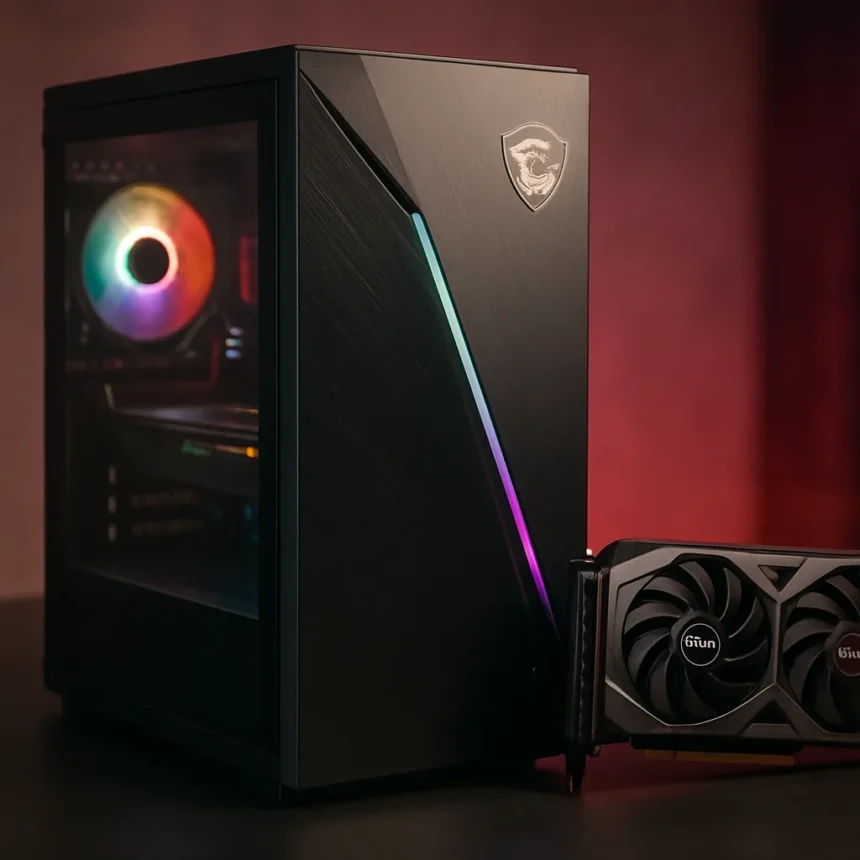
The RAM crisis gaming PC prices are spiraling into 2026, and MSI’s candid warning signals how dire the situation has become. MSI General Manager Huang Jinqing stated at an investor briefing that 2026 is the most challenging year since MSI was founded, driven by severe DRAM shortages and astronomical memory costs that are reshaping the entire gaming hardware market.
Key Takeaways
- MSI plans 15-30% price increases on gaming laptops, desktops, GPUs, and handhelds due to DRAM shortage.
- PC market forecast to shrink 10-20% in 2026 as component scarcity tightens.
- MSI holds only 1-2 months of secure memory inventory; suppliers reluctant on long-term commitments.
- Budget gaming laptops being cut; MSI prioritizing premium products and AI server production.
- DDR4 motherboards gaining traction as cheaper alternative despite lower performance than DDR5.
Why RAM crisis gaming PC prices are spiking now
MSI’s inventory situation reveals the depth of the problem. The company maintains only 1-2 months of secure DRAM supply, leaving it vulnerable to price swings and allocation decisions by Samsung and SK Hynix, the two dominant suppliers who are reluctant to commit to longer-term supply agreements. This forces MSI into reactive pricing rather than planned margin management. When suppliers control the supply chain this tightly, manufacturers have no choice but to pass costs downstream.
The timing is brutal. Nvidia’s shift toward AI data center production means fewer graphics chips flowing to consumer gaming partners like MSI. Simultaneously, DRAM makers are prioritizing memory allocation to AI infrastructure over consumer PC components. MSI expects lower Blackwell GPU availability but will focus on premium SKUs—the RTX 5070, 5080, and 5090—which already command record-high prices and will likely climb further. Lower-end cards like the RTX 5050, though widely available, face risk because they are not major profit drivers.
The price hikes hitting gamers and builders
MSI’s planned increases of 15-30% across gaming laptops, desktops, GPUs, and handhelds represent a fundamental reset in consumer PC pricing. This is not a temporary surge—it is a structural shift driven by a supply chain that now prioritizes artificial intelligence over gaming. Budget-focused gamers will feel the pain first. MSI is cutting back on budget laptop production entirely, shifting resources to premium segments where margins can absorb the memory cost increases.


The broader PC market is contracting. Industry forecasts suggest a 10-20% shrinkage in 2026 due to component scarcity. When supply tightens and prices spike, demand collapses. Consumers delay purchases. Builders stretch upgrade cycles. Only those with urgent needs or deep wallets proceed, which explains why MSI is abandoning the budget segment—there is no profit there when memory costs are astronomical and volume is evaporating.
DDR4 makes a comeback, but at a cost
In response, MSI is releasing more DDR4-compatible motherboards, leveraging the fact that DDR4 remains significantly cheaper than DDR5 despite the broader shortage. This is a pragmatic but uncomfortable compromise. Gamers considering DDR4 systems now face a choice between lower memory costs and lower performance. DDR4 is mature, stable, and affordable—but it is not the future. Accepting DDR4 in 2026 means accepting a performance ceiling that newer DDR5 systems will eventually surpass.



This strategy reveals how manufacturers are rationing scarcity. They cannot meet demand at reasonable prices for premium DDR5 systems, so they are offering a lower-cost, lower-performance alternative. It is a triage approach: premium buyers get DDR5 at inflated prices, budget buyers get DDR4 at acceptable prices, and everyone in the middle gets squeezed.
What this means for the gaming PC market
MSI’s candid assessment—calling 2026 the toughest year in company history—should alarm anyone planning a PC upgrade. This is not hyperbole from a marketing department. This is a general manager speaking to investors about existential supply chain challenges. The company is making hard choices: cutting entire product categories, raising prices across the board, and pivoting toward AI and premium gaming where margins justify the memory costs.
The ripple effects extend beyond MSI. If the largest independent gaming hardware manufacturer is cutting budgets and raising prices, smaller competitors and system integrators face even worse pressure. The result is a market where budget gaming PCs become harder to find and premium systems command prices that would have seemed absurd two years ago.
Will prices stabilize in 2026?
Some DRAM prices have plateaued, but that does not signal relief. Plateau is not the same as decline. MSI’s continued price hikes and inventory constraints suggest that even stable memory costs remain elevated relative to historical norms. Suppliers have no incentive to drop prices when demand from AI infrastructure is insatiable. Consumer PC manufacturers will absorb the pain through margin compression or pass it to buyers through higher prices. MSI is choosing the latter.



Is the RAM crisis affecting all gaming PC brands?
Yes. While MSI is the most vocal about it, any manufacturer dependent on DRAM—which includes every PC, laptop, and GPU maker—faces the same constraints. MSI’s willingness to publicly acknowledge the crisis suggests the problem is industry-wide, not company-specific. Expect similar announcements and price adjustments from competitors throughout 2026.
Should I buy a gaming PC now or wait?
Waiting will not help. If prices are rising 15-30% in 2026 and inventory is tightening, buying now at current prices is the rational choice. Waiting for a price drop assumes DRAM costs will fall, which requires either a supply surge or a demand collapse. Neither is likely in the near term, given AI infrastructure’s relentless appetite for memory. If you need a gaming PC, the calculus favors purchasing before the next round of increases takes effect.
MSI’s statement cuts through industry optimism and corporate spin. The RAM crisis gaming PC prices are not a temporary disruption—they are the new normal, at least for 2026. Gamers and builders who act now will avoid the worst of the price increases. Those who delay will face a market where budget options vanish and premium systems carry premiums that would have seemed outrageous just a year ago.
Edited by the All Things Geek team.
Source: TechRadar




