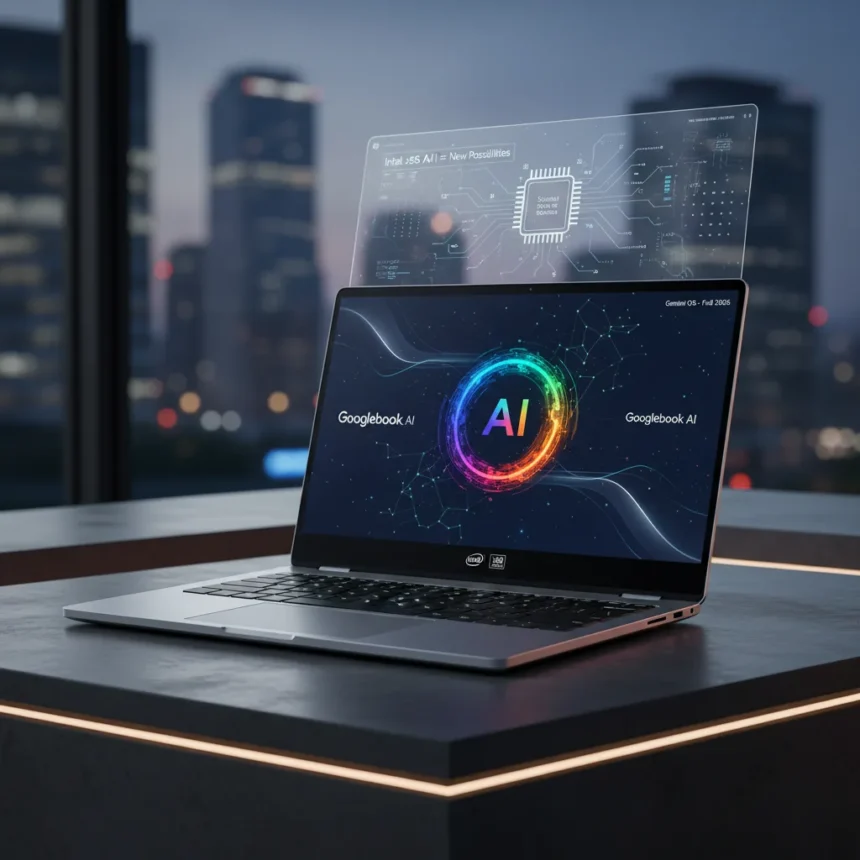
The Googlebook AI laptop is a new line of premium laptops powered by Google’s Gemini AI models, built in partnership with Intel, Qualcomm, and MediaTek, launching in autumn 2026. Intel officially confirmed its role in the project via a post on X, expressing enthusiasm to partner with Google on devices that blend Android, Google Play, and ChromeOS into what Google describes as an “intelligence system” or potentially the first AI-native operating system. The announcement signals Google’s shift away from traditional ChromeOS toward a Gemini-centric platform designed to compete directly with Apple’s MacBook Neo in the premium laptop market.
Key Takeaways
- Googlebook AI laptop combines Android, Google Play, and ChromeOS into a unified operating system experience centered on Gemini AI.
- Intel, Qualcomm, and MediaTek will supply chips; Intel’s x86 architecture marks a significant departure from ARM-only Chromebooks.
- Premium OEM partners include Acer, ASUS, Dell, HP, and Lenovo, offering diverse form factors and sizes.
- Magic Pointer AI cursor and Create My Widget features enable contextual Gemini assistance and custom dashboards without coding.
- Launch scheduled for fall 2026; existing Chromebook users will receive transition support and continued updates.
Googlebook AI laptop features and AI-native design
The Googlebook AI laptop distinguishes itself through deeply integrated Gemini AI features that go beyond typical laptop assistance. Magic Pointer, an AI-powered cursor system, lets users shake or wiggle the cursor to activate Gemini mode for contextual suggestions—point at a date in an email to automatically set up a calendar meeting, for example. This contextual awareness extends throughout the system, making AI assistance reactive rather than something users must explicitly invoke.
Create My Widget (also called “Create your Widget”) leverages Gemini prompts to build custom dashboard widgets that pull information directly from web searches, Gmail, and Calendar data. Users can generate personalized dashboards for trip planning, meeting overviews, or other recurring needs without writing code. Native Android application support means developers do not need to create separate versions for the Googlebook AI laptop—Android apps run directly without emulation. Integration with Android phones allows users to view files, search content, and cast Android apps and experiences directly to the desktop.
Chip architecture: Intel x86 alongside ARM alternatives
Intel’s partnership on the Googlebook AI laptop represents a notable shift in Google’s hardware strategy. While the company has historically favored ARM-based processors in Chromebooks, the new platform will support Intel’s x86 architecture alongside Qualcomm and MediaTek chips. This multi-architecture approach gives OEMs flexibility in component sourcing and allows Intel to compete for premium segments where x86 performance and software compatibility remain advantages. The specific Intel chip model has not been disclosed, leaving questions about whether Google worked with Intel on custom silicon or adapted existing processors for the Googlebook AI laptop platform.


The decision to support multiple architectures reflects pragmatic OEM partnerships—Acer, ASUS, Dell, HP, and Lenovo can select chips based on their target price points and performance requirements. Qualcomm and MediaTek bring efficiency and thermal advantages for thinner designs, while Intel’s x86 option appeals to users and developers prioritizing raw performance or legacy software support. This flexibility positions the Googlebook AI laptop to compete across multiple market segments rather than occupying a single price tier.
Market positioning and Chromebook transition
Google has committed to supporting existing Chromebook users through continued updates and compatibility programs. Many current Chromebook devices will be eligible to transition to the new Googlebook AI laptop experience, though specific eligibility criteria remain unclear. This transition strategy acknowledges Google’s installed Chromebook base while signaling that the future of Google’s laptop platform centers on Gemini AI integration rather than traditional ChromeOS.



The Googlebook AI laptop directly challenges Apple’s MacBook Neo in the premium segment. Where Apple’s offering emphasizes proprietary silicon and ecosystem lock-in, the Googlebook AI laptop leverages Android’s openness and Google’s AI expertise to create a differentiated value proposition. The partnership with five major OEMs—Acer, ASUS, Dell, HP, and Lenovo—ensures broad availability across design preferences and price points, a competitive advantage over Apple’s single-vendor approach. Fall 2026 launch timing gives Apple time to refine MacBook Neo, but Google’s multi-partner strategy and native AI-first design may appeal to users seeking alternatives to Apple’s walled garden.
What makes Googlebook AI laptop different from Chromebooks?
The Googlebook AI laptop represents a fundamental reimagining of Google’s laptop OS, moving from ChromeOS as a browser-centric platform to an AI-native operating system. While Chromebooks prioritize simplicity and cloud connectivity, the Googlebook AI laptop embeds Gemini AI as a core operating system component, enabling contextual assistance, widget generation, and intelligent suggestions without explicit user prompts. Native Android support eliminates emulation layers, making the platform more open to the Android app ecosystem than traditional Chromebooks.
Will existing Chromebook users get the new Googlebook AI laptop experience?
Google has stated that existing Chromebook users will receive continued updates through their current support commitments, and many Chromebook devices are eligible to transition to the new Googlebook AI laptop experience. However, the company has not specified which Chromebook models qualify or what the transition process entails. Users should expect a gradual rollout rather than an immediate switchover for all devices.
When will Googlebook AI laptop devices launch?
Googlebook AI laptop devices are scheduled to launch in autumn 2026, with full details expected closer to release. The fall 2026 timeline provides OEM partners like Acer, ASUS, Dell, HP, and Lenovo time to finalize designs and prepare manufacturing. Pricing and exact regional availability have not been announced, though the global reach of these OEM partners suggests a broad international rollout.



The Googlebook AI laptop represents Google’s boldest move yet to establish AI as a core operating system feature rather than an afterthought. By partnering with Intel, Qualcomm, and MediaTek while enlisting five major OEMs, Google has created a platform with genuine competitive diversity—something Apple’s vertical integration cannot match. Whether users embrace an AI-first laptop experience remains an open question, but the scale of this partnership and the fall 2026 launch window signal that Google is serious about challenging Apple’s premium laptop dominance.
Edited by the All Things Geek team.
Source: Tom's Hardware