





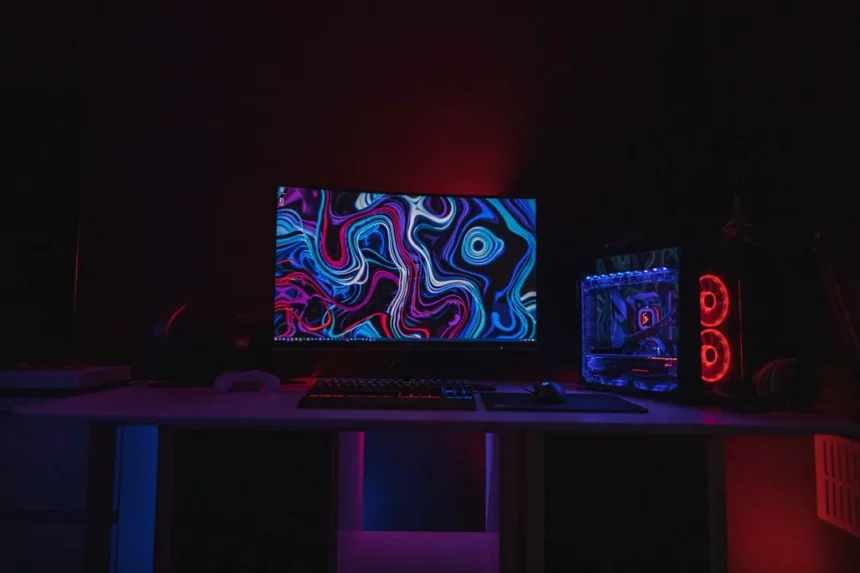
The Samsung Odyssey G8 is a 32-inch 6K gaming monitor, making it the world’s first display to combine 6K resolution with gaming-focused performance. The G80HS model represents a significant leap beyond the 4K standard that has dominated gaming for years. Early hands-on impressions reveal a monitor that delivers both visual clarity and the fluid responsiveness gamers demand.
Key Takeaways
- Samsung’s Odyssey G8 is the world’s first 6K gaming monitor at 32 inches, setting a new resolution benchmark.
- The display delivers vibrant color and exceptional sharpness across the entire screen.
- Gaming performance remains fluid despite the demanding 6K resolution.
- The monitor positions itself as a premium option for competitive and visual-focused gamers.
- 6K resolution in a gaming context represents a significant jump from current 4K standards.
What Makes This 6K Gaming Monitor Different
The Samsung Odyssey G8 breaks new ground by combining ultra-high resolution with gaming-specific engineering. While 6K displays exist in professional and creative spaces, bringing that resolution to gaming is a different challenge entirely. The monitor achieves this by maintaining fluid performance—the responsiveness that separates a gaming display from a professional workstation monitor. Most high-resolution displays prioritize color accuracy and brightness over refresh rates; the Odyssey G8 refuses that compromise.
The 32-inch size is crucial to the experience. At smaller screen sizes, the jump from 4K to 6K becomes less noticeable to the human eye. At 32 inches, the additional pixels translate directly into sharper text, crisper UI elements, and more detailed game worlds. Every visual element gains definition without the monitor becoming unwieldy for a typical gaming desk setup.
Visual Performance and Image Quality
The initial hands-on testing highlights the vibrant color reproduction and sharpness that define this 6K gaming monitor. The additional resolution delivers a visible improvement in image clarity compared to 4K displays, particularly in fast-paced games where fine details matter. Text rendering is noticeably sharper, and distant objects in game environments retain definition that 4K monitors blur away.


Color vibrancy stands out as a strength. The display renders colors with intensity and accuracy that appeals to both competitive gamers who need precise visual feedback and visual-focused players who want immersive, detailed worlds. This balance—between professional-grade color accuracy and gaming-oriented visual punch—is where the Odyssey G8 differentiates itself from both traditional gaming monitors and professional displays.
Gaming Performance at 6K Resolution
Delivering fluid performance at 6K is the real engineering achievement here. The monitor maintains responsiveness despite the pixel density, which is essential for any gaming display that wants to justify its existence beyond a creative workstation. Early impressions confirm that the Odyssey G8 achieves this balance, proving that 6K gaming is viable rather than purely aspirational.



This matters because resolution and responsiveness have historically been at odds. Professional displays maximize resolution and color accuracy but sacrifice refresh rates. Gaming monitors prioritize low latency and high refresh rates but cap out at 4K. The Odyssey G8 challenges that dichotomy by proving a 6K gaming monitor can deliver both. Gamers upgrading from 4K displays will notice the visual leap immediately; they will also appreciate that their frame rates and input lag remain competitive.
How the 6K Gaming Monitor Compares to 4K Standards
Current gaming monitors max out at 4K resolution in the 27-to-32-inch range. Those displays offer proven performance and mature driver support across all major games. The jump to 6K introduces more pixels—roughly 33 percent more than 4K—which demands more from graphics cards and system bandwidth. For gamers with high-end hardware, that extra visual fidelity is worth the performance cost. For others, 4K remains the practical sweet spot.
The Odyssey G8 is not a replacement for 4K gaming monitors; it is an upgrade path for enthusiasts with the hardware to drive it. This positions Samsung’s 6K gaming monitor as a premium product for a specific audience rather than a universal next step. That targeting is honest—the display knows its market and delivers to it without pretending to be something it is not.
Is 6K Gaming Worth the Upgrade?
The answer depends on your current setup and priorities. If you are running a 4K monitor and your graphics card is a high-end model from the last two generations, the visual jump is significant enough to justify consideration. The sharpness and clarity gains are tangible, not marginal. However, if your system is built around 4K gaming at high refresh rates, pushing to 6K will require hardware upgrades beyond just the monitor.



For new builders planning a premium gaming setup, the Odyssey G8 is worth factoring into the budget conversation. The monitor exists; it works; and it delivers on the promise of 6K gaming. Whether that promise matters to you depends on how much you value visual fidelity over raw frame rate performance.
What Should You Know Before Considering This Monitor?
The Samsung Odyssey G8 is a flagship product with flagship expectations. This is not a budget display, and it is not designed for casual gamers or esports competitors who prioritize 144+ Hz refresh rates above all else. It is built for players who want the sharpest, most detailed gaming experience their hardware can deliver. That positioning is clear and appropriate.
The 6K gaming monitor market is brand new. Driver optimization, game-specific performance tuning, and ecosystem maturity will improve over time. Early adopters should expect occasional quirks or suboptimal performance in certain titles as developers and driver teams catch up. That is the cost of being first—and for some gamers, that novelty factor is part of the appeal.
Can a 6K gaming monitor actually deliver smooth performance?
Yes. The Samsung Odyssey G8 proves that 6K gaming monitors can maintain fluid performance through engineering that prioritizes responsiveness alongside resolution. Early testing confirms the display delivers the responsiveness gamers expect, not just the clarity professionals demand. This was the critical unknown—and the Odyssey G8 answers it convincingly.
Is a 6K gaming monitor worth buying over a 4K display?
For high-end gamers with capable hardware, the visual upgrade from 4K to 6K is noticeable and worthwhile. The additional sharpness and detail justify the cost and performance overhead if your system can handle it. For mainstream gamers, 4K remains the practical choice until 6K becomes more affordable and widely optimized.
What graphics card do I need for a 6K gaming monitor?
The research brief does not specify GPU requirements for the Samsung Odyssey G8. High-end graphics cards from recent generations (RTX 4090, RTX 4080, or equivalent) are the safe starting point, but specific performance targets depend on the games you play and your refresh rate targets. Check Samsung’s official specifications and your graphics card manufacturer’s guidance for detailed recommendations.
The Samsung Odyssey G8 marks a turning point for gaming displays. It proves that 6K gaming is not a distant fantasy—it is here, it works, and it delivers a meaningful visual upgrade for gamers willing to embrace the cutting edge. Whether you take that step depends on your hardware, budget, and how much you value sharpness over speed. For those who do, the world’s first 6K gaming monitor is a sight to behold.
Edited by the All Things Geek team.
Source: Tom's Guide




