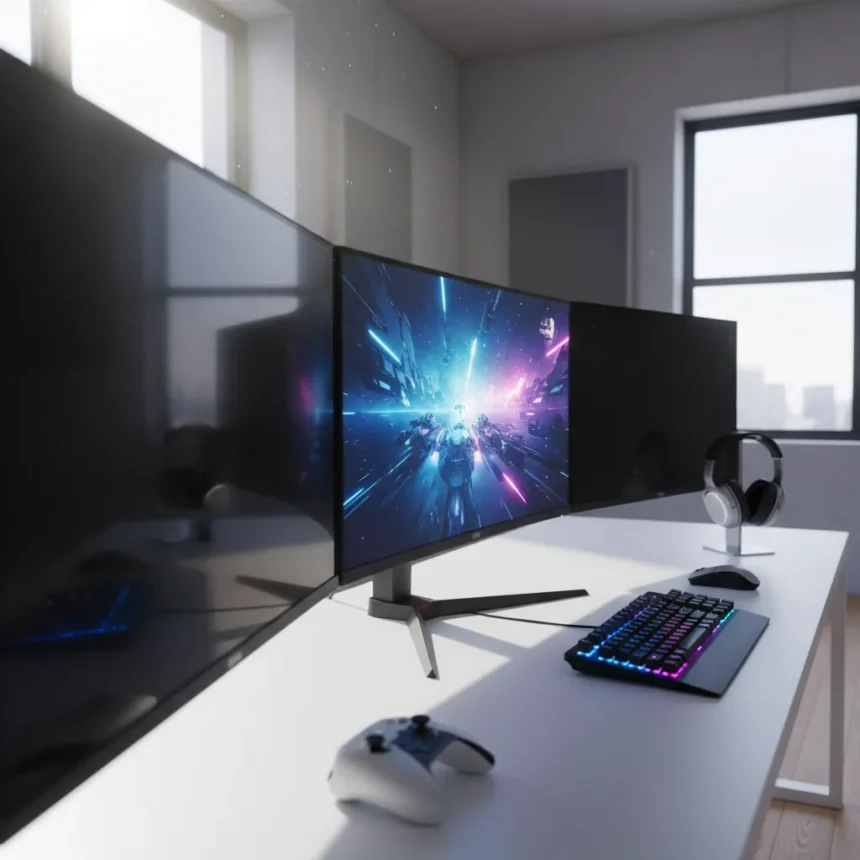
Samsung OLED gaming displays are finally addressing one of OLED’s most frustrating weaknesses: reflections in bright rooms. The 2026 lineup introduces Glare Free technology that eliminates reflections without the image quality loss that plagues traditional anti-glare coatings.
Key Takeaways
- Samsung’s 2026 OLED TVs and Odyssey G6 monitors feature proprietary Glare Free technology to reduce reflections in bright environments.
- Odyssey G6 G61SH offers QHD resolution, 240 Hz refresh rate, and 0.03 ms response time with QD-OLED panels.
- 2026 OLED TVs support up to 165 Hz refresh rates with AMD FreeSync Premium Pro and full NVIDIA G-SYNC compatibility.
- Odyssey G60H achieves 1,040 Hz refresh rate in 1080p Dual Mode, pushing gaming displays into extreme speed territory.
- Samsung is sourcing LG WOLED panels for its first gaming monitor, the S27HG702WC, expected mid-2026.
Why Samsung OLED gaming displays matter now
OLED monitors have dominated gaming for speed and contrast, but they’ve always struggled in rooms with windows or bright overhead lighting. Reflections wash out the image, forcing gamers to choose between performance and visibility. Samsung’s Glare Free technology solves this by using a proprietary anti-reflective layer on the S95H and S90H OLED TVs that actually preserves the deep blacks and vibrant colors OLED is famous for. This is the breakthrough gamers have been waiting for.
The timing matters. Console gaming is becoming more competitive, and PC gaming has moved beyond 240 Hz refresh rates into territory that demands both speed and clarity. A gaming display that works equally well in a dark esports cave or a sunlit living room removes a major purchasing constraint. Samsung is positioning these displays as the first true all-environment OLED gaming option.
Samsung OLED gaming displays specs and performance
The 2026 lineup splits into two categories: TVs for console and living room gaming, and dedicated monitors for competitive play. The S95H and S90H OLED TVs introduce HDR10+ ADVANCED, Samsung’s enhanced standard for brightness, contrast, and motion handling. Both support up to 165 Hz refresh rates with AMD FreeSync Premium Pro for tear-free gameplay on PCs and consoles. The entry-level S85H caps out at 120 Hz, trading some speed for a lower price point.


The Odyssey G6 monitor line is where Samsung OLED gaming displays get extreme. The G60H variant achieves 1,040 Hz refresh rate when running in 1080p Dual Mode, though it drops to 600 Hz at native QHD resolution. The G61SH takes a more balanced approach with a QHD-native QD-OLED panel, 240 Hz refresh rate, and a lightning-fast 0.03 ms response time. Both models include full NVIDIA G-SYNC compatibility, ensuring smooth gameplay across platforms.
A leaked third option, the S27HG702WC, represents Samsung’s first gaming monitor using LG WOLED panels instead of its own QD-OLED technology. The 27-inch display targets 4K gaming at 165 Hz with a dual-mode option that hits 330 Hz at 1080p, expected to launch in late June 2026. This move suggests Samsung is diversifying its panel sourcing for cost efficiency, even with in-house OLED production capacity.



How Samsung OLED gaming displays compare to existing options
Current gaming monitors using QD-OLED panels from Samsung have set the standard for speed and contrast, but they inherit OLED’s reflection problem in bright rooms. Samsung’s new Glare Free technology directly addresses this limitation without the image dulling that traditional anti-glare coatings introduce. Competing displays using LG WOLED panels, like those from other manufacturers, offer similar speed but lack Samsung’s proprietary reflection-reduction layer.
AMD FreeSync Premium Pro and NVIDIA G-SYNC support across the entire 2026 lineup means these displays work with nearly any gaming platform—a flexibility advantage over displays locked into a single sync standard. The 165 Hz TV refresh rate is a notable jump from typical gaming TV specs, positioning Samsung OLED gaming displays as genuine alternatives to dedicated monitors for living room esports setups.
Should you wait for Samsung OLED gaming displays?
If you’re shopping for a gaming monitor or TV right now and bright room reflections have been a dealbreaker, waiting until mid-2026 for these displays makes sense. The Glare Free technology is a genuine innovation that solves a real problem without compromise. However, pricing remains unconfirmed—expect premium positioning given the anti-reflective tech and high refresh rates.
For competitive players who game in dark rooms, current OLED displays already deliver the speed and contrast you need. For casual gamers or anyone whose setup includes natural light, Samsung OLED gaming displays represent the first OLED option that doesn’t force you to choose between performance and visibility.



What is Glare Free technology on Samsung OLED gaming displays?
Glare Free is Samsung’s proprietary anti-reflective coating designed specifically for OLED panels. Unlike traditional anti-glare treatments that scatter light and dull the image, Glare Free reduces reflections while maintaining OLED’s signature contrast and color accuracy. It’s available on the S95H and S90H OLED TVs for 2026.
Which Samsung OLED gaming displays are coming first?
The 2026 OLED TV lineup (S95H, S90H, S85H) is expected later in 2026 with no confirmed date. The Odyssey G6 monitor variants are also slated for 2026, while the LG WOLED-based S27HG702WC gaming monitor is rumored for late June 2026.
Do Samsung OLED gaming displays support both AMD and NVIDIA?
Yes. All 2026 Samsung OLED TVs and Odyssey G6 monitors feature full NVIDIA G-SYNC compatibility, and the TVs include AMD FreeSync Premium Pro support for tear-free gaming across platforms.
Samsung OLED gaming displays represent a maturation of OLED gaming technology. By solving the reflection problem that has limited OLED’s appeal in bright rooms, these displays open OLED performance to a much wider audience. The 2026 lineup is worth waiting for if glare has been holding you back.
Where to Buy
Edited by the All Things Geek team.
Source: T3