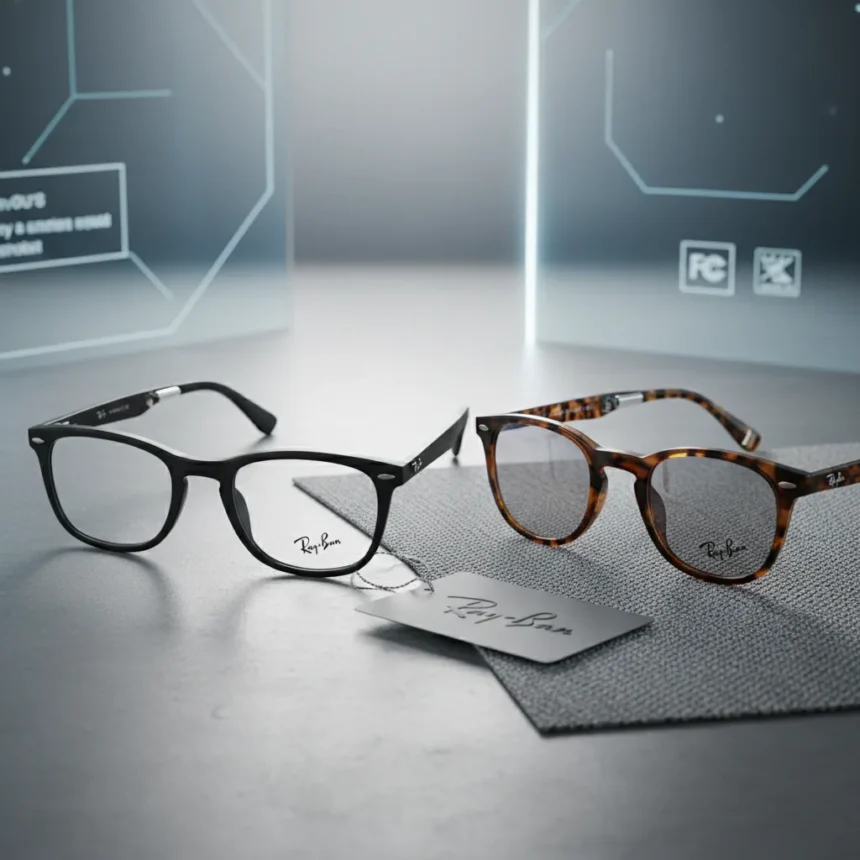
Meta Ray-Ban prescription smart glasses are finally becoming reality. The company is preparing two new models codenamed Scriber and Blazer, both specifically engineered for people who need prescription lenses. These are not afterthoughts—they represent Meta’s first serious attempt to serve the massive market of vision-corrected glasses wearers, a demographic the original Ray-Ban Meta glasses largely ignored.
Key Takeaways
- Two new Meta Ray-Ban models, Scriber and Blazer, designed exclusively for prescription lens wearers
- FCC filings confirm production-ready units, signaling an imminent commercial launch
- Glasses will ship in rectangular and rounded frame styles to suit different face shapes
- Distribution through traditional prescription eyewear channels, not just Meta’s direct sales
- Represents Meta’s largest expansion of Ray-Ban smart glasses beyond the original non-prescription model
Why Meta Ray-Ban prescription smart glasses matter now
The original Ray-Ban Meta glasses launched to genuine enthusiasm, but they carried a glaring limitation: if you wore glasses for vision correction, you either had to choose between your prescription and the smart features, or layer the device awkwardly over your existing frames. That friction eliminated roughly 60 percent of the potential market. Meta Ray-Ban prescription smart glasses solve that problem by integrating the smart display technology directly into prescription-ready frames. The company is not just adding a checkbox feature—it is redesigning the entire product category to match how people actually use eyewear.
The timing signals confidence. FCC filings for both Scriber and Blazer show production-ready hardware, meaning these are not vaporware concepts but devices ready for manufacturing. This is the kind of regulatory clearance that typically precedes a launch announcement by weeks, not months.
What the two new models offer
Scriber and Blazer differ in frame geometry, not functionality. Scriber features a rectangular design, while Blazer opts for rounded frames. This distinction matters more than it sounds—frame shape is deeply personal, and forcing all prescription wearers into a single aesthetic would repeat the mistake of the original model. By offering two silhouettes, Meta is signaling it understands that smart glasses must compete on design as much as on features.


The critical detail is distribution. Rather than funneling prescription orders exclusively through Meta’s website, the company plans to sell these glasses through traditional prescription eyewear channels. This means partnerships with major optical retailers and eye care providers, the same networks that have sold glasses for decades. For prescription wearers, this is transformative—they can walk into a store, get their eyes tested, and walk out with Meta Ray-Ban prescription smart glasses in a single visit, rather than navigating an unfamiliar direct-to-consumer process.
How Meta Ray-Ban prescription smart glasses compete
The smart glasses market remains fragmented. Apple has not released a mass-market AR device. Google’s Gemini glasses remain experimental. Meta’s Ray-Ban partnership is the only consumer smart glasses product with real distribution and adoption. By adding prescription support, Meta widens its moat—it is the only company offering smart glasses that work smoothly for people who need vision correction. Competitors would need to negotiate similar optical partnerships and navigate the regulatory complexity of prescription eyewear. That is not trivial. Meta’s existing relationship with Ray-Ban and its optical supply chain expertise give it a significant head start.



The trade-off is that prescription smart glasses are more complex to manufacture and customize than non-prescription models. Each pair requires optical calibration specific to the wearer’s prescription. That complexity is precisely why no other smart glasses maker has seriously tackled it yet. Meta is betting that the market size justifies the added production burden.
When will Meta Ray-Ban prescription smart glasses launch?
FCC approval typically means a public announcement follows within weeks. Neither Meta nor Ray-Ban has officially confirmed a launch date, but the regulatory paperwork suggests availability could arrive in the coming months rather than years. Pricing remains unknown, though prescription eyewear generally commands a premium over non-prescription frames. Expect Meta Ray-Ban prescription smart glasses to cost more than the standard Ray-Ban Meta model, with final pricing dependent on lens complexity and frame choice.
Should you wait for Meta Ray-Ban prescription smart glasses?
If you wear glasses and have been curious about smart glasses, waiting is the rational choice. The original Ray-Ban Meta is a solid device, but it was never designed for your use case. Meta Ray-Ban prescription smart glasses will eliminate the compromise. The question is timing—if you need smart glasses urgently, the original model works. If you can afford to wait, the prescription versions will offer a superior experience tailored to your actual vision needs.
Are Meta Ray-Ban prescription smart glasses compatible with all prescriptions?
The research brief does not specify whether all prescription types will be supported. Typically, smart glasses with prescription integration work with standard single-vision and progressive lenses, but specialized prescriptions may face limitations. Confirmation on compatibility will likely come with the official product launch announcement.



Will Meta Ray-Ban prescription smart glasses work with existing Ray-Ban frames?
No. These are new purpose-built models. You cannot retrofit prescription lenses into the original Ray-Ban Meta glasses. The Scriber and Blazer designs are engineered from the ground up to accommodate optical customization, making them distinct products from the non-prescription line.
Meta Ray-Ban prescription smart glasses represent the moment when smart eyewear stops being a novelty and starts being practical for the majority of people who wear glasses. The two new models, distribution through optical retailers, and imminent FCC approval suggest that moment is arriving sooner than expected. For prescription wearers tired of compromises, this is the device you have been waiting for.
Edited by the All Things Geek team.
Source: Tom's Guide