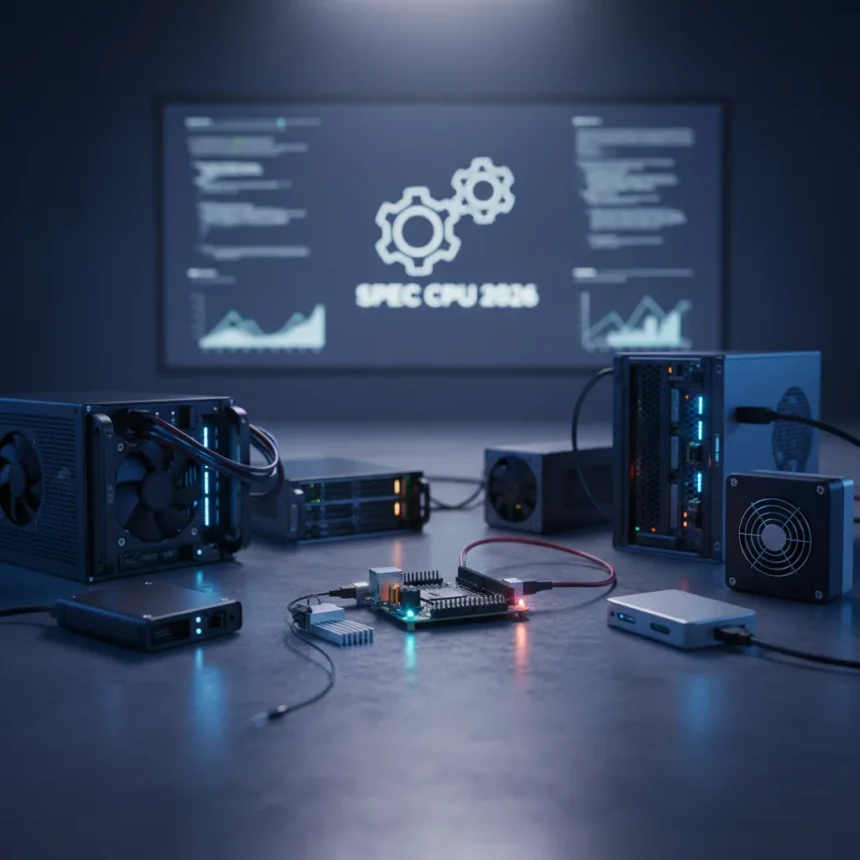
SPEC CPU 2026 benchmarking represents a significant shift in how the industry evaluates processor performance across vastly different hardware tiers. The Standard Performance Evaluation Corporation has released an updated benchmarking suite that emphasizes portability and breadth, capable of running on everything from enterprise server fleets to single-board computers like the Raspberry Pi 5. This flexibility signals a broader trend: performance evaluation tools must work across heterogeneous hardware ecosystems, not just high-end workstations.
Key Takeaways
- SPEC CPU 2026 includes more tests than previous versions for comprehensive CPU evaluation.
- The suite runs on a wide range of systems, from large servers down to the Raspberry Pi 5.
- Portability and scalability are core design principles of the updated benchmarking framework.
- SPEC CPU 2026 is expected to become the standard for evaluating server and workstation performance.
- The benchmark supports various hardware configurations and operating systems for maximum flexibility.
What SPEC CPU 2026 Benchmarking Changes
SPEC CPU 2026 fundamentally rethinks what a server-focused benchmark should be. Rather than targeting only high-end processors, the suite has been designed for flexibility and scalability. The expanded test suite includes more workloads than its predecessors, providing a more comprehensive picture of CPU capabilities. This means manufacturers and system integrators can evaluate performance across a much broader spectrum of real-world scenarios. The benchmark no longer assumes a one-size-fits-all approach to performance measurement.
The shift toward portability matters because modern computing spans everything from hyperscale data centers to edge devices and embedded systems. By supporting multiple hardware configurations and operating systems, SPEC CPU 2026 benchmarking allows organizations to compare performance using a single, standardized tool. This eliminates the fragmentation of using different benchmarks for different device classes. A single benchmark across diverse hardware also reduces confusion when evaluating processor generations or comparing competing architectures.
SPEC CPU 2026 Benchmarking on Small Devices
The inclusion of the Raspberry Pi 5 as a supported platform for SPEC CPU 2026 benchmarking demonstrates the suite’s reach. The Raspberry Pi 5 is a compact, affordable single-board computer, and its ability to run the benchmark showcases both the Pi’s performance capabilities and the benchmark’s flexibility. This is not a gimmick—it reflects a real need in the industry to evaluate performance on constrained devices that power IoT, edge computing, and embedded applications. When a benchmark can run on a Raspberry Pi, it proves the tools are genuinely portable rather than merely claiming to be.


Running SPEC CPU 2026 benchmarking on smaller systems also serves a practical purpose: developers and engineers working on ARM-based or low-power processors can now use the same evaluation framework as those testing data center CPUs. This standardization reduces the cognitive load of switching between different benchmark suites depending on the target hardware. It also means results are more directly comparable across the entire spectrum of processor types.
Why SPEC CPU 2026 Benchmarking Matters Now
The expectation that SPEC CPU 2026 benchmarking will become the standard for evaluating server and workstation performance reflects confidence in the updated suite’s relevance. As processors become more specialized—with different designs optimized for different workloads—a more comprehensive benchmarking approach is essential. The expanded test coverage addresses this by providing more accurate and comprehensive performance metrics for modern CPUs. A benchmark that only measures single-threaded speed or memory bandwidth misses critical aspects of real-world performance. SPEC CPU 2026 benchmarking aims to close those gaps.



The timing of this release also matters. As AI workloads, containerized applications, and edge computing continue to reshape infrastructure, benchmarks must evolve to reflect these realities. A suite that can run on diverse hardware and include more varied test scenarios is better positioned to remain relevant as computing architectures continue to diverge and specialize.
How SPEC CPU 2026 Benchmarking Compares to Earlier Approaches
Earlier SPEC CPU suites were more narrowly focused on specific processor classes or use cases. SPEC CPU 2026 benchmarking breaks that mold by emphasizing a broader, more flexible approach. The expanded test coverage and support for a wider range of systems represents a maturation of the benchmarking philosophy. Rather than assuming all servers are identical or that performance metrics from a data center CPU apply directly to edge devices, the updated suite acknowledges hardware diversity as the norm. This is a pragmatic response to how computing has actually evolved since the previous benchmark generation.
The shift also reflects lessons learned from users who found earlier benchmarks either too narrow for their needs or too resource-intensive for smaller systems. SPEC CPU 2026 benchmarking addresses both concerns by being more inclusive in scope while remaining portable enough to run on constrained hardware.
What Does SPEC CPU 2026 Benchmarking Measure?
SPEC CPU 2026 benchmarking includes more tests than its predecessors, though the exact workloads are designed to reflect real-world computing scenarios. The expanded test suite provides a more complete picture of how a processor handles diverse tasks. Rather than optimizing for a single metric, the benchmark evaluates multiple dimensions of CPU performance. This prevents manufacturers from gaming results by optimizing for a narrow benchmark at the expense of broader performance.


The flexibility of SPEC CPU 2026 benchmarking means it can be adapted for different use cases while maintaining consistency. Organizations can run the full suite or focus on specific test categories relevant to their workloads. This modularity makes the benchmark more useful across different industries and deployment scenarios.
Is SPEC CPU 2026 benchmarking available now?
SPEC CPU 2026 benchmarking is available and already producing results on a range of systems, including the Raspberry Pi 5. The suite is designed to support various hardware configurations and operating systems, making it accessible to researchers, manufacturers, and system integrators worldwide.
Can SPEC CPU 2026 benchmarking run on older processors?
Yes. SPEC CPU 2026 benchmarking is designed for flexibility and scalability across hardware configurations. The emphasis on portability means it can run on older systems as well as newer ones, though the specific workloads and test coverage are optimized for modern processors and use cases.
Why is the Raspberry Pi 5 important for SPEC CPU 2026 benchmarking?
The Raspberry Pi 5 demonstrates that SPEC CPU 2026 benchmarking is genuinely portable across device classes. It shows the benchmark can evaluate performance on small, affordable hardware used in embedded systems and edge computing, not just enterprise servers. This inclusivity makes the benchmark more relevant across the entire computing spectrum.
SPEC CPU 2026 benchmarking represents a meaningful evolution in how the industry measures processor performance. By expanding test coverage, emphasizing portability, and supporting diverse hardware from servers to single-board computers, the suite acknowledges that modern computing is fundamentally heterogeneous. For manufacturers, system designers, and performance enthusiasts, having a single, standardized benchmarking tool that works across this range is a practical win. The inclusion of devices like the Raspberry Pi 5 proves the benchmark is not just theoretically flexible—it actually works where it matters.
Edited by the All Things Geek team.
Source: Tom's Hardware