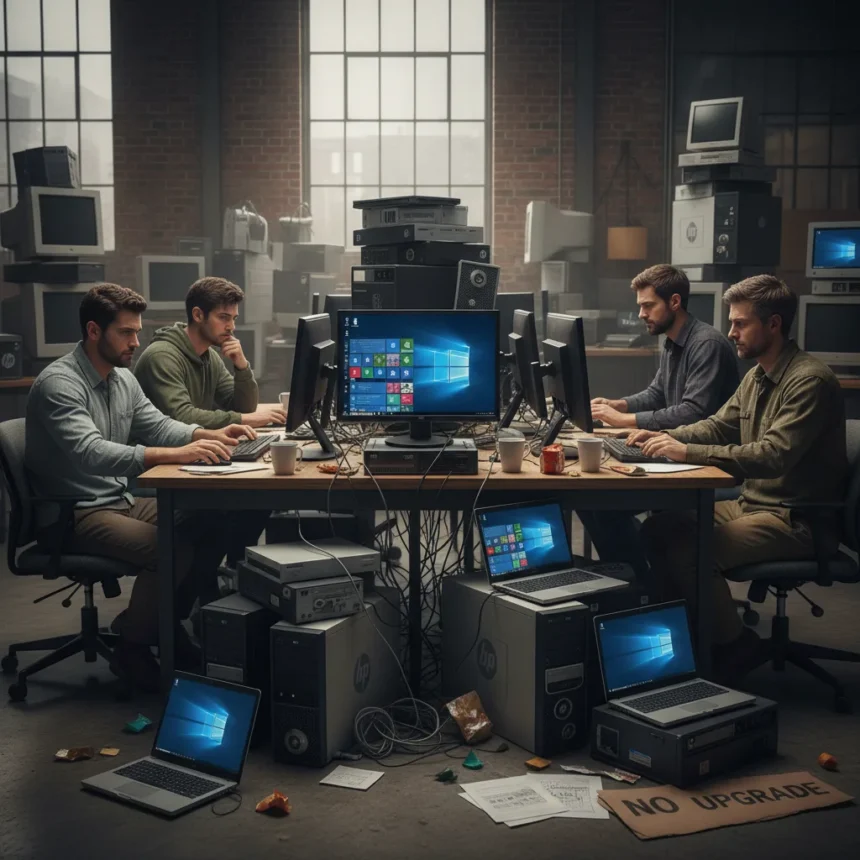
Windows 10 holdouts represent a stubborn reality for Microsoft: millions of users, particularly those running HP systems, are refusing to upgrade to Windows 11 despite the company’s relentless push to move the entire installed base forward. This resistance exposes a fundamental challenge in Microsoft’s strategy—forcing adoption of a new operating system when the previous generation still works perfectly fine.
Key Takeaways
- Millions of HP users remain on Windows 10 despite Microsoft’s Windows 11 upgrade campaign
- Windows 10 holdouts demonstrate significant resistance to mandatory OS upgrades
- Microsoft faces a strategic challenge converting legacy Windows 10 systems to newer platforms
- Hardware compatibility and user preference continue to drive Windows 10 retention
- The upgrade push reveals tensions between corporate OS roadmaps and actual user behavior
Why Windows 10 holdouts persist despite Microsoft’s pressure
The Windows 10 holdouts phenomenon reflects a basic truth: when an operating system works reliably, users have little incentive to abandon it. Windows 10 achieved something Microsoft struggled with for years—widespread user satisfaction. It boots quickly, runs legacy software without friction, and lacks the controversial design changes that plagued Windows 8. For HP users specifically, the calculus is even simpler: their hardware works, their software runs, and Windows 11 offers no killer features worth the hassle of migration.
Microsoft‘s Windows 11 upgrade push relies heavily on hardware requirements and aggressive marketing, yet these tactics have proven insufficient to overcome user inertia. The company has set an October 2025 end-of-support date for Windows 10, creating artificial urgency. But deadlines alone do not drive adoption when millions of users view the upgrade as optional rather than essential. HP’s customer base, in particular, has shown remarkable resistance—suggesting that even major hardware manufacturers cannot force their users toward upgrades they do not want.
The gap between Microsoft’s roadmap and user reality
Windows 10 holdouts expose a disconnect between what Microsoft plans and what users actually do. The company invested heavily in Windows 11’s new features—Copilot integration, redesigned UI, improved performance claims—but these selling points matter little to users whose existing setup already meets their needs. For HP customers running Windows 10, the perceived value proposition of Windows 11 remains unconvincing, particularly when migration introduces compatibility risks and learning curves.


This gap reveals a broader industry problem: operating system upgrades are increasingly optional rather than mandatory. Unlike critical security patches, which users understand as necessary, major version upgrades now feel like lifestyle choices. Users ask themselves whether the benefits justify the disruption, and many Windows 10 holdouts conclude they do not. Microsoft’s response—setting hard end-of-support dates and restricting updates—feels punitive rather than persuasive, which may actually harden user resistance rather than overcome it.
What Windows 10 holdouts mean for Microsoft’s future strategy
The persistence of Windows 10 holdouts, particularly among HP’s installed base, signals that Microsoft’s upgrade push faces structural challenges it cannot simply market or deadline away. If millions of users resist moving to Windows 11 even as support winds down, the company faces a fragmented ecosystem that complicates security updates, feature development, and long-term platform strategy. Supporting two major OS versions simultaneously drains engineering resources and creates testing nightmares for software developers.



For HP specifically, the presence of so many Windows 10 holdouts among its customer base represents both a problem and an opportunity. The company could differentiate itself by offering superior Windows 11 migration support, hardware trade-in programs, or exclusive features that make upgrading genuinely attractive rather than merely obligatory. Instead, the industry has largely relied on end-of-support pressure, which works for some users but fails spectacularly for others who simply accept the security risks or move to alternative platforms.
Is Windows 10 still secure after support ends?
Windows 10 holdouts who refuse to upgrade after October 2025 will no longer receive security patches, making their systems increasingly vulnerable to new exploits and malware. Microsoft will stop issuing updates, leaving the OS exposed to threats that emerge after the support deadline. However, many enterprise users have negotiated extended support agreements, so the risk timeline varies by customer type.
Why don’t Windows 10 users just upgrade to Windows 11?
Windows 10 holdouts cite several barriers: hardware incompatibility (Windows 11 requires specific processors and TPM 2.0 chips), unfamiliar UI changes, potential software incompatibility, and lack of compelling new features. For users whose hardware predates Windows 11’s requirements, upgrading means buying new equipment—a significant cost that many view as unjustified.
Will Microsoft extend Windows 10 support again?
Historically, Microsoft has extended support timelines under pressure, but the company has publicly committed to October 2025 as the final Windows 10 end-of-support date. Extended support typically costs enterprises significant fees, making it an unattractive option for consumer and small-business Windows 10 holdouts.



The Windows 10 holdouts story is ultimately about power—who controls the upgrade cycle, and whether users or corporations get to decide when change happens. Microsoft’s aggressive timeline suggests the company believes it must force the issue, yet millions of HP users are calling that bluff by simply refusing to move. That resistance, sustained across such a large installed base, indicates that operating system upgrades have fundamentally changed. They are no longer inevitable. They must be earned.
Edited by the All Things Geek team.
Source: Windows Central