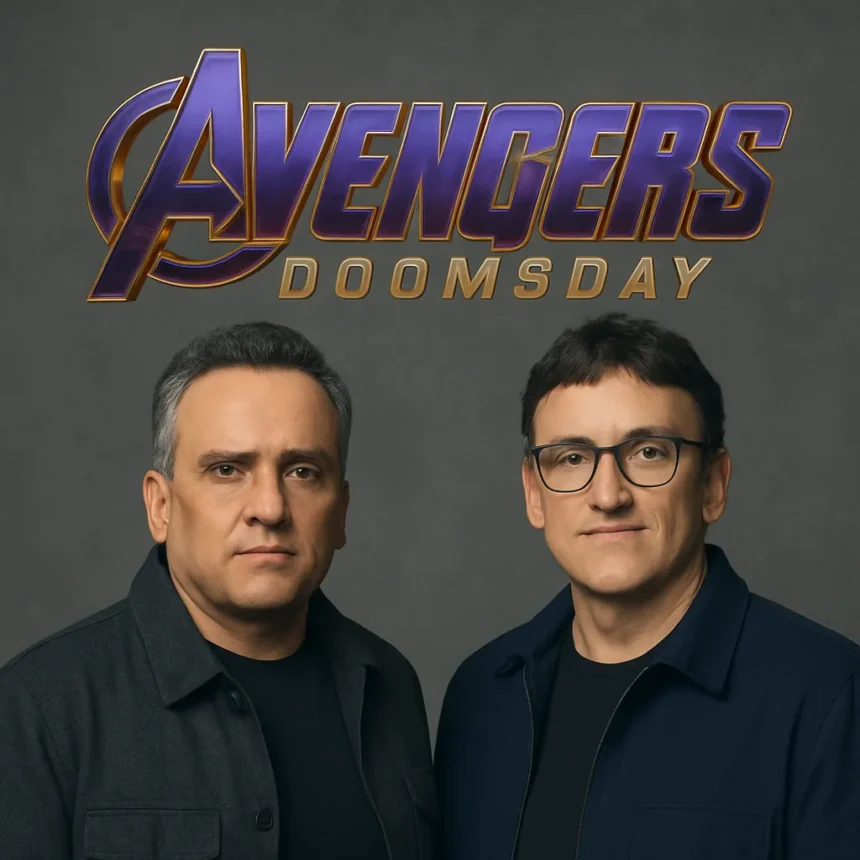
Avengers: Doomsday phase zero represents the Marvel Cinematic Universe’s most ambitious reset since its inception, according to the Russo Brothers. The filmmakers, who directed Avengers: Infinity War and Avengers: Endgame, claim the December 18, 2026 release will fundamentally reshape how the MCU operates by reuniting fragmented hero teams across multiple franchises. This is not a soft reboot—it is a deliberate creative recalibration designed to recapture the early MCU’s sense of discovery and consequence.
Key Takeaways
- Avengers: Doomsday phase zero will unite the Avengers, Fantastic Four, and X-Men franchises in one film
- Robert Downey Jr. leads the cast as Doctor Doom, marking his return to the MCU
- The film releases December 18, 2026, as the thirty-ninth MCU installment
- Directors Anthony and Joe Russo are returning to helm the project
- The X-Men’s official return to the MCU is confirmed with the teaser line The X-Men Will Return
What Does Phase Zero Actually Mean for the MCU?
Phase zero is not an official Marvel production designation—it is the Russo Brothers’ conceptual framework for how Avengers: Doomsday will operate creatively. The term references the MCU’s earliest films, when interconnected storytelling felt fresh, stakes felt real, and hero team-ups genuinely surprised audiences. By taking the MCU back to phase zero, the filmmakers signal a rejection of the recent franchise fatigue that has plagued post-Endgame projects. The film will accomplish this reset by collapsing the boundaries between previously isolated Marvel properties.
The scope of this convergence is staggering. Avengers: Doomsday phase zero will bring together heroes from Earth-616 (the traditional Avengers universe), Earth-828 (a parallel dimension), and a separate X-Men universe, all converging against a single existential threat. This is not a multiverse story in the chaotic, audience-alienating sense of recent MCU outings. Instead, it is a controlled narrative collapse designed to make each franchise feel essential to the larger whole. The Russo Brothers have built their MCU reputation on making ensemble casts feel cohesive despite their scale—Infinity War managed this with 60+ characters. Avengers: Doomsday phase zero will test that skill against an even larger roster.
Robert Downey Jr.’s Doctor Doom Anchors the Narrative
Robert Downey Jr.’s casting as Doctor Doom is the narrative linchpin that makes Avengers: Doomsday phase zero work thematically. Doom is not a villain who wants to destroy the world—he wants to save it through totalitarian control. This ideological framework allows the film to pit multiple hero teams against a single antagonist without fragmenting the story into competing subplots. Downey Jr. brings the same charisma and philosophical depth he brought to Tony Stark, but inverted. His Doom will force the Avengers, Fantastic Four, and X-Men to confront uncomfortable truths about their own limitations and contradictions.


The casting also serves a meta-narrative function. Downey Jr. is the MCU’s original anchor, the actor whose performance launched the entire franchise. His return as Doom—not as Stark—signals that the MCU is willing to evolve beyond its founding mythology. This is what phase zero actually means: a return to first principles, but not to first characters. The film respects the past while refusing to be imprisoned by it.
How Avengers: Doomsday Phase Zero Differs from Recent MCU Ensembles
The MCU’s recent ensemble films have struggled with bloated casts and unclear stakes. The Marvels felt scattered. Quantumania felt small despite its cosmic scope. Avengers: Doomsday phase zero is designed to correct these failures by treating the convergence of franchises as the story itself, not as a backdrop for individual character arcs. Each hero team brings its own narrative momentum into the collision. The Avengers arrive with decades of MCU continuity. The Fantastic Four bring a family dynamic and scientific grounding. The X-Men bring ideological conflict and social allegory. Rather than smoothing these differences into a generic superhero soup, the Russo Brothers’ approach will amplify them.


The film’s placement as the thirty-ninth MCU installment and its connection to multiple prior films—including Deadpool & Wolverine, Captain America: Brave New World, and The Fantastic Four: First Steps—means audiences will arrive with heavy baggage. Avengers: Doomsday phase zero cannot afford to waste time on exposition. Instead, it must immediately justify why these heroes need each other. The Russo Brothers have proven they can do this. The question is whether audiences are exhausted enough by the MCU to appreciate a reset, or too exhausted to care.
The X-Men Return: What It Means for the MCU’s Future
Marvel’s official teaser line—The X-Men Will Return—carries enormous weight. The X-Men have been absent from the MCU proper since Disney acquired Fox in 2019. Their integration into Avengers: Doomsday phase zero is not a cameo or a post-credits scene. It is a full narrative integration that positions them as co-leads alongside the Avengers and Fantastic Four. This suggests the MCU’s Phase Six will be defined by franchise consolidation rather than expansion. Fewer new properties, but deeper interconnection among existing ones.
The return also suggests a creative philosophy shift. Rather than introducing the X-Men in their own standalone film and gradually building to team-ups, the MCU is deploying them immediately in the franchise’s highest-stakes narrative. This is either bold or reckless depending on execution. It signals confidence in the Russo Brothers’ ability to balance legacy characters with new ones, and confidence that audiences are ready for the X-Men to matter immediately, not eventually.
When Will Avengers: Doomsday Phase Zero Release?
Avengers: Doomsday phase zero arrives December 18, 2026. That date is nearly two years away, which provides ample time for both the MCU and audiences to recalibrate expectations. The gap allows Marvel to course-correct if upcoming Phase Six films fail to build sufficient momentum toward the convergence. It also means the Russo Brothers have time to craft a script that honors the complexity of bringing five major franchises together without collapsing under its own weight. Patience, in this case, is a strategic advantage.


Is Avengers: Doomsday the MCU’s Last Chance?
The MCU’s recent performance has been mixed at best. Audiences have grown weary of multiverse stories, fatigue-inducing release schedules, and diluted storytelling spread across films and Disney+ series. Avengers: Doomsday phase zero is being positioned as the course correction—the moment when Marvel remembers why people cared in the first place. The Russo Brothers are betting that consolidation and consequence will trump expansion and spectacle. If they are right, the MCU enters a new era of focused, high-stakes storytelling. If they are wrong, the franchise faces a credibility crisis from which it may not recover.
FAQ
What does phase zero mean in the context of Avengers: Doomsday?
Phase zero refers to the MCU’s early era when interconnected storytelling felt fresh and surprising. The Russo Brothers use the term to describe Avengers: Doomsday’s creative approach: a return to first principles that emphasizes stakes, consequence, and surprise over spectacle and expansion.
Will Avengers: Doomsday phase zero be the final Avengers film?
The research brief does not specify whether this will be the final Avengers film in the MCU. The film is positioned as a major reset point, but Marvel has not announced plans for future Avengers projects beyond December 2026.
How many MCU films will lead into Avengers: Doomsday phase zero?
Avengers: Doomsday is the thirty-ninth MCU film and connects to multiple prior projects including Deadpool & Wolverine, Captain America: Brave New World, The Fantastic Four: First Steps, and Thunderbolts. The exact number of direct setup films depends on how closely each prior release feeds into the narrative.
Avengers: Doomsday phase zero is either the MCU’s salvation or its final gamble. The Russo Brothers are betting that audiences want consequence over convenience, and that bringing together the Avengers, Fantastic Four, and X-Men in a single high-stakes narrative will remind viewers why they fell in love with superhero cinema in the first place. December 18, 2026 will reveal whether that bet was visionary or delusional.
Where to Buy
Amazon Prime Video – Free Trial
Edited by the All Things Geek team.
Source: Tom's Guide