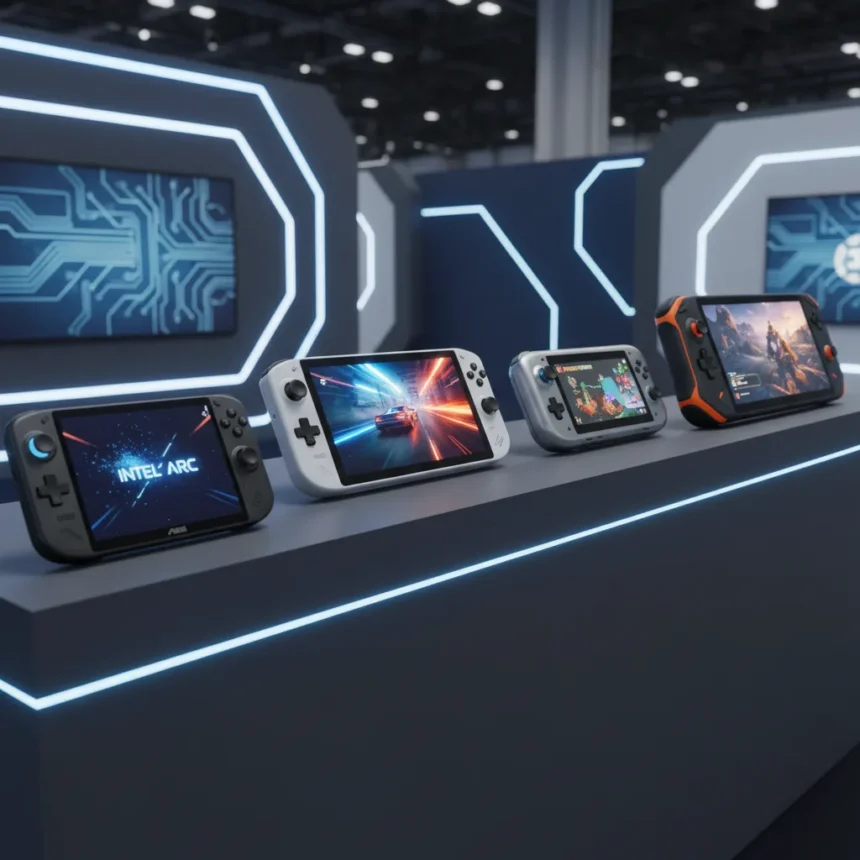
Gaming handhelds Computex 2025 showcased a new generation of portable gaming PCs that prioritize display quality, efficiency, and raw performance over affordability. The author tested every major handheld at the Taiwan tech conference and identified four standout devices that signal where the handheld market is heading: higher prices, better screens, and chips that finally deliver on the promise of console-level gaming in your pocket.
Key Takeaways
- Asus ROG Ally X20 upgrades to a 7.4-inch OLED display with 1,400-nit peak brightness, keeping the AMD Ryzen AI Z2 Extreme processor
- Intel’s new Arc G3 Extreme chip powers both the Acer Predator Atlas 8 and MSI Claw 8 EX AI+, matching AMD’s performance at half the power draw
- The Acer Predator Atlas 8 ships in October with an 8-inch 120Hz VRR screen and likely premium pricing
- MSI Claw 8 EX AI+ delivers 12 hours of playtime in endurance mode, Hall Effect joysticks, and an 80Wh battery
- Handheld gaming is entering a premium phase where flagship devices cost significantly more than the Steam Deck OLED
Asus ROG Ally X20: The OLED Bet
The Asus ROG Ally X20 is Asus’s 20th-anniversary celebration handheld, and it makes a clear bet: gamers will pay more for a better screen. The device ditches the LCD panel of its predecessor and swaps it for a 7.4-inch OLED display with 1,400-nit peak brightness, a meaningful jump from the previous 7.0-inch screen. In hands-on use, the OLED upgrade is immediately noticeable—colors pop, blacks are genuinely black, and the brightness handles outdoor play far better than older LCD handhelds.
Here’s the catch: Asus kept the AMD Ryzen AI Z2 Extreme processor, declining to upgrade the chip itself. This decision splits the handheld enthusiast community. The Z2 Extreme remains capable for current games, but pairing last-generation silicon with a premium display feels like a half-measure when competitors are shipping new processors. The ROG Ally X20 is a display-first device, not a performance-first one.
Intel’s Arc G3 Extreme Changes the Efficiency Game
Intel’s new Arc G3 Extreme handheld chip is the real story of Computex for gaming handhelds. The chip powers two of the four standout devices—the Acer Predator Atlas 8 and MSI Claw 8 EX AI+—and Intel claims it matches AMD’s previously class-leading Z2 Extreme at half the power draw. In endurance mode, a power-saving toggle that caps frame rates to 30fps or 60fps depending on the game, Intel told the author the Arc G3 Extreme enabled nearly 12 hours of playtime in Team Fortress 2. That’s a significant shift for handheld longevity.

The Arc G3 Extreme represents Intel’s first serious push into handheld gaming silicon. Previous Intel handheld chips felt like compromises—powerful on paper but thermally aggressive and power-hungry. This one actually delivers efficiency without gutting performance, a technical achievement that reshapes what handheld makers can promise.
Acer Predator Atlas 8: Premium Performance, Premium Price
The Acer Predator Atlas 8 is the newcomer with the most ambitious specs. It pairs Intel’s Arc G3 Extreme with an 8-inch 120Hz VRR screen, making it one of the largest and smoothest handheld displays on the market. The device is expected to ship in October. On paper, the Predator Atlas 8 sounds like the handheld to beat—bigger screen, newer chip, high refresh rate.
The article implies the Predator Atlas 8 will carry a steep price tag, though exact pricing was not confirmed at Computex. This is where handheld gaming enters uncomfortable territory. Flagship devices are approaching the cost of entry-level laptops. Gamers accustomed to the Steam Deck’s value proposition will balk at premium pricing for a device with a narrower game library and less ecosystem support.
MSI Claw 8 EX AI+: The Balanced Contender
The MSI Claw 8 EX AI+ feels like the most complete handheld of the four. It runs Intel’s Arc G3 Extreme, sports an 8-inch 120Hz VRR screen matching the Predator Atlas 8, and includes an 80Wh battery. In hands-on testing, the device ran quieter and more power-efficient than expected, with Hall Effect joysticks that resist the drift problems plaguing cheaper handhelds.
What sets the MSI Claw 8 EX AI+ apart is ergonomic maturity. The form factor feels refined, the button layout is intuitive, and the overall device strikes a balance between performance, battery life, and usability that the other three handhelds either sacrifice or compromise on. It is the device that feels most like the standard all new handheld gaming PCs will be judged by.
The Price Problem Nobody’s Solving
All four gaming handhelds Computex highlighted share a troubling trend: they are expensive. The ROG Ally X20 costs more than its predecessor. The Predator Atlas 8 is positioned as a premium device. The MSI Claw 8 EX AI+ is not cheap. Meanwhile, the Steam Deck OLED remains the value reference point, offering strong performance at a fraction of what these new devices command.

The handheld market is bifurcating. Budget-conscious gamers have the Steam Deck. Performance-obsessed players now have four premium options that promise better screens, faster chips, and longer battery life—but at prices that require serious commitment. Whether gamers will pay those premiums remains the unanswered question.
Should you buy one of these gaming handhelds Computex highlighted?
If you want the best display and already own an Ally, the ROG Ally X20 makes sense. If you prioritize efficiency and balanced performance, the MSI Claw 8 EX AI+ is the most complete package. If you demand the latest chip and largest screen, the Acer Predator Atlas 8 delivers—assuming you accept the price. For everyone else, the Steam Deck OLED remains the smarter buy.
Which gaming handheld has the best battery life?
The MSI Claw 8 EX AI+ delivers nearly 12 hours of playtime in endurance mode, according to Intel’s testing in Team Fortress 2. The 80Wh battery combined with the Arc G3 Extreme’s efficiency makes it the endurance leader among the four.
Does the Asus ROG Ally X20 get a processor upgrade?
No. The ROG Ally X20 keeps the AMD Ryzen AI Z2 Extreme processor from the previous model and focuses its upgrade entirely on the display, moving to a 7.4-inch OLED panel with 1,400-nit brightness.
The gaming handhelds Computex 2025 revealed are undeniably more capable than their predecessors. Better displays, smarter power management, and new chips that actually deliver efficiency—these are real advances. But they come at a cost that puts premium handhelds out of reach for casual players. The market has matured, but it has also stratified. Choose based on what matters to you: display quality, raw performance, battery life, or value. No single device wins on all fronts.
Edited by the All Things Geek team.
Source: T3