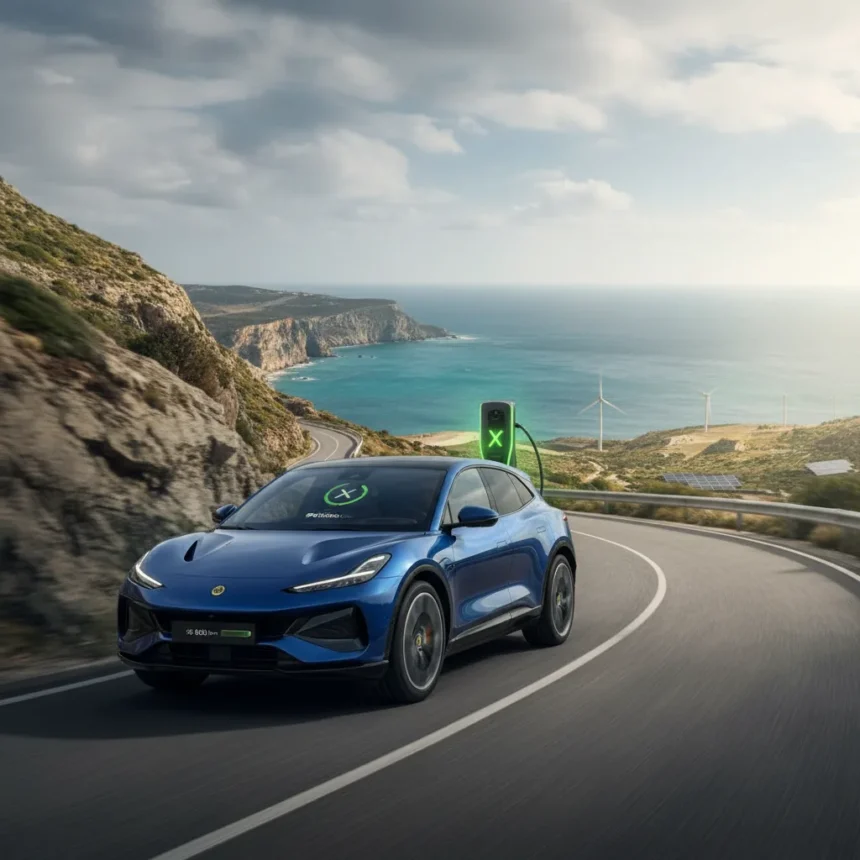
The Lotus Eletre X tackles EV range anxiety head-on with a solution that could redefine how premium electric vehicles approach the charging infrastructure challenge. As the model expands into European markets, it represents a significant shift in how luxury automakers are addressing one of the biggest consumer objections to EV ownership.
Key Takeaways
- Lotus Eletre X offers a novel approach to solving EV range anxiety for premium buyers
- The model is now coming to Europe, expanding beyond its initial markets
- The vehicle may have found the sweet spot between pure electric and hybrid powertrains
- Range anxiety remains a critical barrier to EV adoption worldwide
- Premium electric vehicles increasingly need solutions beyond larger batteries
What Makes the Lotus Eletre X Different
The Lotus Eletre X stands apart from conventional electric vehicles by addressing the practical reality that many drivers face: anxiety about running out of charge before reaching a charging station. Rather than simply increasing battery capacity, the Eletre X introduces a clever solution that fundamentally changes how owners think about electric driving. This approach bridges the gap between the limitations of today’s charging networks and the aspirations of drivers who want zero-emission motoring without constant range calculations.
The vehicle’s strategy appears to blend the benefits of electric propulsion with a mechanism that eliminates the need for constant charging anxiety. This positions it differently from traditional battery-electric vehicles, which rely entirely on planning routes around charging infrastructure, and from conventional plug-in hybrids, which compromise efficiency by carrying both powertrains simultaneously.
Why Range Anxiety Still Matters in 2025
Range anxiety persists as the primary psychological barrier preventing mainstream EV adoption, even as charging networks expand globally. Drivers worry not just about reaching a charger, but about the time required to recharge, the availability of chargers at their destination, and the degradation of battery performance in cold weather. The Lotus Eletre X addresses this anxiety directly, offering owners confidence in longer journeys without the guilt of burning fossil fuels.

For European markets specifically, where driving distances can span multiple countries and charging infrastructure varies significantly by region, a solution that reduces range anxiety has genuine practical value. The Eletre X’s European expansion signals that Lotus believes this approach resonates with premium buyers who want both environmental responsibility and driving freedom.
Lotus Eletre X vs. Traditional EV Competitors
The Lotus Eletre X differs fundamentally from conventional battery-electric vehicles in its approach to the range problem. While competitors like Tesla and traditional luxury EV makers focus on larger batteries and faster charging speeds, the Eletre X takes a different path that acknowledges the real-world limitations of charging infrastructure. This pragmatic solution may appeal more to buyers skeptical of pure electric powertrains than to early adopters already comfortable with charging logistics.



The vehicle also distinguishes itself from conventional plug-in hybrids by avoiding the weight and complexity penalties those models carry. Rather than housing two complete powertrains, the Eletre X achieves its range solution through a more elegant engineering approach, potentially delivering better efficiency and driving dynamics than traditional PHEV designs.
European Market Implications
The arrival of the Lotus Eletre X in Europe marks a strategic decision by Lotus to compete in a market increasingly divided between pure EV purists and pragmatic drivers seeking flexibility. European regulations increasingly favor zero-emission vehicles, yet many drivers remain hesitant about charging infrastructure reliability. The Eletre X offers a middle path that satisfies both environmental regulations and real-world driving confidence.
Europe’s diverse charging landscape—from Germany’s robust Ionity network to Eastern Europe’s developing infrastructure—makes a solution to range anxiety particularly valuable. Buyers across the continent face different charging realities, and a vehicle that reduces anxiety regardless of regional infrastructure maturity has broad appeal.
Does the Lotus Eletre X solve range anxiety permanently?
The Eletre X significantly reduces range anxiety by eliminating the need to obsess over charging locations and battery depletion, but it does not solve the underlying infrastructure challenge. What it does accomplish is remove the psychological barrier that prevents many drivers from considering electric vehicles, allowing them to focus on the driving experience rather than energy logistics.



How does the Lotus Eletre X compare to traditional plug-in hybrids?
The Eletre X achieves range confidence without the weight penalties, complexity, and efficiency compromises of conventional plug-in hybrids. Traditional PHEVs carry dual powertrains and larger fuel tanks, which increases curb weight and reduces overall efficiency. The Eletre X’s approach appears to deliver similar practical benefits through more elegant engineering.
When will the Lotus Eletre X be available in Europe?
The Lotus Eletre X is now coming to European markets, though specific availability dates and regional launch schedules have not been detailed in available information. Interested buyers should contact local Lotus dealers for market-specific timing and specification details.
The Lotus Eletre X represents a pragmatic answer to one of the EV industry’s most persistent challenges. By focusing on solving range anxiety rather than ignoring it, Lotus has positioned itself to capture buyers who want electric driving without the psychological burden of charging logistics. As the vehicle rolls out across Europe, it will test whether this clever approach resonates with premium buyers tired of range anxiety ruining their EV experience.
Where to Buy
Edited by the All Things Geek team.
Source: T3