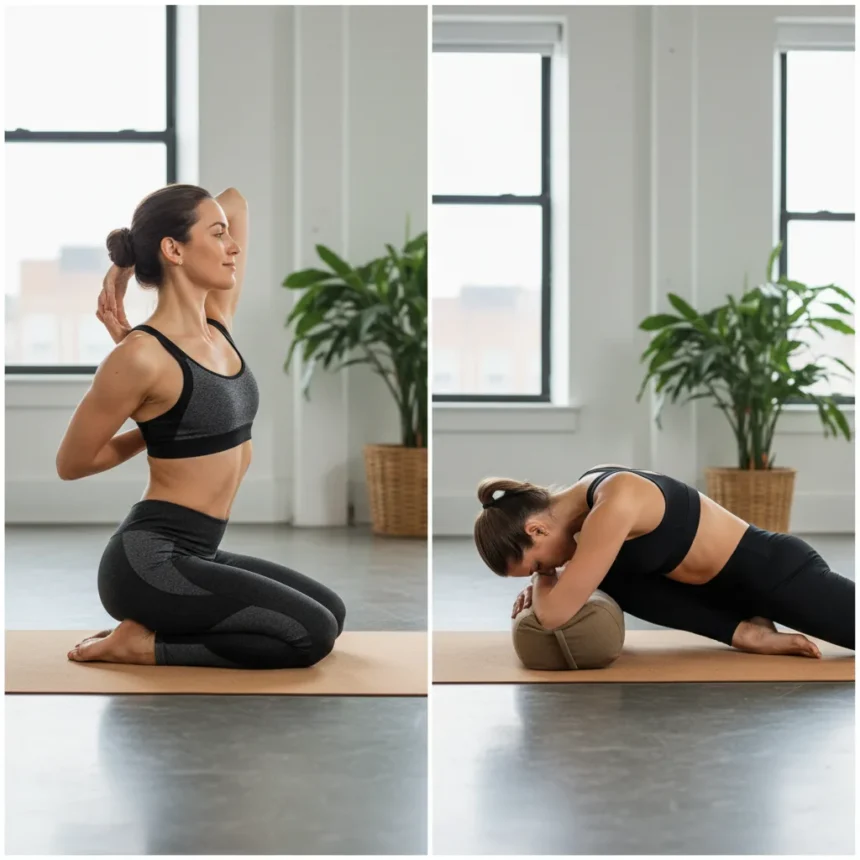
Cow-face pose hip mobility has emerged as a compelling alternative for people who struggle with pigeon pose when targeting tight hips and glutes. While pigeon pose dominates mainstream fitness routines, not every body responds well to its deep external rotation demand. Some practitioners find the intensity uncomfortable or the positioning awkward. Cow-face pose addresses these limitations by offering a different mechanical angle—one that still delivers glute and hip release without the same degree of strain.
Key Takeaways
- Cow-face pose provides an alternative hip-release method for those uncomfortable with pigeon pose
- The stretch targets tight hips and glutes through a different movement pattern
- Tom’s Guide has tested multiple hip-mobility alternatives, including figure-4, 90/90, and couch stretches
- Hip stiffness relief depends on finding the right stretch for your individual body mechanics
- Comparing different poses helps identify which works best for your mobility needs
Why Pigeon Pose Doesn’t Work for Everyone
Pigeon pose is the default recommendation in most yoga and fitness circles for opening tight hips. The pose demands significant external rotation of the hip joint, which feels therapeutic for some but punishing for others. People with limited hip mobility, previous injuries, or structural variations in hip anatomy often find pigeon pose either inaccessible or aggravating rather than relieving. The intensity can create tension instead of release, making practitioners dread the stretch instead of benefiting from it.
Tom’s Guide has documented this pattern across multiple hip-mobility investigations. The publication’s fitness team and contributing trainers have tested tortoise pose, figure-4 stretch, couch stretch, 90/90 stretch, and various pigeon-pose variations. The consistent finding: one stretch does not fit all bodies. What provides deep relief for one person may feel inaccessible or uncomfortable for another.
How Cow-Face Pose Hip Mobility Differs from Pigeon
Cow-face pose hip mobility works by stacking the legs in a different configuration than pigeon pose, creating a stretch that targets the same muscle groups—glutes, hip external rotators, and tensor fasciae latae—but through altered biomechanics. Rather than one leg folded in front with deep external rotation, cow-face pose involves a vertical stacking that many people find more manageable and less intense on the joint itself.


The distinction matters because hip tightness is not universal. Some people carry tension in the deep external rotators that pigeon aggressively targets; others hold restriction in the hip flexors or tensor fasciae latae that respond better to different angles. Cow-face pose hip mobility addresses this variation by offering a gentler entry point into hip release. For practitioners returning from injury, dealing with hypermobility concerns, or simply preferring less aggressive stretching, this alternative can deliver consistent relief without the joint stress that pigeon sometimes creates.
Building a Hip-Mobility Routine Beyond Single Stretches
The broader fitness trend documented by Tom’s Guide suggests that effective hip mobility requires multiple approaches rather than relying on one signature stretch. The publication’s research highlights figure-4 stretch, 90/90 stretch, couch stretch, and tortoise pose as complementary tools. Each addresses hip tightness from a different angle, and combining several stretches in a routine tends to produce better results than repeating one pose daily.



Cow-face pose hip mobility fits naturally into this multi-stretch framework. Using it alongside figure-4, 90/90, or couch stretches creates a comprehensive approach that addresses different hip restrictions and prevents the adaptation that occurs when muscles become too familiar with a single movement pattern. Variety also keeps practice interesting—a crucial factor for consistency, since the best stretch is the one you actually do regularly.
Is Cow-Face Pose Right for Your Hip Tightness?
Determining whether cow-face pose hip mobility suits your needs depends on your individual response to pigeon pose and your specific areas of restriction. If pigeon pose feels intense, pinchy, or inaccessible, cow-face pose is worth experimenting with. If pigeon works well for you, there is no reason to abandon it—the goal is finding what produces genuine relief, not following a trend.
Start by testing cow-face pose in isolation before adding it to a full routine. Hold it for 30 seconds to one minute on each side, breathing steadily and avoiding any sharp pain. Mild discomfort is normal in a stretch; sharp joint pain is a signal to stop. If cow-face pose feels more accessible than pigeon and produces the same sense of release, you have found a valuable addition to your mobility work.
How does cow-face pose compare to figure-4 stretch for hip tightness?
Cow-face pose and figure-4 stretch both target hip external rotators and glutes but through different mechanics. Figure-4 involves lying on your back and pulling one knee across your body, while cow-face uses a seated vertical leg stack. Some people find figure-4 more accessible; others prefer the control and feedback of cow-face. Both are effective, and using them together in a routine provides more comprehensive hip release than either alone.


Can cow-face pose replace pigeon pose entirely?
Cow-face pose hip mobility can replace pigeon pose if pigeon feels uncomfortable or inaccessible for your body. However, if pigeon pose works well for you and produces genuine relief, there is no need to switch. The goal is consistent, sustainable hip mobility work—whichever stretch achieves that is the right choice.
Is cow-face pose safe for beginners?
Cow-face pose is generally accessible for beginners, but like all stretches, it requires mindful practice. If you are new to stretching, returning from a hip or lower-back injury, or pregnant or postpartum, consult a qualified fitness professional or physical therapist before beginning any new stretch routine. They can assess your individual mobility needs and ensure proper form.
The fitness landscape is shifting away from one-size-fits-all stretching protocols toward personalized mobility work that respects individual anatomy and injury history. Cow-face pose hip mobility represents this shift—a practical alternative for people whose bodies do not respond well to traditional pigeon pose. Rather than forcing yourself through an uncomfortable stretch, testing cow-face pose offers a way to achieve the same hip and glute release through a movement pattern that actually feels good. That difference between discomfort and genuine relief is what separates a sustainable practice from one you eventually abandon.
Edited by the All Things Geek team.
Source: Tom's Guide