
Crimson Desert sales milestone has become one of gaming’s most striking turnaround stories. The open-world action-adventure game developed and published by South Korean company Pearl Abyss hit 5 million copies sold worldwide within 26 days of launch, making it the fastest-selling Korean-made packaged game on record. Pearl Abyss announced the achievement on April 15, 2026, less than a month after the game launched on March 19 across PlayStation 5, Xbox Series, PC via Steam, and Epic Games Store.
Key Takeaways
- Crimson Desert sold 2 million copies on launch day, setting a Korean game record
- Reached 5 million sales in 26 days despite initial criticism over controls and quality-of-life issues
- Steam rating improved from “Mixed” to “Very Positive” with nearly 50,000 reviews
- Maintains 100,000+ daily active players on Steam with 24-hour peaks near 128,000
- Pearl Abyss stock recovered 27.8% from its low point to ₩58,800
How Crimson Desert sales milestone overcame rough launch criticism
Crimson Desert sales milestone success masks a rocky start. At launch, players complained about clunky controls, unintuitive menu design, and missing quality-of-life features that felt outdated compared to competing open-world games. The game’s initial Steam reviews reflected this frustration, earning a “Mixed” rating. But Pearl Abyss responded with aggressive post-launch support, rolling out patches that addressed core complaints faster than most publishers manage. Within weeks, the sentiment shifted dramatically. The game’s Steam rating climbed to “Very Positive” with nearly 50,000 reviews, a trajectory few games achieve after a lukewarm debut.
This recovery matters because it proves that strong fundamentals—rich content, technical ambition, and a fully realized world—can overcome launch-day friction if developers commit to fixing problems. Crimson Desert’s sustained player counts prove players stuck around. Daily Steam peaks hold steady at around 100,000 concurrent players, with a recorded 24-hour peak of 127,915. For a single-player-focused open-world game, those numbers indicate a game that retained its audience rather than hemorrhaging players after the first week.
Crimson Desert sales milestone and Pearl Abyss’ market recovery
The sales explosion has immediate business consequences. Pearl Abyss stock recovered to ₩58,800 (approximately $38.89), a 27.8% gain from its lowest point. For a company that built its reputation on live-service games like Black Desert, Crimson Desert represents a successful pivot into premium single-player territory. The game’s strong performance in North America and Europe, with significant overseas revenue, signals that Pearl Abyss can compete beyond its domestic Korean market.


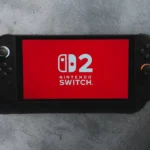
Pearl Abyss CEO Heo Jin-young confirmed the company is already exploring a Nintendo Switch 2 port, though he acknowledged the lower hardware specifications would require compromises. This forward-looking stance reflects confidence in Crimson Desert’s staying power. Publishers don’t plan ports for games they expect to fade—they plan them for franchises they believe will sustain momentum.
What Crimson Desert sales milestone means for Korean game developers
Crimson Desert’s record as the fastest-selling Korean-made packaged game carries symbolic weight. South Korea has produced world-class game developers, but most have found their greatest success through live-service models (Nexon, Netmarble) or mobile games (Kakao). Crimson Desert proves Korean studios can compete in the premium open-world space, historically dominated by Western and Japanese publishers. The game sold 2 million copies on day one alone, 3 million by day four, and 4 million by day twelve. Each milestone came faster than expected, validating Pearl Abyss’ investment in the title.


Pearl Abyss stated that the game “gained attention for its rich content and technical quality, leading to strong performance in both domestic and international markets”. That assessment understates the achievement—Crimson Desert didn’t just perform; it defied the conventional wisdom that launch-day stumbles are fatal. The game proved that engaged communities will forgive technical rough edges if the core experience is compelling and developers demonstrate commitment to improvement.
Can Crimson Desert sales momentum sustain?
The critical question now is whether Crimson Desert can maintain its audience beyond the launch window. Open-world games face a natural retention cliff once players finish the campaign. Pearl Abyss has not announced post-launch content roadmaps, seasonal updates, or multiplayer features that might extend engagement. The company’s history with live-service games suggests it understands long-term player retention, but Crimson Desert was marketed as a story-driven single-player experience, not a games-as-a-service title.
The 100,000 daily Steam players represent a healthy engaged core, but they also hint at a plateau. Games often see sharp drops after the first month as players finish main campaigns. Whether Crimson Desert can hold 50,000+ concurrent players by summer will determine if this milestone becomes a sustained franchise or a one-month phenomenon.
Is Crimson Desert worth buying after the launch rush?
If you skipped Crimson Desert at launch due to mixed reviews, the current state justifies reconsidering. The game’s technical quality, world design, and narrative depth attracted millions of players, and post-launch patches have addressed the most glaring control and interface issues. You will find a community still actively engaged rather than a ghost town. The improved Steam rating and sustained player counts suggest the game delivers on its promise as a premium open-world experience.


Will Crimson Desert come to Nintendo Switch 2?
Pearl Abyss is researching a Switch 2 port and confirmed internal research and development is underway, but CEO Heo Jin-young cautioned that the Switch’s lower specifications compared to other consoles would require compromises. No official release date or confirmation has been announced, so a Switch 2 version remains speculative for now.
Crimson Desert sales milestone represents more than a commercial success—it is a validation of Pearl Abyss’ willingness to take risks on premium single-player games and a reminder that players forgive imperfect launches if developers deliver meaningful improvements. The game’s trajectory from mixed reviews to sustained engagement proves that word-of-mouth, rapid patches, and genuine quality can overcome early skepticism. For Korean game developers watching from the sidelines, Crimson Desert shows the path forward.
Edited by the All Things Geek team.
Source: Windows Central