The Evercade Nexus is a handheld retro gaming console made by Blaze Entertainment, featuring a 5.89-inch IPS display, dual analogue sticks, and compatibility with over 700 games across 80+ cartridges. It arrives at a moment when Nintendo Switch 2 rumors dominate headlines—yet this device might be the more compelling choice for players who actually care about retro gaming rather than latest performance.
Key Takeaways
- Evercade Nexus features dual analogue sticks and a 5.89-inch 840×512 display, the largest screen in Evercade history
- Compatible with entire Evercade library of 700+ games across 80+ cartridges, including N64 titles like Banjo-Kazooie
- Standard model costs $199.99 (£169.99); limited Nexus 64 Edition runs $229.99 (£189.99)
- 5000mAh battery provides approximately 5 hours of playtime
- Dual stereo speakers, WiFi 6, and customizable RGB logo differentiate it from prior Evercade models
Why Evercade Nexus Matters for Retro Gaming
For years, Evercade occupied a strange niche: a dedicated retro platform that felt half-baked compared to the versatility of a Switch. The original Evercade handheld lacked dual analogue sticks, making N64 and 32-bit games feel cramped and awkward. The EXP-R improved things with a 4.3-inch screen, but still fell short for 3D titles that demand proper stick control. The Nexus finally closes that gap. Its 5.89-inch display and dual sticks transform how these games feel in your hands—suddenly, Super Mario 64 and GoldenEye aren’t compromises, they’re legitimate ways to replay your childhood.
Creative Bloq called it “the retro handheld upgrade I’ve been waiting for,” and the sentiment rings true. This is not a device that asks you to tolerate limitations. It’s built specifically for the games it plays, without the performance tax of a general-purpose console trying to do everything.
Hardware That Prioritizes the Right Things
The Evercade Nexus measures 215mm wide by 111mm tall by 34mm deep, weighing 410 grams—large enough to feel substantial without being unwieldy. The standard all-black model features neon red accents; the limited Nexus 64 Edition (capped at 2,000 units) swaps the casing for N64-inspired gray with matching D-Pad and button styling. Both versions include textured grips that prevent the device from feeling slippery during extended play sessions.

The 5.89-inch IPS panel outputs over 500 nits of brightness, making outdoor gaming viable—a practical advantage over Switch 2 rumors that don’t promise equivalent brightness. Dual stereo speakers sit front-facing, and the device supports both wired headphones (via 3.5mm jack) and wireless audio. A quad-core 1.5GHz CPU and 4GB EMMC RAM handle the emulation load without stuttering, though this is not a device for modern AAA titles. That’s the point: it knows its lane and owns it completely.
Battery life clocks in at approximately 5 hours per charge, powered by a 5000mAh cell and USB-C charging. That’s respectable for a dedicated emulation device, though it trails some modern gaming handhelds. WiFi 6 (dual-band 5GHz/2.4GHz) handles cartridge updates without requiring a computer. A customizable RGB light-up logo adds a small flourish that appeals to collectors without compromising the device’s retro aesthetic.
The Game Library That Makes This Work
Evercade Nexus ships with access to the entire Evercade cartridge library—over 700 games. That includes a standout launch title: Banjo-Kazooie and Banjo-Tooie on a single “Double Pack” cartridge, customized specifically for the Nexus with twin-stick support, improved camera angles, enhanced graphics, and unlockable content. This is not a port of the original ROM; it’s a thoughtful modernization that respects what made these games special while acknowledging how they feel on modern hardware.
The EverSync feature enables local multiplayer across two consoles using a single cartridge—no internet required. This is a practical feature for couch gaming that most modern handhelds overlook. The Tat mode from earlier Evercade models returns, though details on its function remain sparse.
What Evercade Nexus Doesn’t Do (And Why That’s Okay)
The Nexus lacks a dual cartridge slot and cannot dock to a TV, which some collectors expected given the device’s premium positioning. These omissions disappoint, but they don’t undermine the core value proposition. If you want a handheld-only retro gaming device with stellar controls and a beautiful screen, those gaps barely matter. If you wanted a Switch-like ecosystem with docking and TV play, you were always going to buy a Switch anyway.
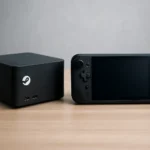
The comparison to Nintendo Switch 2 is instructive. Switch 2 will likely offer raw processing power, hybrid TV docking, and access to modern games. Evercade Nexus offers something different: a device that treats retro gaming as a primary concern, not an afterthought. It’s the difference between a generalist console that plays old games adequately and a specialist device that plays old games beautifully. For collectors and enthusiasts, that distinction matters enormously.

Should You Buy the Evercade Nexus?
At $199.99 for the standard model and $229.99 for the limited N64 Edition, the Nexus sits at a reasonable price point for a dedicated retro handheld with this screen quality and control layout. It’s not a budget device, but it’s not premium-tier pricing either. If you own a large Evercade cartridge collection, the upgrade from an EXP-R is straightforward—the larger screen and dual sticks justify the investment. If you’re new to Evercade, the Nexus is the version to buy; earlier models feel dated in comparison.
The real audience here is not casual players grabbing a Switch for Mario and Zelda. It’s people who spent hundreds of hours in GoldenEye, Donkey Kong Country, and Kirby 64, and who want to revisit those games without emulation hassles or legal gray areas. For that audience, Creative Bloq’s assessment holds: “this might be the one that finally tips the platform from niche retro curiosity into something much bigger”.
What makes Evercade Nexus different from the original Evercade?
The Nexus is the largest Evercade handheld to date with a 5.89-inch display versus the original’s smaller screen, adds dual analogue sticks (previously absent), and features a brighter 840×512 IPS panel optimized for 32/64-bit era games. Earlier models lacked the control scheme necessary for 3D titles like Banjo-Kazooie.
How many games does Evercade Nexus support?
The Evercade Nexus is compatible with the entire Evercade library of over 700 games across 80+ physical cartridges. This includes classic titles from NES, SNES, Genesis, and N64 eras, with more releases planned regularly.
Can you play Evercade Nexus games on a TV?
The Evercade Nexus does not feature TV docking capability—it is a handheld-only device. This distinguishes it from the Nintendo Switch ecosystem but keeps the design focused and the price lower than a hybrid console.
The Evercade Nexus is not a Switch 2 killer, nor is it trying to be. It’s a device that understands exactly what retro gaming enthusiasts want and delivers it without compromise. Dual sticks, a gorgeous screen, a massive library, and a price tag that doesn’t require a second mortgage. In a world obsessed with raw power and hybrid functionality, that clarity of purpose feels almost radical.
Where to Buy
Edited by the All Things Geek team.
Source: T3