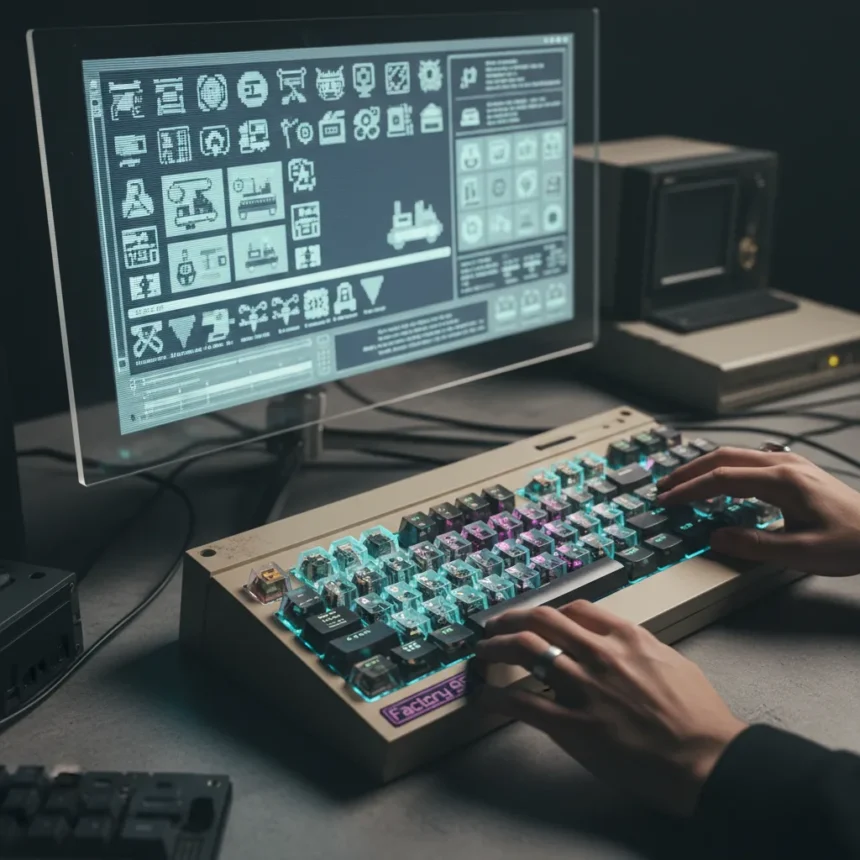
Factory 95 retro automation game is a base-building automation title by Macrobit Interactive that weaponizes Windows 95 nostalgia as its core design philosophy. The game launched recently with a singular mission: prove that retro aesthetics paired with modern game design can convert players who’ve never touched the automation genre into devoted fans.
Key Takeaways
- Factory 95 is Macrobit Interactive’s debut game, blending Windows 95 UI with fast-paced automation gameplay.
- The game’s retro graphics and desktop-style interface evoke genuine nostalgia without sacrificing modern game mechanics.
- Its accessible aesthetic and engaging pace position it as a potential entry point for newcomers to the automation genre.
- Windows 95-style terminals, command displays, and realistic UI design create an immersive retro computing experience.
- The game’s appeal extends beyond nostalgia to genuinely compelling gameplay that holds player attention.
Why Factory 95 Works When Nostalgia Alone Shouldn’t
Nostalgia is cheap. Slap a CRT filter on a mediocre game, throw in some chiptune music, and call it retro—audiences have seen that trick a thousand times. Factory 95 doesn’t rely on that formula. Instead, it marries authentic Windows 95 visual language—complete with realistic desktop interfaces, multiple terminal windows, and command displays—to a game engine that actually demands engagement. The result is something that feels genuinely from another era while playing like a modern title with substance. The fast-paced gameplay doesn’t just exist alongside the retro aesthetic; it justifies it, making the UI feel functional rather than decorative.
Macrobit Interactive’s decision to use Windows 95 as more than window dressing separates Factory 95 from the crowded retro gaming space. The game doesn’t just look like the 1990s—it thinks like them. Every menu, every system notification, every interface element echoes actual Windows 95 design language. For players old enough to remember that era, this authenticity hits hard. For younger players discovering it for the first time, it reads as genuinely novel, a glimpse into computing history through an interactive lens. That dual appeal is rare and valuable.
Breaking Into the Automation Genre Through Familiarity
Base-building automation games occupy a niche. Titles in this space demand patience, spatial reasoning, and a tolerance for systems that punish inefficiency. They’re not inherently welcoming to newcomers. Factory 95 sidesteps this gatekeeping problem by making its interface feel like home—at least to anyone who grew up with Windows. The familiar desktop environment lowers the psychological barrier to entry. You’re not learning alien UI logic; you’re navigating something you already understand, just with factories instead of folders.

This familiarity extends gameplay engagement. When a player who’s never touched an automation game sits down with Factory 95, they’re not wrestling with unfamiliar menus or abstract design paradigms. They’re building factories using the same visual language they used to organize their files in 1998. That comfort creates space for the actual game design to shine. The fast-paced mechanics can demand attention without demanding a steep learning curve. It’s a smart design choice that other indie developers should study—accessibility doesn’t require dumbing down; it requires meeting players where they are.
The Nostalgia Hook That Actually Delivers Gameplay
Factory 95 retro automation game succeeds because it refuses to choose between nostalgia and substance. The Windows 95 aesthetic isn’t window dressing—it’s integral to the experience. Every visual element reinforces the computing environment theme while supporting the automation mechanics underneath. Terminal windows display factory status. Command prompts execute production orders. The desktop becomes your factory floor. This thematic coherence means the retro design serves the gameplay rather than competing with it.

For players skeptical of the automation genre, Factory 95 presents a compelling argument. The game’s engaging pace and visual clarity make it easier to grasp core mechanics than games that bury their interfaces under futuristic chrome or abstract minimalism. The Windows 95 UI, paradoxically, makes complex systems feel more transparent. You’re not guessing what a button does—you’re reading a label you recognize. That clarity, combined with fast-paced action, creates a game that hooks players through familiarity and keeps them through genuine engagement.
How Factory 95 Compares to the Broader Automation Space
The automation genre includes games that prioritize massive scale, intricate production chains, and deep systems mastery. Factory 95 doesn’t compete on those axes. Instead, it competes on accessibility and pacing. Where some automation games ask players to plan factories that span hundreds of hours, Factory 95 delivers tighter, faster gameplay loops. The retro aesthetic reinforces this distinction—it’s not trying to be a 2025 game with 2025 production chains. It’s building something leaner, more focused, and deliberately nostalgic in tone as well as appearance.
This positioning matters. Not every player wants a 200-hour factory sim. Some want to experience the genre without committing to a mastery curve that spans months. Factory 95’s retro Windows 95 design language signals that this is a game with a different scope and pacing. It’s inviting rather than intimidating. That’s a gap in the market, and Macrobit Interactive’s debut fills it with style and substance. The game proves that you don’t need latest graphics or massive scope to make automation compelling—you need clarity, pace, and design that respects player time.
Why Retro Aesthetics Matter Right Now
Retro gaming has moved beyond nostalgia into genuine design philosophy. Developers are rediscovering lessons from earlier eras—clarity over complexity, personality over photorealism, focused scope over bloat. Factory 95 embodies this shift. The Windows 95 aesthetic isn’t a gimmick; it’s a design choice that solves real problems in game interface and player communication. Modern UI design often prioritizes minimalism to the point of obscurity. Windows 95 design, by contrast, prioritizes clarity and immediate recognition. Every button looks like a button. Every window has a clear purpose. That directness serves automation games beautifully.

The timing of Factory 95’s launch matters too. As players grow increasingly fatigued with corporate minimalism and algorithmic design, retro aesthetics offer something genuinely different. A game that looks like Windows 95 feels like a breath of fresh air, not because it’s old, but because it’s honest. There’s no pretense, no hidden complexity behind flat surfaces. You know what you’re looking at. For a genre like automation that thrives on systems clarity, that honesty is invaluable.
Is Factory 95 worth playing if I’ve never tried automation games?
Yes. Factory 95 retro automation game is designed specifically for players skeptical of the genre. The Windows 95 aesthetic makes the interface intuitive, and the fast-paced gameplay prevents the slow-burn tedium that deters newcomers. If you’ve been curious about automation games but intimidated by their complexity, this is a natural entry point.
What makes Factory 95’s retro design different from other retro games?
Factory 95 uses Windows 95 visual language functionally, not decoratively. The desktop interface, terminals, and command displays aren’t just cosmetic—they’re core to how you interact with the game. The retro aesthetic directly supports the automation mechanics, making the UI feel authentic and purposeful rather than nostalgic window dressing.
How does Factory 95 retro automation game compare to other automation titles?
Factory 95 prioritizes accessibility and pacing over massive scope. While other automation games demand hundreds of hours and deep systems mastery, Factory 95 delivers tighter, faster gameplay loops wrapped in a familiar Windows 95 interface. It’s the automation game for players who want the genre experience without the overwhelming commitment.
Factory 95 proves that nostalgia works best when it serves the game, not the other way around. Macrobit Interactive’s debut doesn’t just hit every retro button—it uses those buttons to build something genuinely engaging. If you’ve dismissed automation games as too dense or too slow, Factory 95 retro automation game might be the exception that changes your mind. And if you’re already a fan of the genre, the Windows 95 aesthetic offers a refreshingly focused alternative to the sprawling factory sims that dominate the space. That’s the real victory here: a game that welcomes newcomers without alienating veterans, all wrapped in the warm glow of 1990s computing.
Edited by the All Things Geek team.
Source: Windows Central