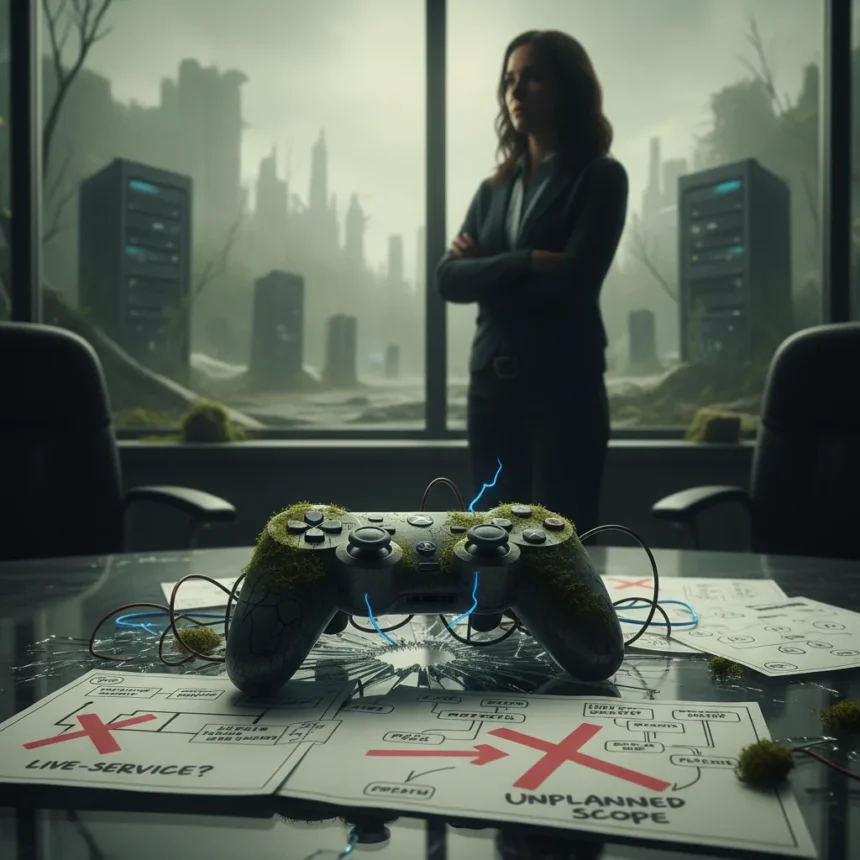
The Last of Us Online cancellation represents a rare moment of industry honesty about live-service ambition outpacing execution. Laura Fryer, a former Microsoft Game Studios executive producer, recently validated Naughty Dog’s December 2023 decision to kill the project while it was approximately 80% complete after seven years of development. But her real insight cuts deeper: the studio should never have greenlit it in the first place.
Key Takeaways
- The Last of Us Online was 80% complete but canceled to preserve Naughty Dog’s single-player focus.
- Fryer praised the cancellation as strategically correct but criticized initial greenlight decision.
- Project suffered from ambitious vision without realistic upfront planning and resource forecasting.
- Naughty Dog chose between funding The Last of Us Online or Neil Druckmann’s Intergalactic: The Heretic Prophet.
- COVID-era online gaming boom created false demand signals that drove over-investment across the industry.
Why The Last of Us Online cancellation was the right call
Fryer’s assessment mirrors what Naughty Dog stated publicly: the studio risked becoming a “solely live service games studio” if it committed The Last of Us Online to market. That constraint would have locked resources into perpetual post-launch content creation, draining capacity for the narrative-driven single-player projects that define the studio’s identity. The cancellation protected Naughty Dog’s core strength—story-driven experiences—and allowed the studio to pursue Neil Druckmann’s Intergalactic: The Heretic Prophet instead. This was not a reckless kill; it was a strategic reset.
Game director Vinit Agarwal confirmed the project had reached substantial completion, stating “we developed it to almost 80% completion, it was very, very close to being done”. Yet proximity to launch does not equal viability. A live-service game 80% feature-complete still requires years of post-release balance patches, seasonal content, server maintenance, and community management. Canceling at this stage cost Naughty Dog sunk development expense, but continuing would have cost the studio its future.
The greenlighting failure: ambition without planning
Fryer’s critique targets the real failure point: “The ambition was there, but the realistic upfront planning wasn’t”. This distinction matters. Ambition alone does not sink projects—poor forecasting does. The Last of Us Online was greenlit during the COVID-19 pandemic when online gaming demand surged and publishers assumed the trend would persist indefinitely. Development began in 2020, when virtual social spaces felt essential and players spent heavily on cosmetics and battle passes. By the time COVID receded and office returns resumed, playtime and spending patterns shifted dramatically across the industry.


Naughty Dog was not alone in this miscalculation. The entire industry over-invested in live-service titles during the pandemic boom, only to face mass layoffs and project cancellations as post-COVID economics reset. What Fryer identifies is that studios like Naughty Dog made these bets without scenario planning—they did not model what happens if player spending normalizes or if the studio’s core audience prefers single-player experiences. The Last of Us Online cancellation was the right call because the upfront decision to greenlight it was made under false assumptions about market permanence.
How The Last of Us Online reflects broader industry dysfunction
The cancellation exposes a structural problem in game publishing: greenlight decisions often prioritize trend-chasing over studio capability assessment. Agarwal noted that Naughty Dog “had to pick the game that was kind of the bread and butter of the studio rather than this experimental game”. This framing—experimental versus core—should have been the greenlight conversation seven years earlier. If leadership understood that a live-service multiplayer title would compete for resources with Naughty Dog’s narrative expertise, that tension should have been resolved before 80% development completion, not after.
The industry-wide pattern is clear: companies spent 2020-2022 chasing live-service revenue, then spent 2023-2024 cutting those projects when player economics failed to materialize. The Last of Us Online was caught in that cycle. Fryer’s point is that realistic upfront planning would have either prevented the greenlight or structured the project differently from the start—perhaps as a smaller, self-contained team, or with clearer resource caps and exit criteria.
What Naughty Dog’s choice means for future live-service bets
Naughty Dog’s decision to prioritize Intergalactic: The Heretic Prophet over The Last of Us Online signals a retreat from the live-service arms race. This is not unique—studios across the industry are cutting multiplayer and live-service projects to refocus on single-player or smaller, more sustainable online experiences. The message to other publishers is blunt: if your studio’s identity and expertise are in narrative-driven games, live-service is a distraction, not an expansion.
Fryer’s criticism of the greenlight process suggests that future live-service projects need harder constraints from day one. What would realistic upfront planning look like? Revenue projections tied to conservative player-spending models, resource allocation that does not cannibalize core studio work, and explicit exit criteria if engagement or monetization falls below targets within a defined window. The Last of Us Online had none of these safeguards.
Did Naughty Dog handle the cancellation announcement fairly?
Agarwal revealed that he learned of the cancellation 24 hours before the public announcement, describing the experience as “soul-crushing” and “unfortunate” because studio leadership had to control messaging before informing the team. This raises a separate question about internal communication, though Fryer’s comments focus on the strategic decision itself, not the execution.


Could The Last of Us Online have succeeded if released?
The 80% completion milestone suggests the game was technically viable for launch. However, technical completion does not equal market fit. A live-service title requires a sustainable player base willing to spend money on cosmetics, battle passes, or season passes over years. The Last of Us Online was designed during a period when that spending seemed assured; by 2023, industry data showed players were consolidating their live-service spending into fewer titles. Releasing an 80% complete live-service game into a saturated market would likely have meant years of resource drain with declining returns.
What happens to the canceled game now?
The Last of Us Online is shelved indefinitely. Naughty Dog has not announced plans to revive, repurpose, or release the work in any form. The seven years of development and the 80% completion milestone represent a total loss from a commercial standpoint, though the technical and design lessons learned may inform future projects.
Fryer’s analysis ultimately vindicates Naughty Dog’s cancellation while indicting the greenlight process that created it. The studio made the hard choice to protect its identity and resources. The lesson for the industry is sharper: ambition without realistic planning is not vision—it is waste. The Last of Us Online cancellation was the right call, but it should never have needed to be made.
Edited by the All Things Geek team.
Source: TechRadar