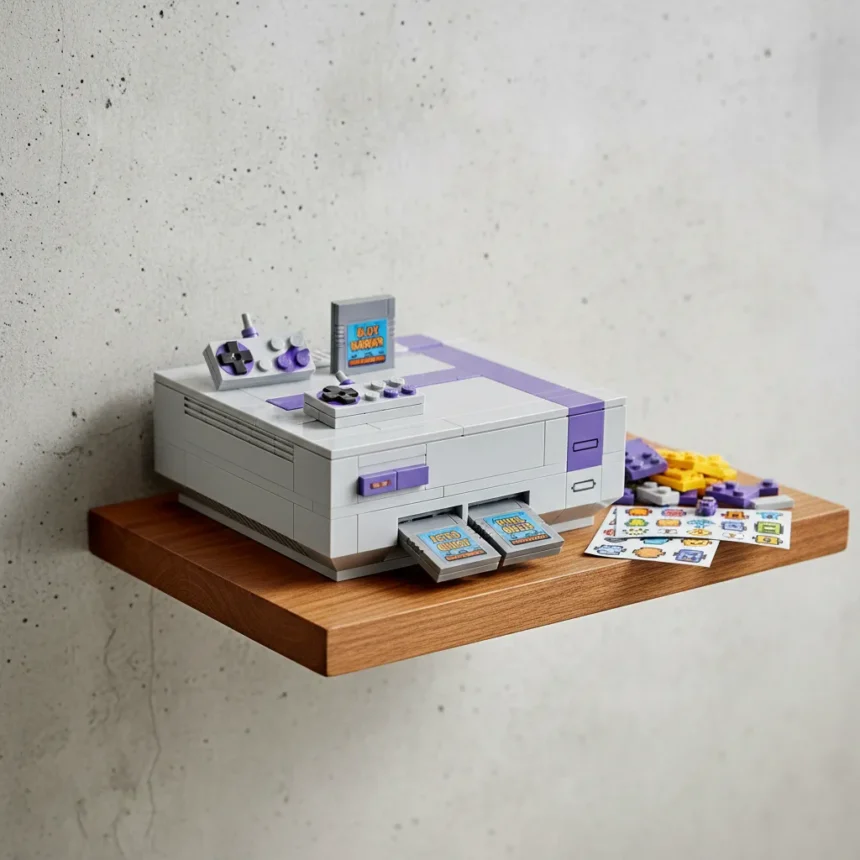
LEGO’s retro gaming console kit is the latest addition to the company’s nostalgic lineup, designed for builders who want to recreate the magic of classic console-era gaming. The 479-piece set combines the tactile satisfaction of LEGO building with interactive details that celebrate gaming’s golden age.
Key Takeaways
- 479-piece LEGO set inspired by iconic gaming hardware from the ’90s era
- Includes removable game cards, controllers, and decorative stickers
- Targets collectors and nostalgic gamers seeking interactive display pieces
- Part of LEGO’s expanding retro collection strategy
- Designed to help builders re-live classic gaming memories through hands-on building
What Makes LEGO’s Retro Gaming Console Kit Stand Out
The LEGO retro gaming console kit distinguishes itself through its attention to authentic detail and interactive elements. Unlike standard LEGO display sets that sit passively on shelves, this kit includes removable game cards and functional-looking controllers that invite continued engagement long after the initial build. The sticker details add another layer of customization, allowing builders to personalize their finished console.
LEGO’s approach here mirrors the broader collector mentality surrounding retro gaming hardware. Vintage console enthusiasts don’t just want static replicas—they want pieces that evoke the tactile experience of holding a controller, sliding in a cartridge, or swapping between games. This kit delivers on that sensory nostalgia by combining LEGO’s building experience with gaming artifacts that feel authentic to the era.
How This Fits Into LEGO’s Retro Collection Strategy
The retro gaming console kit represents LEGO’s calculated expansion into nostalgia-driven products. By positioning this set within its broader retro collection, LEGO targets adult builders and collectors who grew up during gaming’s most iconic hardware generation. This demographic has proven willing to invest in premium collectibles that bridge childhood memories with modern building experiences.


The inclusion of removable game cards and controllers suggests LEGO is learning from its audience—these interactive elements transform a static model into a functional display piece that can be rearranged and reimagined. It’s a subtle but meaningful distinction from purely decorative LEGO sets. Builders can arrange the game cards in different sequences, swap controller positions, or adjust the overall aesthetic based on personal preference.
LEGO Retro Gaming Console vs. Other Nostalgia Collectibles
LEGO’s retro gaming console kit competes in a crowded space of nostalgia-focused collectibles, but its building-first approach sets it apart from static replica consoles or licensed miniatures. Traditional gaming memorabilia offers historical authenticity but demands passive appreciation. LEGO’s version prioritizes the building experience itself—the satisfaction of assembly, the hands-on customization through stickers, and the interactive elements that encourage ongoing engagement.

Other LEGO retro products in the collection likely share this philosophy, positioning LEGO as a curator of experiential nostalgia rather than a vendor of museum pieces. The 479-piece count suggests a build that requires genuine time investment without becoming overwhelming, hitting a sweet spot for both casual builders and serious collectors seeking meaningful projects.
Who Should Buy LEGO’s Retro Gaming Console Kit
This kit appeals directly to three overlapping audiences. First, adult gamers who lived through the ’90s console era and view retro hardware as cultural artifacts worth celebrating. Second, LEGO enthusiasts who appreciate themed sets that combine building satisfaction with thematic authenticity. Third, collectors seeking display pieces that spark conversation and evoke specific memories of gaming’s formative years.
The removable game cards and controllers also make this kit attractive to parents introducing children to retro gaming culture, though the target demographic clearly skews toward adults with disposable income and established nostalgia preferences. For anyone displaying retro gaming memorabilia or LEGO collections, this set offers a natural focal point that bridges both interests.
Is LEGO’s retro gaming console kit worth the investment?
The value proposition depends on whether you prioritize the building experience, the display appeal, or both. If you’re seeking a quick display piece, dedicated gaming replicas might offer faster gratification. If you value the satisfaction of assembly and interactive details like removable game cards and controllers, LEGO’s approach justifies the investment for collectors who appreciate hands-on engagement with their memorabilia.

What’s included in the LEGO retro gaming console kit?
The 479-piece set includes the console structure itself, two controllers, removable game cards, and decorative stickers. These elements allow builders to customize their finished piece and rearrange components based on preference, extending playability beyond the initial build phase.
How long does it take to build LEGO’s retro gaming console kit?
While exact build time isn’t specified, a 479-piece set typically requires 2-4 hours depending on builder experience and attention to detail. The complexity level appears designed for adult builders seeking a satisfying multi-hour project rather than a quick assembly.
LEGO’s retro gaming console kit succeeds because it understands that nostalgia isn’t passive—it demands engagement. By combining the building experience with interactive elements and authentic details, LEGO transforms a simple collectible into a conversation piece that celebrates gaming history while delivering genuine building satisfaction.
Where to Buy
LEGOSuper Mario Game Boy 72046$57.99shop now | Lego Icons Pac-Man Arcade 10323$267.99shop now | Lego Icons Atari 2600 Game Console 10306$339.99shop now | Lego Creator3 in 1 Retro Gaming Console 31380$19.97shop now | Lego Icons Retro Radio 10334$99.99shop now
Edited by the All Things Geek team.
Source: TechRadar