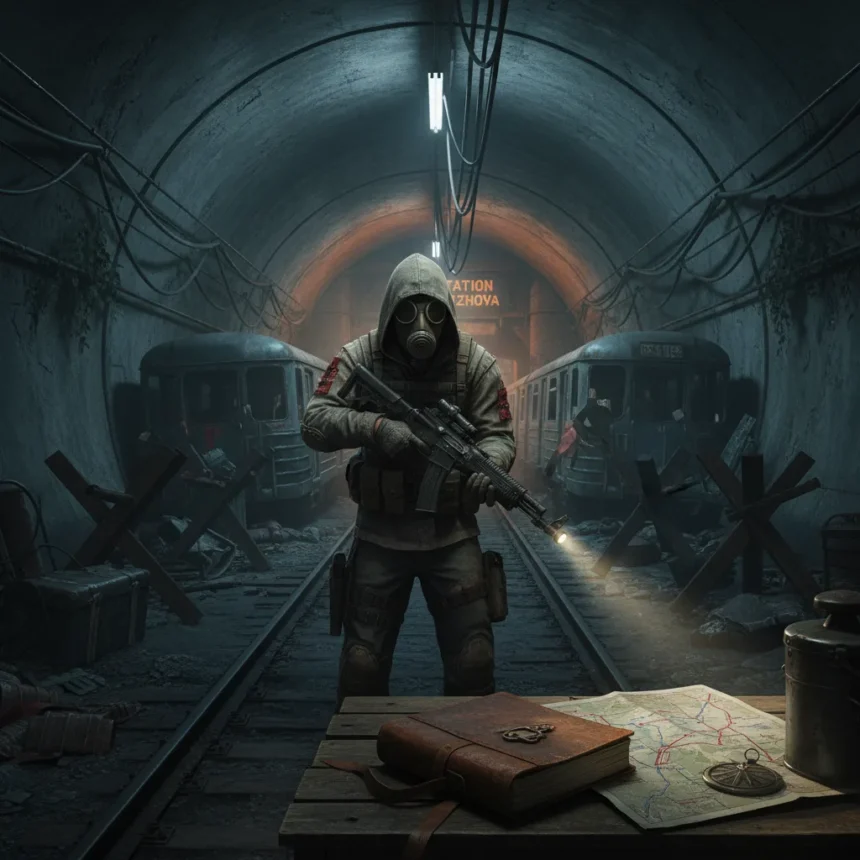
Metro 2039 level design represents a deliberate rejection of modern gaming’s obsession with open-world sprawl. Developed by 4A Games, a Ukrainian studio collaborating with author Dmitry Glukhovsky, the game commits to tightly curated, story-first environments that prioritize narrative tension over player freedom.
Key Takeaways
- Metro 2039 combines sandbox-style areas with underground claustrophobic sections, avoiding open-world excess and always-online modes
- 4A Games reshaped the narrative following Russia’s full-scale invasion of Ukraine, forcing the studio to confront real-world tyranny and freedom themes
- The game shifts from previous Metro titles’ focus on preventing war to dealing with war’s consequences, choices, and securing a future
- Glukhovsky describes Metro 2039 as darker than any previous entry, emphasizing the cost of silence and horrors of tyranny
- Metro 2039 level design maintains the series’ signature claustrophobic FPS identity rather than chasing Battle Royale or always-online trends
Why Metro 2039 Level Design Rejects Open-World Trends
Metro 2039 level design deliberately avoids the sprawling, player-directed sandbox approach that has dominated AAA gaming. Instead, 4A Games is doubling down on the series’ core strength: tightly controlled environments where narrative and atmosphere drive every design decision. The game features sandbox-style areas alongside underground, claustrophobic terror sections, creating a hybrid that respects player agency without sacrificing the suffocating tension that defines the Metro franchise.
This approach stands in stark contrast to the industry’s broader trend toward always-online modes, Battle Royale mechanics, and open-world overhauls. Metro 2039 level design refuses these trends entirely. Instead, it leans into what 4A Games does best: crafting single-player FPS campaigns where every corridor, every shadow, every choice carries narrative weight. The studio’s decision reflects a growing skepticism toward the assumption that bigger always means better.
How War Reshaped Metro 2039 Level Design Philosophy
Russia’s full-scale invasion of Ukraine forced 4A Games to fundamentally reconsider what Metro 2039 level design should communicate. The narrative was revised to reflect the studio’s new reality, transforming the game from a hypothetical warning into a reflection on war’s actual consequences. Co-creative director Pavel Ulmer stated: war is now the developers’ reality, making Metro 2039 a uniquely Ukrainian experience shaped by lived trauma rather than speculation.


This shift in perspective directly influences how Metro 2039 level design functions narratively. Previous Metro titles focused on preventing war; Metro 2039 deals with war’s aftermath. The game now emphasizes choices, actions, consequences, and the cost of securing a future. Each level must now carry the weight of this thematic reorientation. Glukhovsky himself, forced into exile due to his outspoken criticism of the invasion, contributed to the narrative despite his Russian origin, embedding the conflict’s moral complexity directly into the game’s design.
Metro 2039 Level Design vs. Modern FPS Trends
The gaming industry has spent the last decade chasing open-world scale, multiplayer connectivity, and live-service models. Metro 2039 level design rejects this logic. Instead of diluting focus across sprawling maps or always-online infrastructure, 4A Games commits to the linear, claustrophobic FPS formula that built the Metro franchise. This is not conservatism—it is conviction.


The comparison is instructive. While competitors chase battle royale mechanics and seasonal content treadmills, Metro 2039 level design prioritizes what a story-driven single-player campaign does uniquely: sustained narrative tension, environmental storytelling, and the kind of intimate pacing that open worlds inherently undermine. The game’s sandbox-style areas provide player choice without sacrificing the controlled, purposeful design that makes each environment feel deliberate rather than procedural.
What Makes Metro 2039 Level Design Darker
Dmitry Glukhovsky has promised that Metro 2039 will be darker than anything the series has delivered before. This darkness is not merely aesthetic—it is architectural. Metro 2039 level design must embody the game’s thematic focus on strife, war fallout, the horrors of tyranny, and the price of freedom. Every corridor, every choice point, every environmental detail serves this narrative purpose.
The darkness also reflects the studio’s refusal to soften the game’s message through comfort mechanics or open-world distraction. By maintaining tight, curated level design, 4A Games ensures that players cannot escape the game’s moral weight through side quests or optional content. The narrative pressure remains constant. This is a deliberate design choice that separates Metro 2039 from competitors who use open-world scale to diffuse narrative intensity.
Is Metro 2039 abandoning the Metro formula?
No. Metro 2039 level design doubles down on the series’ core identity: story-driven single-player FPS campaigns set in claustrophobic, underground environments. The addition of sandbox-style areas represents evolution, not abandonment. The game remains fundamentally committed to narrative-first design rather than chasing always-online or Battle Royale trends.


How does Metro 2039 level design compare to Metro Exodus?
Metro Exodus focused on preventing war; Metro 2039 deals with war’s consequences. This thematic shift directly affects level design philosophy. Where Exodus explored open environments and player choice in the context of survival, Metro 2039 emphasizes the cost of those choices, the weight of silence, and the horrors that follow conflict. The level design must now communicate moral complexity rather than survival mechanics.
Will Metro 2039 include multiplayer or live-service modes?
The research brief confirms Metro 2039 is a story-driven single-player FPS campaign avoiding always-online modes and Battle Royale overhauls. No multiplayer or live-service components are mentioned, indicating 4A Games’ commitment to a focused, narrative-driven experience.
Metro 2039 level design represents a rare moment in AAA gaming: a major studio choosing depth over scale, narrative over player retention metrics, and claustrophobic intensity over open-world distraction. In an industry obsessed with sprawl, 4A Games is betting that tightly curated, story-first design remains the most powerful way to move players. Whether that bet pays off will say as much about the future of FPS design as it does about Metro 2039 itself.
Edited by the All Things Geek team.
Source: Creativebloq