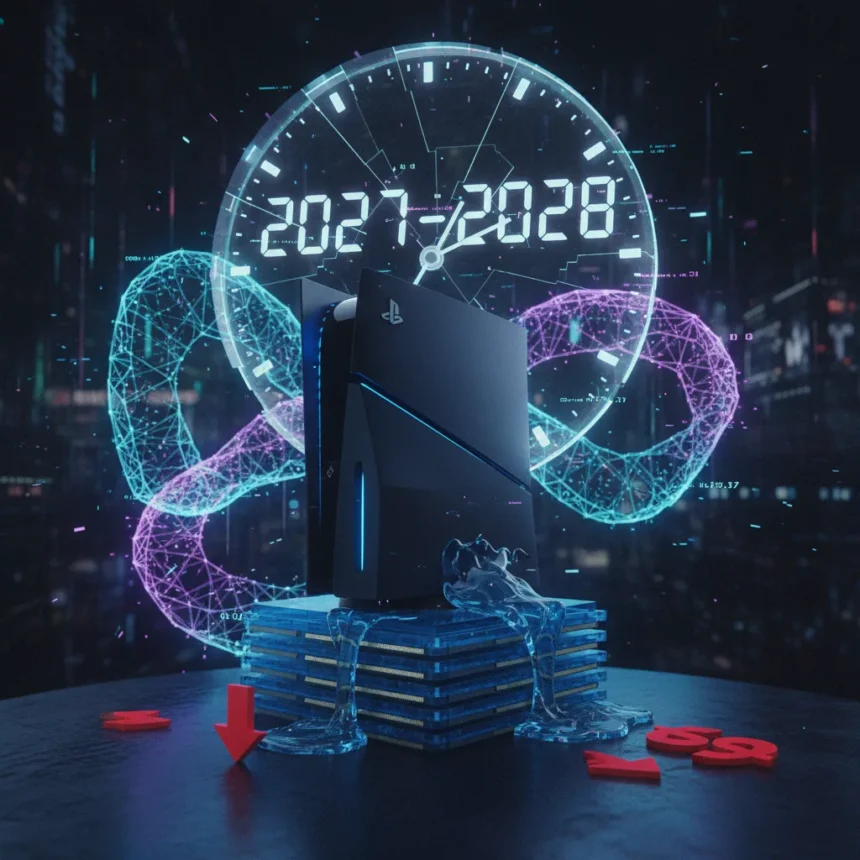
The PS6 release date is no longer a safe assumption. Sony, which had been quietly targeting a 2027-2028 launch window for its next-generation console, is now publicly signalling hesitation — and the culprit is an AI-driven RAM crisis that is reshaping the economics of consumer electronics hardware. The situation is serious enough that Sony CFO Hiroki Totoki has stated the company “must think carefully about what we will do,” a rare admission of uncertainty from one of gaming’s most disciplined hardware makers.
Key Takeaways
- Sony’s PS6 release date could slip to 2028 or even 2029 due to RAM shortages caused by AI data center demand.
- CFO Hiroki Totoki has publicly stated Sony is “thinking carefully” about PS6 timing and pricing.
- A delay to 2029 would create a nine-year gap from the PS5’s November 2020 launch — the longest PlayStation generation ever.
- Nintendo is facing the same pressure, with the Switch 2’s reported price reportedly under review due to volatile memory costs.
- Micron predicted in late 2025 that RAM shortages could persist beyond 2026, potentially into 2027 or later.
Why the PS6 Release Date Is Suddenly Uncertain
Generative AI applications are consuming memory chip supply at a pace the industry did not anticipate. Data centers building out AI infrastructure have diverted significant memory chip production away from consumer electronics, driving up costs and squeezing availability for companies like Sony that need large volumes of RAM for next-generation consoles. The result is that Sony’s original PS6 release date planning has collided with a supply chain reality it cannot simply engineer its way around.
Micron’s late 2025 report predicted that RAM shortages could persist well beyond 2026, potentially stretching into 2027 or later. That timeline maps directly onto Sony’s PS6 development window — and it explains why Totoki’s language has shifted from confident to cautious. Bloomberg’s sources familiar with Sony’s plans describe any delay to 2028 or 2029 as a “major upset.” That’s not spin; a nine-year console generation would be unprecedented for PlayStation, which launched the PS5 in November 2020.
Sony’s PS6 Release Date Risk Mirrors Valve’s Steam Machine Mistake
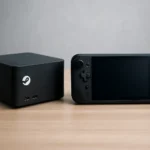
The comparison to Valve’s Steam Machine is pointed and worth taking seriously. Valve launched the Steam Machine in 2015 into a market where hardware supply and cost issues undermined the product’s value proposition from day one. It sold poorly and was eventually discontinued. Sony risks a similar outcome if it announces a PS6 release date and price before the RAM market stabilises — committing to figures that either prove unaffordable for consumers or financially damaging for Sony itself.

The difference is that Sony knows this risk. Totoki’s public caution suggests the company is deliberately avoiding the trap of premature commitment. That’s strategically sound, but it creates its own problem: the gaming industry runs on anticipation cycles, and silence from Sony creates a vacuum that speculation — and anxiety — will fill. The longer the PS6 release date remains unconfirmed, the more that uncertainty shapes consumer behaviour around PS5 purchases and platform loyalty.
Nintendo and Microsoft Face the Same RAM Crisis
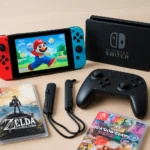
Sony is not alone in this. Nintendo’s President Shuntaro Furukawa confirmed in April 2026 that the memory market is “very volatile” and that the company is monitoring it closely, even as he suggested it hadn’t yet materially affected Nintendo’s plans. The Switch 2, reportedly priced at $450, is reportedly under review for a price increase — though by exactly how much remains unclear. For a mass-market device targeting families and younger players, any upward price movement is a genuine commercial risk.
Industry reports also suggest Microsoft’s next Xbox faces similar delay risks stretching to 2029 or beyond from the same RAM pressures. If all three major console platforms are simultaneously constrained by the same memory shortage, the next hardware generation could arrive later and cost more than any previous cycle — a scenario that would reshape the competitive dynamics between consoles and PC gaming, where hardware is upgraded incrementally rather than in platform-wide generational leaps.
What does the RAM crisis mean for PS5 owners right now?
PS5 production costs are already rising, and Sony has implemented price increases for the PS5 in some regions — Japan’s PS5 Digital Edition rose to ¥79,980 in 2026. That signals the RAM crisis is not a future problem; it’s affecting current hardware economics today. PS5 owners should not expect a PS6 announcement to rescue them from platform limbo any time soon.
Could the PS6 actually cost significantly more than previous consoles?
Analyst speculation has floated the possibility of a significantly higher PS6 launch price tied to elevated RAM costs, though Sony has made no official pricing statements. What’s certain is that if RAM prices remain elevated through 2027, Sony faces an unappealing choice: absorb costs and sell at a loss, pass costs to consumers, or delay until the market corrects. None of those options is clean.
Is a 2029 PS6 launch actually possible?
Bloomberg’s anonymous sources say a delay to 2028 or 2029 would be a “major upset” — which implies it’s a real possibility, not a worst-case fringe scenario. Sony’s original target was 2027-2028. A 2029 launch would mean nine years between PlayStation generations, longer than any previous gap in the franchise’s history. Whether Sony can hold that line depends almost entirely on how quickly AI data center demand eases pressure on the global memory supply chain.

The PS6 release date was supposed to be one of gaming’s most anticipated announcements of the late 2020s. Instead, it’s become a case study in how AI infrastructure investment can ripple into entirely unrelated industries. Sony’s caution is understandable — and probably correct. But “thinking carefully” only buys so much time before the market, and PlayStation’s competitors, force a decision regardless.
Edited by the All Things Geek team.
Source: TechRadar