





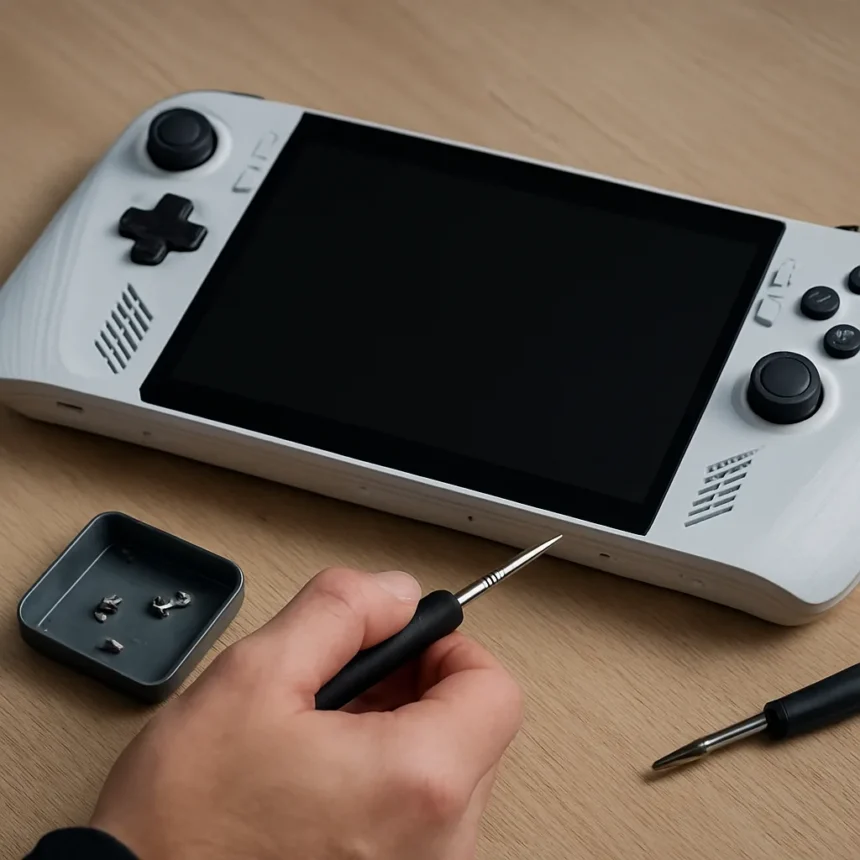
The ROG Ally X repair situation has become one of the most telling stories in handheld gaming this year, exposing a gap between the premium promise of high-end portable gaming PCs and the reality of owning one when hardware fails. ASUS admitted to experiencing high repair volume for the ROG Ally X, a concession that validated what many owners had already suspected: this was not an isolated problem affecting a handful of unlucky buyers.
Why ROG Ally X Repair Volume Became a Talking Point
When ASUS publicly acknowledged elevated repair demand for the ROG Ally X, it confirmed what the Windows Central coverage had been documenting — a pattern of power-on failures and hardware faults serious enough to push significant numbers of devices through the RMA process. Power-on failures are among the most disruptive faults a portable device can suffer, because unlike a software glitch or a degraded battery, they render the device completely unusable with no workaround available to the owner.
The troubleshooting and RMA process for these failures is not straightforward. Owners dealing with ROG Ally X power-on failures face a multi-step diagnostic process before ASUS will authorise a repair, and during high-volume periods, turnaround times stretch considerably. For a device positioned as a serious gaming platform — not a budget experiment — that kind of downtime is genuinely disruptive.
How Repairable Is the ROG Ally X Really?
A teardown of the ROG Ally X reveals a mixed picture on repairability. Some components are accessible and serviceable, but others present real challenges that make DIY repair a risky proposition for most owners. iFixit has documented the device’s internal layout, and the conclusion is that while ASUS has made certain parts approachable, the ROG Ally X is not the kind of device you crack open casually. This matters enormously when official repair channels are overwhelmed — if self-repair were straightforward, owners could address minor faults themselves rather than waiting in a queue.


Compare this to the broader handheld market: Valve’s Steam Deck was designed with repairability as an explicit goal, with iFixit partnerships and official spare parts availability built into the product strategy from launch. The ROG Ally X, despite its higher price point, does not offer the same level of owner-serviceable design. That is a meaningful trade-off that buyers rarely consider until something breaks.
The ROG Ally X Repair Experience and What It Reveals About the Category
The experience of sending a handheld gaming PC away for repair and returning to find yourself already adapted to a different device is more common than manufacturers would like to admit. The ROG Ally X repair cycle — device fails, owner ships it in, weeks pass, device returns — creates a window long enough for habits to change and alternatives to take root. That is not just a customer satisfaction problem; it is a retention problem.



This dynamic is unique to handheld gaming PCs in a way it simply is not for home consoles. A PlayStation or Xbox failure is painful, but most households have secondary entertainment options. A handheld gaming PC that doubles as a travel companion and a primary gaming device leaves a much more specific gap when it is gone. The emotional and practical cost of that absence is something the ROG Ally X situation has made visible in a way that raw repair statistics cannot fully capture.
Should the ROG Ally X repair situation change your buying decision?
If you are considering a handheld gaming PC purchase right now, the ROG Ally X repair volume issue is worth weighing seriously. It does not mean the device is fundamentally flawed beyond redemption, but it does mean you should factor in the realistic possibility of a repair event and ask whether the RMA process in your region is fast enough to be acceptable. ASUS’s acknowledgement of high repair volume is at least honest — but honesty about a problem is not the same as having solved it.
Alternatives exist. The Steam Deck remains the most repair-friendly option in the category, and its software ecosystem has matured considerably. Other Windows-based handhelds compete on performance and form factor, but the ROG Ally X’s repair visibility has made ecosystem support and after-sales service a more prominent part of every comparison conversation than it was a year ago.
What are the most common ROG Ally X failure types?
Power-on failures are among the most frequently reported issues with the ROG Ally X, leaving the device completely unresponsive. These failures typically require an official RMA rather than a simple software fix, contributing to the high repair volume ASUS has acknowledged.


How long does ROG Ally X repair typically take?
Turnaround times vary by region and repair volume, but during periods of high demand the wait can stretch long enough that owners find themselves adapting to alternative devices in the meantime. ASUS has not published specific repair timeframes publicly.
Is the ROG Ally X worth buying despite the repair concerns?
The ROG Ally X is a capable handheld gaming PC with strong performance credentials, but the documented repair volume and the complexity of the RMA process are genuine considerations. Buyers who prioritise repairability and after-sales peace of mind may find the Steam Deck or other alternatives a more comfortable long-term proposition.
The ROG Ally X repair story is ultimately a cautionary tale about the handheld gaming PC category as a whole: powerful hardware in a compact, portable form factor comes with real reliability risks, and the support infrastructure behind these devices has not always kept pace with their ambitions. Until manufacturers treat post-sale service with the same seriousness as launch-day specs, buyers are right to factor repairability into every purchase decision.
Edited by the All Things Geek team.
Source: Windows Central




