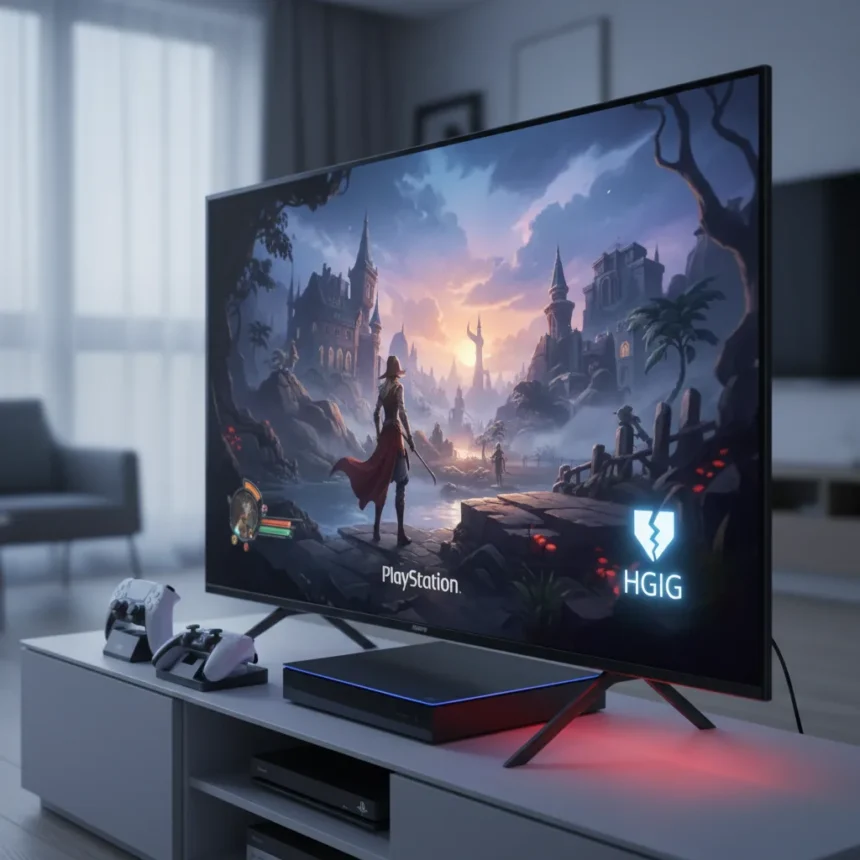
The Sony Bravia 9 II gaming feature set looks impressive on paper, but one critical omission undermines its appeal to console gamers. Despite Sony manufacturing both the PlayStation 5 and this flagship television, the Bravia 9 II lacks HGiG support, a feature designed to deliver more consistent and faithful HDR gaming experiences.
Key Takeaways
- Sony Bravia 9 II is missing HGiG, a feature that prevents tone mapping distortion in HDR games.
- HGiG coordinates the TV, console, and game to preserve the creator’s original intent for HDR output.
- LG pioneered HGiG support, and Samsung later added it to select QLED models via firmware.
- The omission is especially notable because Sony controls both the console and TV ecosystems.
- HGiG prevents TVs from double tone mapping already tone-mapped HDR content.
What Is HGiG and Why It Matters for Gaming
HGiG is a set of guidelines that coordinates how a television, gaming console, and individual game communicate to deliver HDR content exactly as the developer intended. Without HGiG, a TV can apply its own tone mapping to an image that has already been tone mapped by the console or game engine, resulting in distorted colors, crushed blacks, or blown-out highlights. The feature acts as a handshake between devices, ensuring each component respects the others’ processing and delivers a unified visual experience.
For PlayStation 5 owners, HGiG support on a television means HDR games render with greater accuracy and closer adherence to the game creator’s artistic vision. This is especially important for titles with carefully calibrated lighting, shadow detail, and color grading. Without it, even a high-quality panel like the Bravia 9 II can inadvertently degrade the HDR experience through unintended post-processing.
Sony’s Ecosystem Gap: Why This Omission Stings
The frustration here centers on a fundamental disconnect: Sony manufactures the PlayStation 5 and understands the technical requirements for optimal HDR gaming, yet the Bravia 9 II does not include HGiG support. This is not a case of a third-party TV maker overlooking a niche feature. Sony controls both sides of the gaming chain and still chose to leave this compatibility layer out of a premium television.

Other manufacturers have already made the move. LG was the first to add HGiG support, and Samsung later integrated it into select 2020 QLED models, even offering it via firmware update to existing owners. These competitors recognized that serious gamers expect seamless integration between their display and gaming hardware. Sony’s omission suggests either an oversight or a deliberate choice to prioritize other features, neither of which inspires confidence in the Bravia 9 II as a PlayStation-first display.
The Broader Gaming Feature Landscape
Modern gaming televisions are expected to support a suite of features that minimize latency and maximize visual fidelity: 4K at 120Hz, Variable Refresh Rate (VRR), Auto Low Latency Mode (ALLM), and increasingly, HGiG. These are no longer nice-to-haves for premium displays aimed at console gamers—they are baseline expectations. The Bravia 9 II may excel in panel quality, brightness, and color accuracy, but the absence of HGiG is a conspicuous gap in an otherwise comprehensive feature set.
The issue becomes more glaring when you consider that HGiG support is not a hardware limitation requiring new panel technology or specialized circuitry. It is a software-level feature that coordinates with existing HDMI handshake protocols. If Samsung could retrofit HGiG to older QLED models, Sony could certainly have included it in a new flagship television designed in 2024 or later.
What This Means for PlayStation 5 Gamers
If you own a PlayStation 5 and are shopping for a premium television, the Bravia 9 II’s missing HGiG support should factor into your decision. You will still get excellent picture quality, high brightness, and responsive gaming performance from the panel itself, but you will miss out on the coordinated HDR experience that HGiG enables. Over time, as more games leverage HGiG-aware HDR pipelines, this gap may become more noticeable.
The workaround is to manually adjust your TV’s tone mapping and HDR settings to be as transparent as possible, but this requires technical knowledge and is not a substitute for native HGiG support. You are relying on the TV’s default behavior rather than a standardized, tested protocol.
Is the Bravia 9 II still worth buying for gaming?
The Bravia 9 II remains a strong television for console gaming, especially if you value panel quality and brightness. However, the missing HGiG support is a legitimate reason to pause and consider alternatives, particularly if you are a serious PlayStation 5 player who cares about HDR accuracy. The omission is more than a minor spec sheet detail—it reflects a missed opportunity for Sony to deliver a truly integrated ecosystem experience.

Will Sony add HGiG to the Bravia 9 II via firmware update?
The research brief does not specify whether Sony has announced plans to add HGiG support through a future firmware update. Samsung’s approach with its QLED models shows that such updates are technically feasible, but Sony has not publicly committed to this path for the Bravia 9 II.
What other TVs support HGiG for gaming?
LG pioneered HGiG support and has included it in several of its high-end models, while Samsung added the feature to select 2020 QLED models via firmware update. If HGiG is a priority for your gaming setup, these brands offer proven alternatives, though you should verify HGiG availability on the specific model you are considering.
Sony had the chance to deliver a seamless gaming experience by combining the PlayStation 5’s technical prowess with a television purpose-built to honor that performance. Instead, the Bravia 9 II falls short of that promise by omitting HGiG. For a company that owns both the console and the TV, that is a missed opportunity that gamers will notice.
Edited by the All Things Geek team.
Source: What Hi-Fi?