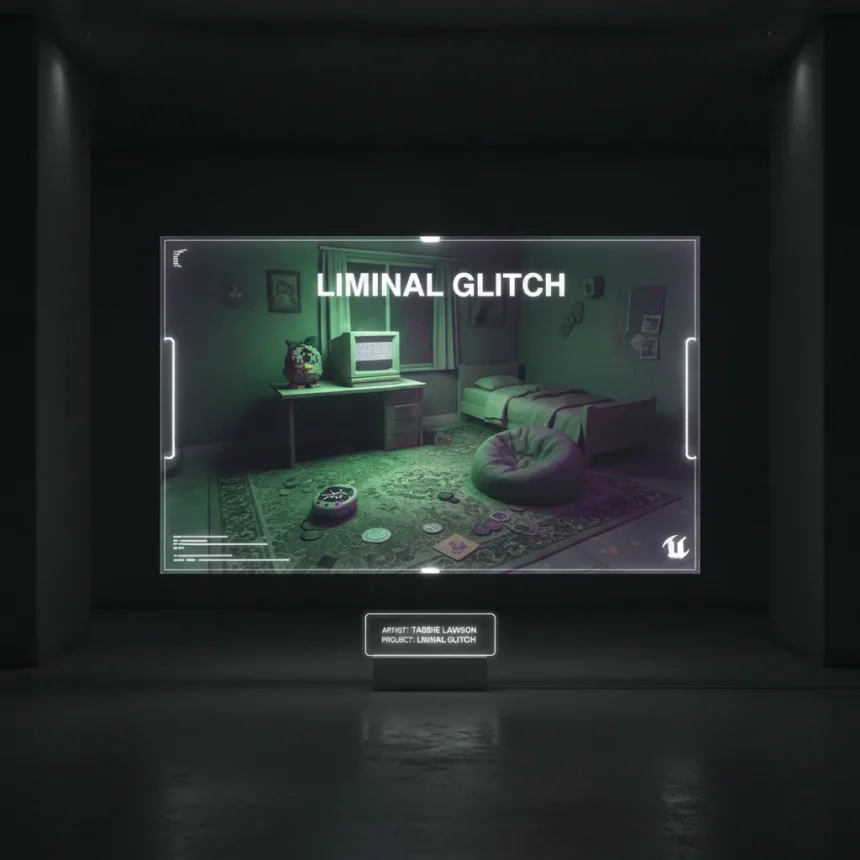
An Unreal Engine game early-2000s nostalgia project by artist Tabbie Lawson is reframing how we think about memory, emotion, and interactive art. Rather than chasing commercial appeal, Lawson has created something far more unsettling—a digital recreation of a childhood that feels both familiar and deeply wrong. The work recreates Alyx Jones’ childhood through the lens of Unreal Engine, transforming the aesthetic comfort of early-2000s design into something hauntingly personal.
Key Takeaways
- Tabbie Lawson uses Unreal Engine to recreate a childhood memory as autobiographical digital art.
- The project transforms early-2000s nostalgia into an emotionally unsettling experience rather than comfort.
- The game frames video game design as personal storytelling, not just entertainment.
- Unreal Engine’s capabilities enable highly detailed reconstruction of memory and atmosphere.
- The work challenges how nostalgia is typically commercialized in games and media.
How Unreal Engine Game Early-2000s Nostalgia Becomes Autobiographical Art
Lawson’s approach rejects the typical nostalgia formula. Most games and media that tap into early-2000s aesthetics do so to comfort—retro soundtracks, pixelated graphics, familiar UI design. This Unreal Engine game early-2000s nostalgia project does the opposite. By using Unreal Engine’s advanced rendering and spatial design tools to meticulously recreate childhood environments, Lawson creates a space that looks right but feels profoundly off. The specificity of personal memory, when rendered in photorealistic detail, becomes unsettling rather than reassuring.
The decision to use Unreal Engine matters here. Unlike indie game engines designed for stylized or retro aesthetics, Unreal’s fidelity forces a confrontation with the gap between how memory feels and how it actually was. A childhood bedroom rendered in high detail becomes a crime scene of small details—the exact shade of a wall, the precise arrangement of forgotten objects, the texture of carpet worn by years of footsteps. This level of reconstruction serves the emotional intent of the work, making the familiar strange.
Why Personal Memory Matters More Than Gameplay Mechanics
What makes this Unreal Engine game early-2000s nostalgia project significant is its rejection of traditional game design priorities. There is no mention of winning, leveling up, or mechanical progression. Instead, the work prioritizes atmosphere, spatial design, and emotional authenticity. This positions the project as interactive art rather than entertainment product, which is a meaningful distinction in how we categorize and discuss games.


Autobiographical games have existed for years, but they typically either sanitize personal experience into palatable narrative or lean heavily into abstract representation. Lawson’s approach uses Unreal Engine’s technical capabilities to achieve something between those extremes—a space that feels like genuine memory, complete with its contradictions, gaps, and emotional weight. The early-2000s setting is not chosen for commercial appeal but because it is the specific era of the childhood being recreated. The nostalgia is incidental to the personal story.
Unreal Engine Game Early-2000s Nostalgia Versus Commercial Game Design
This project stands apart from mainstream games that exploit early-2000s aesthetics for profit. Commercial titles typically use retro design as a shorthand for fun or accessibility, stripping away the complexity of actual memory. They ask: how can we make players feel good about the past? Lawson’s work asks a harder question: what does it feel like to return to a specific moment, rendered with absolute precision, knowing you cannot actually return?



The use of Unreal Engine underscores this difference. A smaller indie engine might have resulted in a more stylized, interpretive experience. Unreal’s power forces a level of detail and realism that intensifies the emotional impact. Every pixel of accuracy makes the work more personal, not less. This is the opposite of how most commercial games use technology—to create spectacle or immersion. Here, technology serves emotional truth.
What This Means for Game Design as Personal Art
Lawson’s Unreal Engine game early-2000s nostalgia project suggests a future where game engines are tools for personal storytelling, not just entertainment production. The work demonstrates that the most compelling interactive experiences may not be the ones with the biggest budgets or the most complex mechanics. Instead, they are the ones that use technological capability to explore something genuinely human—in this case, the texture of memory and the strangeness of returning to a place you thought you knew.
This approach also challenges the assumption that nostalgia must be comforting. By rendering early-2000s childhood with unflinching detail, the project reveals nostalgia as something more complicated—a mix of recognition and alienation, familiarity and loss. The early-2000s aesthetic becomes a vehicle for exploring that complexity rather than a shorthand for easy emotion.
Is this Unreal Engine game available to play?
The research brief does not contain verified information about release dates, platform availability, or whether the project is publicly playable. These details are not confirmed in the available sources, so they cannot be stated here.


Why does the artist use Unreal Engine instead of other game engines?
Unreal Engine’s fidelity and spatial rendering capabilities enable the level of detail necessary to recreate childhood memory with precision. This technical capability directly serves the emotional and artistic goals of the project, making the familiar feel unsettling through sheer accuracy.
What makes this different from other nostalgic games?
Most games that tap into early-2000s nostalgia aim for comfort and fun. This Unreal Engine game early-2000s nostalgia project instead creates emotional discomfort by rendering personal memory with absolute detail, transforming what should feel familiar into something hauntingly strange. The work prioritizes personal storytelling over entertainment mechanics.
Tabbie Lawson’s project proves that game engines are evolving beyond their commercial purpose. When pointed toward personal truth rather than mass appeal, Unreal Engine becomes a tool for art that is unsettling precisely because it is honest. The early-2000s nostalgia is not a marketing angle—it is the specific texture of a life being examined with unflinching precision.
Edited by the All Things Geek team.
Source: Creativebloq