





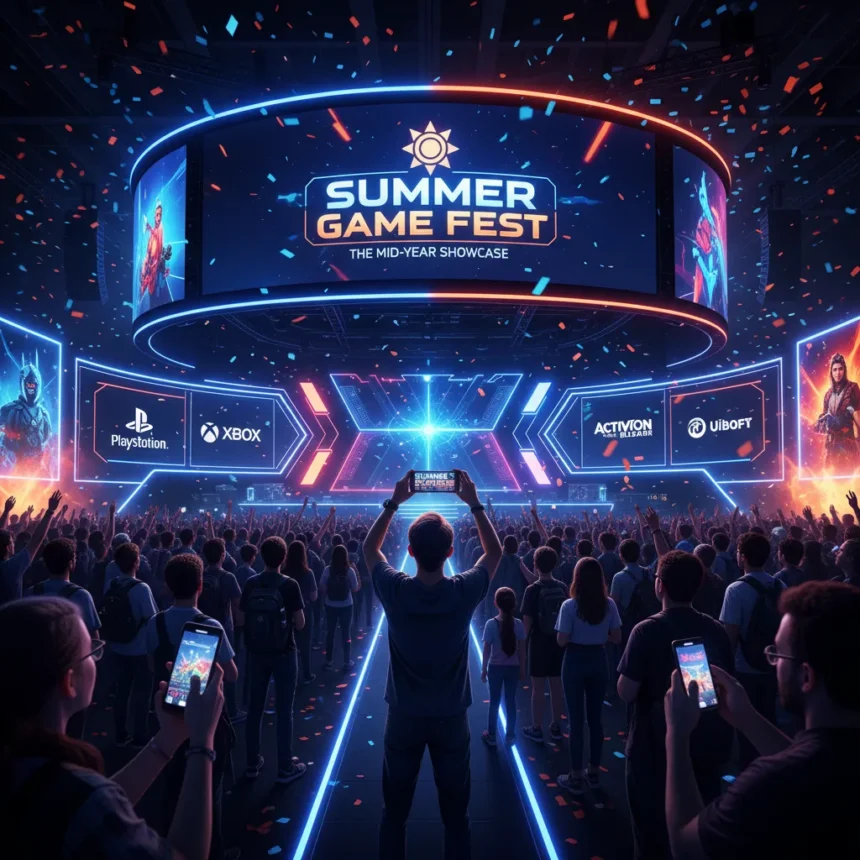
Summer Game Fest is an annual live video game showcase organized by journalist Geoff Keighley that has become the default mid-year stage for major game announcements and publisher reveals. After the Entertainment Software Association discontinued E3 following 2021, Summer Game Fest stepped into the void, earning the nickname “not-E3” among industry watchers and players alike. The event has grown from a single showcase into a multi-day festival spanning partner streams, developer showcases, and exclusive gameplay reveals.
Key Takeaways
- Summer Game Fest replaced E3 as the primary mid-year gaming showcase after E3’s discontinuation in 2021.
- The event takes place during the North American summer and features a main show typically lasting around two hours.
- The 2025 event expanded to include 15+ partner showcases including Xbox Games Showcase, Day of the Devs, and Devolver Digital.
- Summer Game Fest 2026 is scheduled for June 5-8 at the Dolby Theatre in Los Angeles.
- TechRadar provides comprehensive live coverage across multiple time zones during the event.
How Summer Game Fest Became Gaming’s Biggest Week
When E3 shut down, the gaming industry faced a scheduling vacuum at the exact moment when publishers needed a global platform for major announcements. Summer Game Fest filled that gap with remarkable speed. Geoff Keighley’s event transformed from a single showcase into what industry observers now call arguably the biggest week in gaming, particularly when timed with major hardware launches. The 2025 edition coincided with Nintendo Switch 2’s launch on June 5, followed immediately by Summer Game Fest and Xbox Games Showcase on June 6, creating an unprecedented concentration of gaming news.
The event’s structure mirrors what made E3 valuable: a flagship main show followed by publisher-specific presentations. The 2025 main show kicked off on June 6, 2025 at 5PM ET / 2PM PDT / 10PM BST / 11PM CEST and ran approximately two hours. That opening ceremony set the tone for a multi-day cascade of reveals, with related events spanning June 6 through June 8. This staggered approach keeps momentum rolling and gives each publisher or developer partner dedicated attention rather than competing for a single evening’s spotlight.
The Expanding Ecosystem of Partner Showcases
What distinguishes Summer Game Fest from its E3 predecessor is the sheer number of parallel events now orbiting the main show. The 2025 schedule included Access-Ability Summer Showcase, Day of the Devs, Devolver Digital showcase, IOI Showcase, Wholesome Direct, Women-Led Games, Latin American Games Showcase, South East Asian Games Showcase, Green Games Showcase, Future Games Show Summer Showcase, Frosty Games Fest, Xbox Games Showcase, PC Gaming Show, and Death Stranding 2 Game Premiere. This isn’t bloat—it’s intentional ecosystem expansion that makes room for indie developers, regional publishers, and niche communities that E3’s corporate gatekeeping often excluded.


The diversity of showcases reflects how gaming has fragmented into distinct communities with distinct interests. A player excited about Latin American game development gets a dedicated showcase. Someone passionate about accessibility in gaming has a specific stage. Publishers like Devolver Digital, known for smaller experimental titles, get equal billing with Microsoft’s blockbuster Xbox lineup. Summer Game Fest succeeds where E3 sometimes stumbled by recognizing that gaming is no longer a monolithic industry—it’s a collection of overlapping audiences.
What Summer Game Fest Reveals Tell Us About Gaming’s Direction
TechRadar’s coverage of Summer Game Fest announcements—from Mortal Kombat 1 reveals to hands-on Pragmata previews—demonstrates how the event functions as a bellwether for industry trends. Developers use Summer Game Fest to signal their priorities: whether they’re chasing cinematic storytelling, competitive multiplayer, experimental mechanics, or cultural representation. The volume and diversity of showcases mean no single publisher can dominate the narrative. A massive AAA reveal on the main stage gets immediate context from indie developers showcasing their work on the same days.



The event’s global streaming approach—with multiple time zones accommodated simultaneously—reflects gaming’s truly international nature. E3 was always a Los Angeles-centric event with awkward timing for European and Asian markets. Summer Game Fest broadcasts worldwide, acknowledging that a game announcement matters equally to a player in London, Seoul, or São Paulo. This accessibility likely contributes to the event’s growing influence.
Summer Game Fest 2026 and Beyond
The event continues to expand. Summer Game Fest 2026 is scheduled for June 5-8 at the Dolby Theatre in Los Angeles, suggesting the event has secured a permanent venue and multi-year commitment. This stability matters—it signals to publishers and developers that they can reliably plan around Summer Game Fest, treating it as a cornerstone of their annual release calendars just as they once did with E3.
The real question isn’t whether Summer Game Fest will survive; it’s how it will evolve. Will the ecosystem of partner showcases continue fragmenting, or will some consolidate? Will virtual reality, cloud gaming, or emerging platforms get dedicated showcases? Will regional events gain prominence? The answers will shape how the gaming industry communicates with players for years to come.
How does Summer Game Fest compare to E3?
Summer Game Fest has effectively replaced E3 as the mid-year gaming showcase since E3’s discontinuation in 2021. Unlike E3’s corporate-focused structure, Summer Game Fest has grown to include diverse partner showcases serving indie developers, regional publishers, and niche gaming communities, making it more inclusive while maintaining industry-wide relevance.


When is Summer Game Fest 2026?
Summer Game Fest 2026 takes place June 5-8, 2026 at the Dolby Theatre in Los Angeles. The event will continue its multi-day format with a main show followed by partner showcases and publisher presentations.
Where can I watch Summer Game Fest?
Summer Game Fest streams globally online, with coverage available across multiple time zones simultaneously. TechRadar and other gaming publications provide live coverage, commentary, and analysis of announcements and reveals throughout the event.
Summer Game Fest’s rise from E3’s successor to gaming’s defining mid-year event reflects how the industry has matured beyond a single trade show. By embracing diverse voices, global accessibility, and expanded schedules, the event has become something E3 never quite managed: a genuinely inclusive platform that speaks to the full spectrum of gaming culture.
Edited by the All Things Geek team.
Source: TechRadar




