





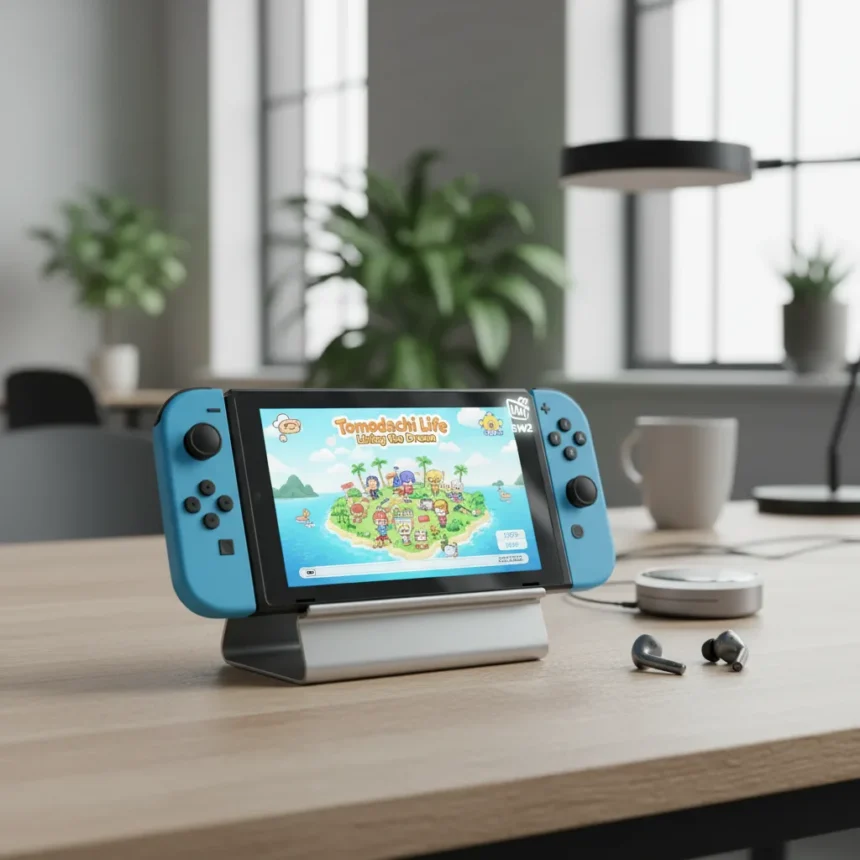
Tomodachi Life: Living the Dream won’t support Nintendo Switch 2’s Handheld Mode Boost feature, Nintendo confirmed, because the game already achieves 1080p resolution in handheld mode without it. The sequel to the 3DS original launches April 16, 2026, and represents the first major title to demonstrate how selectively developers will adopt the Switch 2’s new resolution-boosting technology.
Key Takeaways
- Tomodachi Life: Living the Dream runs natively at 1080p in handheld mode on Switch 2 without Handheld Mode Boost enabled
- Resolution remains identical whether the Boost feature is enabled or disabled, making the feature redundant
- Handheld Mode Boost only activates for games rendering below their target resolution
- Nintendo recommends playing the demo with Boost disabled to maintain touchscreen functionality
- Demo version currently enables Boost unintentionally but disables touchscreen; system update coming to fix this
Why Tomodachi Life: Living the Dream Doesn’t Need the Boost
Nintendo stated clearly that Tomodachi Life: Living the Dream achieves higher resolution in handheld mode on Switch 2 than the original game did on Switch, eliminating any need for resolution assistance. According to Nintendo’s official support page, “When playing Tomodachi Life: Living the Dream in handheld mode on the Nintendo Switch 2, you can play at a higher resolution (1080p) than using handheld mode on Nintendo Switch, regardless of whether Handheld Mode Boost is enabled or disabled. For that reason, this game does not support Handheld Mode Boost”. This straightforward technical reality—the game already hits its intended resolution ceiling—means the Boost feature would provide zero visual benefit.
The distinction matters for understanding how Switch 2 optimization works. Handheld Mode Boost is a targeted feature designed to help games that fall short of their native resolution targets. It was shadowdropped on March 17 and requires explicit developer support to function. Not every Switch 2 game will use it. Titles that already meet their resolution targets, like Tomodachi Life: Living the Dream, simply opt out.
The Demo’s Accidental Boost Problem
The “Tomodachi Life: Living the Dream – Welcome Version” demo launched April 16 and initially enabled Handheld Mode Boost unintentionally, but this created an unexpected trade-off: the Boost mode disabled touchscreen functionality. Nintendo recognized the problem and plans a system update to disable Boost on the demo version, restoring both the 1080p resolution and touchscreen support simultaneously. Nintendo’s recommendation is straightforward: “We recommend playing the demo version with Handheld Mode Boost disabled, as you will still be able to play at the higher resolution and use the touch screen”.

This mishap reveals how Handheld Mode Boost interacts with other system features. The feature is not a universal performance solution—it is a surgical tool with specific use cases and occasional friction points. Developers who ship games optimized for Switch 2’s native hardware, as the Tomodachi Life sequel is, sidestep these complications entirely.
What This Means for Switch 2 Game Development
Tomodachi Life: Living the Dream serves as an early indicator of how the Switch 2 launch library will stratify. Games built from the ground up for Switch 2 hardware and targeting native 1080p handheld resolution—like this title—will not need Handheld Mode Boost. Games ported from Switch or built with lower resolution targets will benefit from the feature. This is not a flaw in Nintendo’s approach; it is how targeted optimization should work. A game that already meets its resolution ceiling gains nothing from a resolution-boosting feature.

The demo’s touchscreen issue, though temporary, underscores a broader reality: new system features always carry edge cases. Nintendo identified the problem quickly and committed to a fix, which is the right response. By launch day on April 16, 2026, the full game will ship without Boost support and with full touchscreen functionality intact.
Does Tomodachi Life: Living the Dream need Handheld Mode Boost?
No. The game runs at 1080p natively in handheld mode on Switch 2, which is higher than the original Tomodachi Life achieved on the standard Switch. Handheld Mode Boost would provide no visual improvement.
Why does the demo have Handheld Mode Boost enabled?
The demo initially enabled Boost unintentionally, which prevented touchscreen functionality from working. Nintendo plans a system update to disable Boost on the demo, allowing players to enjoy both 1080p resolution and touchscreen controls.
Is Tomodachi Life: Living the Dream a Switch 2 exclusive?
Yes, the sequel launches exclusively on Nintendo Switch 2 on April 16, 2026. The original Tomodachi Life released on Nintendo 3DS.

Tomodachi Life: Living the Dream’s decision to skip Handheld Mode Boost is not a limitation—it is a sign of proper optimization. The game was built for Switch 2 from the start and hits its resolution targets without assistance. This is exactly how a new console’s launch library should work: titles designed for the hardware, running at their intended quality, without needing band-aid solutions. The Boost feature will find its purpose in other games that need it. This one simply does not.
Edited by the All Things Geek team.
Source: TechRadar




