





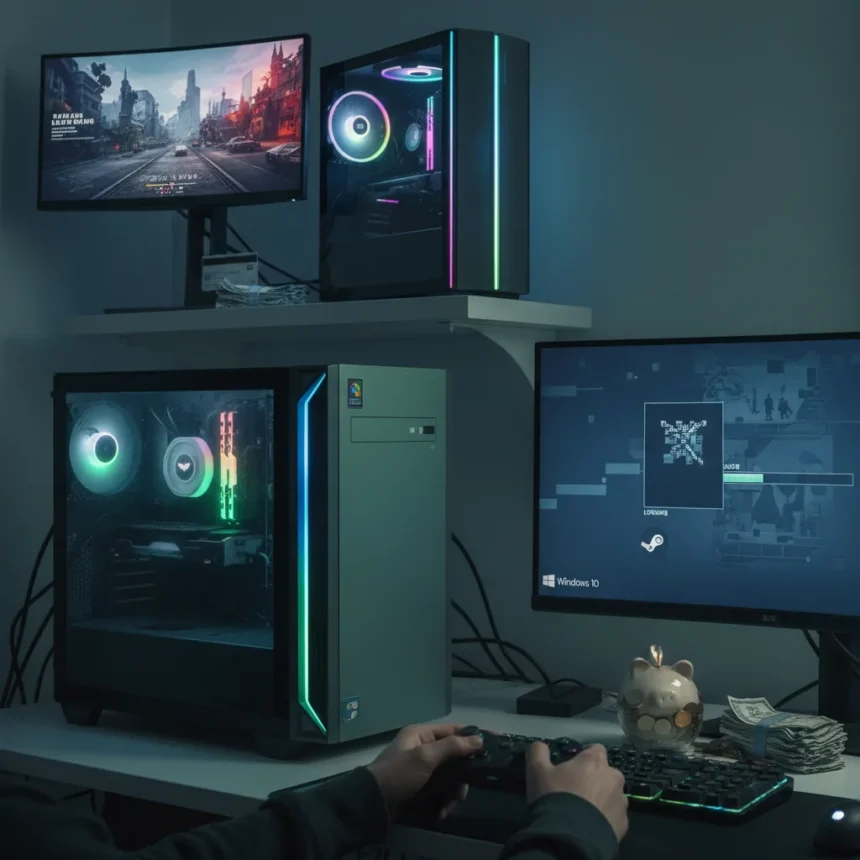
Windows 10 PC gaming remains stubbornly popular on Valve’s platform, with roughly one-quarter of Steam gamers still running the aging operating system. This persistence is puzzling—Microsoft ended support for Windows 10 in October 2025, yet millions of active players have not migrated to Windows 11. The question is straightforward but the answer is complicated: are these gamers choosing to stay put, or has the cost of upgrading priced them out of modern gaming entirely?
Key Takeaways
- Windows 10 still powers 25-29% of Steam gaming PCs despite end-of-support in October 2025.
- Windows 11 has captured roughly 66% of Steam users, but the Windows 10 tail remains large and persistent.
- March 2026 Steam survey data shows Windows 10 dropped 14.89%, signaling accelerating migration but also lingering resistance.
- Holiday 2025 PC promotions and handheld gaming devices drove some adoption shifts, but upgrade barriers remain real.
- Linux gaming is gaining traction at 3.20% of Steam, offering an alternative path for players avoiding Windows 11.
The Windows 10 PC gaming stalemate
Windows 10 PC gaming adoption on Steam hit a wall in late 2025. According to Valve’s Hardware Survey, Windows 10 64-bit accounted for 29.06% of Steam gaming PCs in November 2025, while Windows 11 64-bit dominated at 65.59%. That means nearly one in three Steam gamers was running an operating system Microsoft had just discontinued support for. By March 2026, Windows 10 adoption had dropped to around 14.89%, a sharp decline but one that still leaves millions of active gamers on legacy hardware.
The persistence of Windows 10 PC gaming adoption raises uncomfortable questions for Microsoft. The company has pushed Windows 11 hard—requiring TPM 2.0, stricter hardware checks, and a redesigned interface—but the gaming community has resisted. Inertia plays a role. Familiarity matters. But so does cost. A full system upgrade is not trivial, especially for players who already have working machines that run their favorite games.
Are upgrade costs the real barrier?
The research suggests cost is a genuine factor, though not the only one. Valve’s March 2026 survey revealed a telling trend: 32GB RAM usage dropped 20%, indicating that some gamers are not upgrading to higher-spec machines. This could signal budget constraints, or it could reflect efficiency improvements in newer software. The data is ambiguous, but the trend is real.


Pre-built gaming PCs like the Lenovo Legion Tower 7i Gen 8 offer a path forward, but they command premium prices compared to budget alternatives. Meanwhile, handheld gaming devices have fractured the upgrade market. The ROG Ally costs roughly $90 less than the base Steam Deck and delivers better Game Pass performance, giving budget-conscious gamers an alternative to dropping $1000+ on a desktop refresh. For some Windows 10 PC gaming holdouts, a handheld device may feel like a better value proposition than a full PC upgrade.
Windows 10 PC gaming vs. the emerging alternatives
Windows 10 PC gaming faces competition from unexpected quarters. Linux gaming is slowly gaining ground, reaching 3.20% of Steam users by November 2025. Steam Deck and similar handhelds have introduced millions of players to SteamOS, a Linux-based alternative that sidesteps Windows entirely. Anti-cheat compatibility and AAA game support remain barriers for Linux, but the trend is upward. For players frustrated by Windows 11’s hardware requirements or simply tired of Microsoft’s approach, Linux represents a genuine escape route.



Windows 11 adoption accelerated during the holiday 2025 season, driven by OEM promotions and device refreshes. But this only underscores the reality: most Windows 10 PC gaming holdouts are not choosing legacy software for its superiority. They are staying because the friction and cost of moving outweigh the benefits of moving forward. Microsoft should be concerned that it took the end of support and holiday discounting to shift the needle significantly.
What the data actually tells us
Valve’s Steam Hardware Survey captures only active Steam gamers, not all PC users, so the sample skews toward relatively recent hardware. This means the true percentage of Windows 10 users in the broader gaming population may be even higher. The survey does not measure sentiment directly—it cannot tell us whether a Windows 10 PC gaming player is holding out by choice or by constraint. But the combination of slow migration rates, RAM downgrades, and the appeal of cheaper handhelds suggests that cost is at least part of the story.
The March 2026 data does show movement. Windows 11 gained 10.57% net adoption, while Windows 10 fell 14.89%. This is not stagnation—it is transition. But it is also a transition that took a deadline and holiday promotions to accelerate meaningfully. Without those external pressures, Windows 10 PC gaming might have held its ground much longer.
Why Windows 10 PC gaming refuses to die
Gamers are pragmatists. A machine that plays games well is a machine worth keeping. Windows 10 remains stable, compatible with most titles, and requires no new hardware investment. For a player with a five-year-old gaming PC that still handles current releases at acceptable frame rates, the case for upgrading is weak. Windows 11’s stricter hardware requirements mean older machines cannot upgrade even if their owners wanted to, further entrenching Windows 10 PC gaming in the installed base.


The upgrade path is also fragmented. Buy a new gaming laptop and you get Windows 11. Build a new desktop and you must pay for Windows separately or accept a trial license. Refresh your RAM and CPU but keep your motherboard, and you may not meet Windows 11’s TPM requirements. These friction points create opportunities for inertia to win. Windows 10 PC gaming persists not because it is better, but because the cost and complexity of leaving is real.
Is Windows 10 PC gaming a choice or a trap?
The honest answer is both. Some gamers are choosing to stay on Windows 10 because they see no reason to move—their games run fine, they understand the system, and change feels risky. Others are effectively trapped by hardware limitations or budget constraints. The sharp drop in Windows 10 adoption between November 2025 and March 2026 suggests the first group is shrinking. But the fact that 14.89% of Steam gamers remained on Windows 10 even after support ended indicates the second group is substantial.
Microsoft’s embarrassment over Windows 10 holdouts is justified, but the company created the conditions for it. Windows 11’s aggressive hardware requirements, the complexity of TPM 2.0, and the premium pricing of compatible machines have all contributed to resistance. A smoother upgrade path and lower hardware barriers might have accelerated adoption. Instead, millions of gamers are making a rational decision: stay with what works until forced to move.
What happens next for Windows 10 PC gaming?
As Microsoft ends security updates and publishers gradually drop Windows 10 support, the pressure on holdouts will increase. Testing costs for legacy OS support will mount, making Windows 10 PC gaming a burden for developers. Eventually, new AAA titles will require Windows 11, and the choice will be made for holdouts. But that process will take years, not months. Windows 10 PC gaming will remain a significant segment of the gaming market well into 2026 and beyond.
For now, the Windows 10 PC gaming phenomenon tells us something important about the gaming community: cost matters, inertia is powerful, and friction in the upgrade path has real consequences. Microsoft wanted a swift migration to Windows 11. Instead, it got a protracted transition that required end-of-support deadlines and holiday discounts to move the needle. That is not a failure of Windows 11 as a gaming platform—it is a failure of the upgrade strategy itself.
Are Windows 10 gamers being forced to upgrade?
Not yet. Windows 10 remains functional and compatible with most games, though new AAA titles increasingly require Windows 11. Microsoft’s support ended in October 2025, but that does not immediately break existing machines. Security patches will stop, creating long-term risk, but games themselves will continue to run. Forced migration will happen gradually, game by game, as publishers drop legacy support.
Can I upgrade my Windows 10 PC to Windows 11 without buying new hardware?
Not always. Windows 11 requires TPM 2.0 and specific CPU generations, which older motherboards do not support. If your Windows 10 PC gaming machine predates 2017 or so, a full motherboard and CPU upgrade may be necessary. This is a major cost barrier and a key reason many gamers are staying put. Checking your system’s compatibility before committing to an upgrade is essential.
Is Linux a viable alternative to Windows 10 for PC gaming?
Linux gaming is improving, with SteamOS and Proton making titles playable outside Windows. Linux reached 3.20% of Steam users by November 2025, a steady climb driven by Steam Deck adoption. However, anti-cheat support and AAA game compatibility remain issues. For casual and indie gamers, Linux is increasingly viable. For competitive or latest AAA gaming, Windows remains the safer choice.
The Windows 10 PC gaming holdout phenomenon reveals a gap between what Microsoft wants and what gamers can afford or are willing to do. Until upgrade costs fall or the pressure to move becomes unavoidable, millions of players will remain on Windows 10, proving that even a tech giant cannot simply will a user base into compliance.
Edited by the All Things Geek team.
Source: Windows Central




