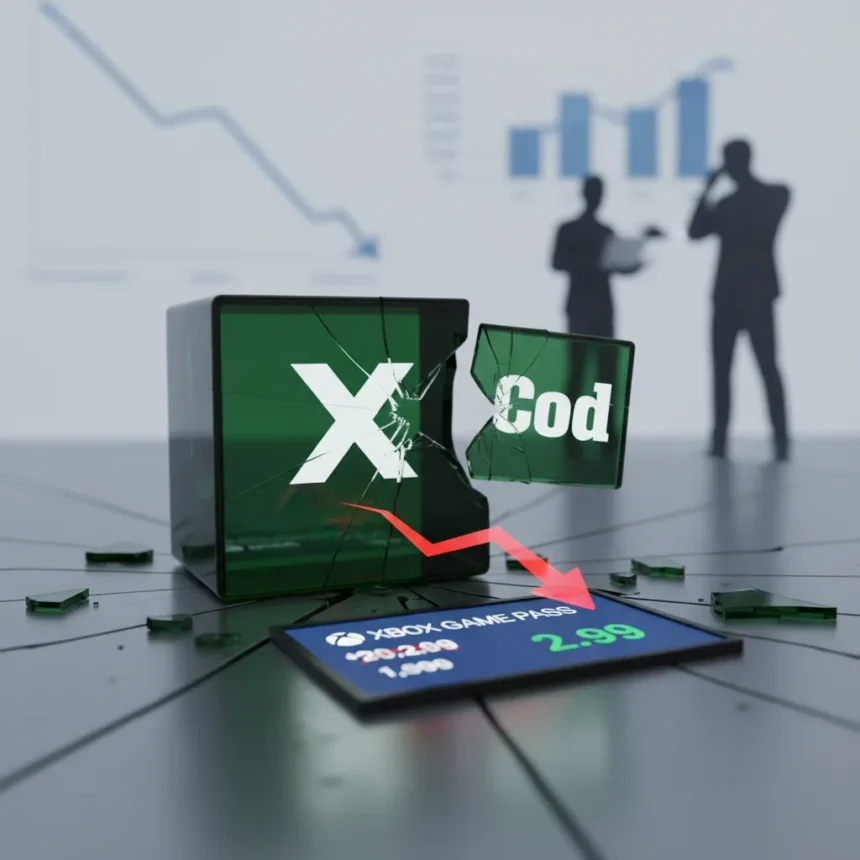
The Xbox Game Pass price cut announced in April 2026 signals a strategic retreat for Microsoft—and analysts are calling it inevitable. Game Pass Ultimate dropped from $29.99 to $22.99 per month, while PC Game Pass fell from $16.49 to $13.99. The cuts come barely six months after Microsoft raised prices by 50%, making the reversal a rare admission that something fundamental went wrong.
Key Takeaways
- Xbox Game Pass Ultimate now costs $22.99/month, down from $29.99; PC tier drops to $13.99
- Call of Duty day-one launches failed to significantly increase console sales or subscriptions
- Microsoft is ending day-one Call of Duty releases on Game Pass going forward
- Game Pass had 34 million subscribers as of 2024, with recent growth stalling
- Analysts expect the price drop to drive subscriber growth amid consumer focus on value
Call of Duty Never Delivered the Growth Microsoft Expected
When Microsoft added Call of Duty: Black Ops 6 and 7 as day-one Game Pass titles, the company bet that the franchise’s massive audience would translate into console sales and subscription surges. It didn’t happen. Mat Piscatella, research director at Circana, was blunt about the outcome: the Call of Duty experiment on Game Pass “did not lead to a significant increase in Xbox console sales or even subscriptions”. The failure was apparent early. “It was clear from very early on,” Piscatella said, “that this change is not surprising at all. A little overdue, perhaps. But not surprising”.
Piers Harding-Rolls, analyst at Ampere Analysis, framed the problem in financial terms. “The commercial reasoning for pursuing a subscription-first strategy for new releases the size of Call of Duty has not been realised,” he said. Microsoft was essentially giving away premium sales—Bloomberg sources suggest the company lost more than $300 million in console and PC premium sales last year through the day-one approach. By ending day-one Call of Duty launches while keeping existing titles on the service, Microsoft is attempting to recapture that revenue without completely abandoning Game Pass subscribers.
The Price Was the Real Problem All Along
Asha Sharma, Xbox’s new gaming head, offered a simple explanation for the cuts: “Game Pass Ultimate has become too expensive for too many players”. At $29.99 per month, the service had become difficult to justify. Piscatella echoed this, noting that “subscription spending has been one of the stronger areas of the video game market over the past two years” but the high price was making Game Pass’s value proposition questionable. With consumer spending pressure mounting across housing, food, and energy costs, a $30 monthly gaming subscription became a harder sell.


The timing matters. Microsoft raised prices six months prior, betting that the Call of Duty addition would justify the hike. When subscriptions didn’t follow, the company faced a choice: defend the price or cut it. The price cut signals that Microsoft is prioritizing subscriber volume over premium revenue—a reversal of its recent strategy. Harding-Rolls noted that the shift opens the door to “a more flexible approach to release windowing of first-party new games,” suggesting Microsoft will no longer treat all major releases as day-one Game Pass candidates.
Stagnation Demands Bigger Changes Ahead
Game Pass had 34 million subscribers as of 2024, the last figure Microsoft disclosed publicly. Recent growth has stalled, and analysts warn that a price cut alone won’t solve the underlying problem. Christopher Dring, founder of The Game Business, was direct: “Xbox Game Pass is struggling for growth and it isn’t delivering on that initial dream Microsoft had back in 2018,” he said. A $7 monthly reduction, while meaningful, may not be enough to reignite momentum.

What comes next is uncertain. Harding-Rolls suggested that day-one releases remain “a legitimate new release strategy for select games and first-party releases will remain central to this approach,” implying Microsoft will be more selective. Dring expects “bigger changes, and perhaps a more flexible service, to follow”. The price cut is a corrective measure, not a fix. It acknowledges that Game Pass’s value proposition had deteriorated—but whether a lower price alone can reverse subscriber stagnation remains an open question.
Why Game Pass Couldn’t Replicate Netflix’s Success
The Call of Duty gamble exposed a fundamental difference between gaming and streaming entertainment. Netflix’s value comes from breadth—thousands of titles at a low monthly cost. Game Pass tried a different approach: exclusivity and day-one access to premium releases. When Call of Duty, one of gaming’s biggest franchises, failed to convert subscribers, it revealed that gamers prioritize choice and value differently than streaming viewers. A single premium title, no matter how popular, doesn’t guarantee subscription growth in a market where players have competing demands on their entertainment budgets.
Is the price cut enough to save Game Pass?
Analysts believe the lower price will attract new subscribers, particularly given strong consumer focus on value across the market. However, Dring cautioned that the cut alone won’t solve Game Pass’s growth problem—bigger strategic changes will likely follow.
Will Call of Duty return to Game Pass as a day-one release?
Microsoft has ended day-one Call of Duty launches going forward, though existing titles remain on the service. Future Call of Duty games will release on traditional premium sales models first.


What’s the new price for Game Pass Ultimate?
Game Pass Ultimate is now $22.99 per month in the US, down from $29.99. PC Game Pass dropped to $13.99 from $16.49. Both price cuts took effect immediately in April 2026.
The Xbox Game Pass price cut is Microsoft’s admission that the Call of Duty experiment failed. By cutting prices and ending day-one launches, the company is retreating from a high-stakes bet that didn’t pay off. Whether this move stabilizes subscriber growth or merely delays a larger reckoning remains to be seen—but for now, affordability is the strategy.
Edited by the All Things Geek team.
Source: TechRadar