





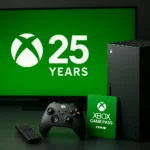
Xbox was greenlit as a hedge against Sony’s threat to dominate the home, according to Ed Fries, former VP of Game Publishing at Microsoft and head of Microsoft Game Studios. Twenty-five years after the original Xbox launched in 2001, Fries has revealed the strategic calculus that convinced Bill Gates and Steve Ballmer to greenlight a gaming console that executives initially thought was a terrible idea.
Key Takeaways
- Ed Fries led Microsoft Game Publishing and pitched Xbox to Gates and Ballmer on February 14, 2000
- Original Xbox lost $4 billion in its first generation but Microsoft gaming is now a $24 billion profitable business
- Sony’s vision of replacing PCs with multiple PlayStations in the home threatened Microsoft’s den and office dominance
- Xbox was positioned as a “Trojan Horse” to secure a living room beachhead against Japanese competition
- Fries left Microsoft in 2004 after launching Halo: Combat Evolved alongside the original console
How Sony’s Vision Forced Microsoft’s Hand
Microsoft had owned the den and the office for decades. Then Sony arrived with a dangerous vision: a home without a PC in it. Rick Thompson, a Microsoft executive, articulated the threat plainly—Sony was showing “three or four PlayStations in every home and no computers”. That prospect was offensive to Gates and the leadership team. If Sony succeeded, Microsoft would lose control of the most intimate spaces in people’s lives.
The Xbox pitch happened on Valentine’s Day 2000, when the team presented their plan to Gates and Ballmer. Initially, Robbie Bach, who became Chief Xbox Officer, said flatly: “let’s not do it.” The team pivoted. They reframed the conversation around Sony. What about the threat? What if Sony owned the rest of the home? That question changed everything. The math was brutal—the console would lose billions, even in the best case. But the alternative, ceding the living room to Sony, was worse.
Xbox as Strategic Beachhead
Xbox was never meant to be a pure gaming device. It was a Trojan Horse. The original console established Microsoft’s presence in the living room, but the real strategy revealed itself over time. Xbox 360 added multimedia capabilities—iPod music, Windows Media Center video streaming. In 2008, Netflix launched on the 360, and suddenly Microsoft had proof of concept. The console was a gateway to the home, and entertainment was the vehicle. This thinking shaped Xbox One as an entertainment-first device, though that bet ultimately stumbled.


The first-generation Xbox hemorrhaged money—$4 billion in losses. But that was the cost of entry. Without those losses, Microsoft would have ceded the living room entirely. By the time Xbox 360 arrived, the company was already closing the profit gap. Today, Microsoft gaming is a $24 billion profitable business, a staggering turnaround from a product that almost never existed because it seemed too risky, too expensive, and too unlikely to succeed.
Ed Fries and the Game Catalog That Saved Xbox
None of this strategy mattered without games. Ed Fries, who left Microsoft in 2004, was instrumental in building the software lineup that made the original Xbox viable. He was a huge Blizzard fan, drawn to the roots of PC gaming—real-time strategy games like Warcraft. Halo: Combat Evolved shipped with the console in 2001 as a flagship FPS, and without that game and others Fries championed, the original Xbox would have failed.


Fries’ departure in 2004 marked the end of an era. He had helped launch the console, secured the living room beachhead, and proved the concept could work. Decades later, he would attempt to acquire Blizzard multiple times before leaving the company. Microsoft eventually succeeded where Fries could not, acquiring Activision Blizzard for $68 billion in January 2022, the largest gaming acquisition in history. Today, Fries works with 1UP Ventures, helping game developers navigate the industry.
Why an Unlikely Bet Became Essential Strategy
The Xbox story reveals something counterintuitive about business strategy: sometimes the most important decisions are the ones that seem least likely to succeed. Microsoft’s leadership could have ignored Sony’s threat. They could have doubled down on PC gaming and let the living room go. Instead, they chose to fight on a new front, in a market they didn’t understand, with a product that lost billions. That decision—made in a room on Valentine’s Day 2000—shaped the gaming industry for decades.
Fries has noted that the new Xbox CEO, Asha Sharma, lacks a gaming background, a fact that some viewed skeptically. Yet Fries himself suggested this “can work fine,” echoing the original Xbox pitch: sometimes the right leader is not the obvious choice. Sometimes the best strategic moves feel unlikely, even wrong, until they aren’t.
Did Microsoft really need to build Xbox to counter Sony?
Yes. Sony’s explicit vision was to dominate home entertainment and replace PCs with multiple PlayStations. Microsoft viewed this as a direct threat to its core business and market dominance. Without Xbox, Sony would have controlled the living room entirely.


How much money did the original Xbox lose?
The original Xbox lost $4 billion in its first generation. Despite these massive losses, the investment proved strategic—Microsoft gaming is now a $24 billion profitable business, and the Xbox platform remains central to that success.
Why did Ed Fries leave Microsoft in 2004?
The research brief does not specify Fries’ reasons for departing in 2004. He had successfully launched the original Xbox and Halo: Combat Evolved, and his departure marked the end of his tenure as head of Microsoft Game Studios.
The Xbox story is ultimately about the courage to make an unlikely bet. Microsoft saw a threat from Sony and chose to fight it, even though the fight would cost billions and success was far from guaranteed. Twenty-five years later, that bet has paid off—not just in profit, but in proving that sometimes the most important strategic moves feel impossible until they’re done.
Where to Buy
Edited by the All Things Geek team.
Source: Windows Central




