





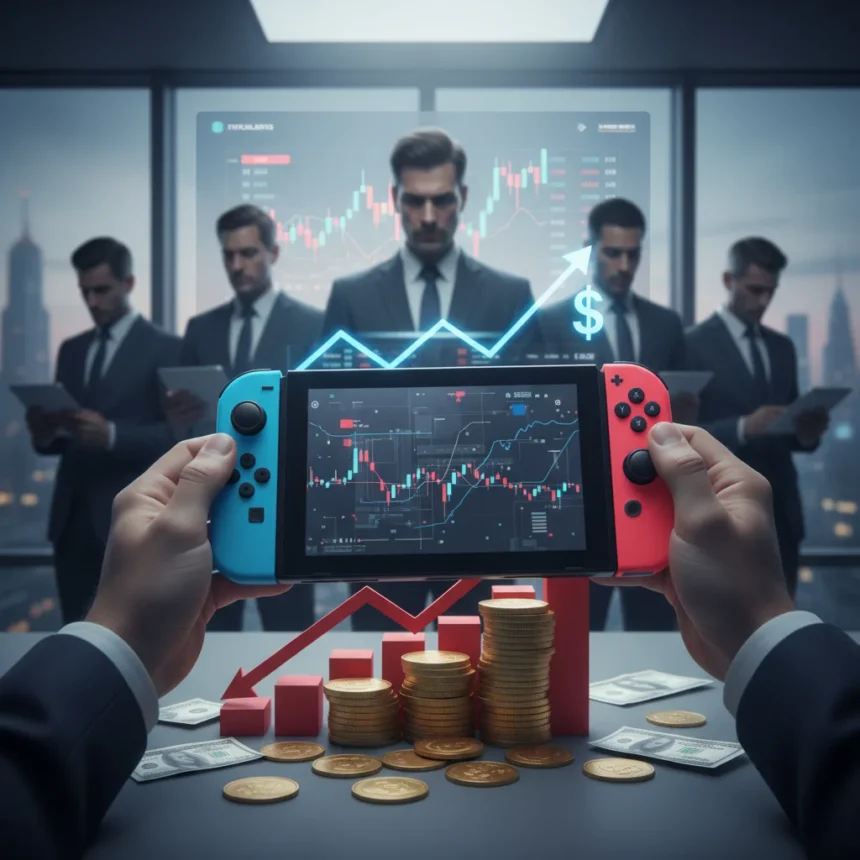
Nintendo Switch 2 price hike fears are intensifying as investors demand the company raise prices to offset mounting losses from supply chain pressures and AI-driven component shortages. Despite strong sales of the $449 console, Nintendo is reportedly selling each unit at a loss, a situation that has sparked investor calls for price increases ranging from $50 to $100 above the current price point.
Key Takeaways
- Nintendo Switch 2 sells at $449 in the West but generates losses due to rising memory costs and tariffs.
- Investors are pressuring Nintendo to raise prices as the stock has dropped 50% despite strong console sales.
- Research firm Niko Partners predicts a global Switch 2 price hike in 2026, potentially to $499 or higher.
- Nintendo president Shuntaro Furukawa stated no price decision has been made but left the door open for future increases.
- Sony and Microsoft already raised PS5 and Xbox prices, setting a precedent for Switch 2 to follow.
Why Investors Are Demanding a Nintendo Switch 2 Price Hike
The Nintendo Switch 2 price hike pressure stems from a perfect storm of manufacturing challenges. Memory prices have surged due to artificial intelligence demand from data centers competing for the same RAM and storage components. Tariffs on electronics manufactured in China, Japan, and Vietnam have further squeezed margins. Nintendo raised prices on accessories after resuming Switch 2 pre-orders in 2025, but kept the console itself at $449—a decision investors view as unsustainable.
Nintendo’s stock performance tells the story. Despite strong Switch 2 sales and the success of the Mario movie, Nintendo’s stock price has dropped 50%, signaling investor anxiety about profitability. Some analysts argue the company cannot maintain current pricing indefinitely without eroding shareholder value. The Japanese version of Switch 2, priced lower than the Western model, has become a particular point of contention, with some investors suggesting Nintendo either raise the price or discontinue the cheaper SKU.
What Nintendo’s Leadership Says About Switch 2 Price Increases
Nintendo president Shuntaro Furukawa has carefully navigated investor pressure without committing to a price increase. In his most recent earnings briefing, Furukawa acknowledged that rising memory costs pose a risk to profitability but stated no decision has been made on pricing. He emphasized Nintendo will assess market trends, installed base, sales, and the broader market environment before making any change.

In November 2025, Furukawa told shareholders the company anticipated maintaining the current Switch 2 price unless notable external factors like tariff adjustments or unforeseen events forced a change. This language leaves room for a price hike if conditions deteriorate, but stops short of confirming one. The company’s cautious tone reflects awareness that console buyers are price-sensitive—a $50 to $100 increase could dampen demand at a critical moment in the console’s lifecycle.
Nintendo Switch 2 Price Hike Predictions for 2026
Research firm Niko Partners has predicted a global Nintendo Switch 2 price hike in 2026, driven by tariffs, memory costs, and macroeconomic pressures. The firm suggests Nintendo could phase out the $449 model in favor of $499 or higher bundle configurations, effectively raising the entry price by at least $50. Some industry analysts have speculated increases could reach $100, though this remains unconfirmed.
This would align Switch 2 with recent pricing moves by competitors. Sony raised PS5 prices multiple times, and Microsoft increased Xbox Series X prices last year. Niko Partners notes that Switch 2 has remained competitively priced compared to these consoles despite tariff pressures, but the firm expects Nintendo to follow Sony and Microsoft’s lead with its own hike.
Can Nintendo Avoid a Price Hike?
Nintendo faces a narrow path to avoid raising Switch 2 prices. If component costs stabilize or tariffs ease, the company might maintain current pricing. However, memory prices remain elevated due to ongoing AI demand, and tariff uncertainty persists. Analyst Michael Pachter has noted that consumer sensitivity to price increases could dampen demand, suggesting Nintendo must weigh short-term margin improvements against long-term market share risks.
The company has some flexibility. Nintendo could absorb losses longer than competitors if it prioritizes market penetration over immediate profitability. However, with investors already anxious about the 50% stock drop, sustained losses on hardware are unlikely to remain acceptable for long. The next earnings briefing will likely provide clues about Nintendo’s timeline for any potential price adjustment.
When will Nintendo announce a Switch 2 price increase?
Nintendo has not announced a price increase and explicitly stated no decision has been made. However, if Niko Partners’ prediction proves accurate, an announcement could come in 2026. Furukawa’s November 2025 comments suggest the company is monitoring the situation closely and will act if external conditions deteriorate significantly.

How much could the Nintendo Switch 2 price hike be?
Predictions range from $50 to $100 above the current $449 price point. Niko Partners specifically suggests phasing in $499 or higher bundle configurations, representing at least a $50 increase. Some analysts have speculated larger hikes, though these remain speculative rather than confirmed by Nintendo.
Why is Nintendo selling Switch 2 at a loss?
Rising memory prices driven by AI data center demand, tariffs on electronics manufactured in Asia, and global supply chain pressures have pushed component costs above Nintendo’s current selling price. The company chose to launch at $449 to remain competitive with PS5 and Xbox, accepting losses in the short term.
Nintendo Switch 2 price hike fears will likely dominate investor conversations until the company either confirms a price increase or announces cost reductions. The company’s careful messaging suggests a decision is coming, but timing and magnitude remain uncertain. For consumers, the window to purchase at $449 may be narrowing—making the current price potentially the last chance to buy without paying a premium.
Edited by the All Things Geek team.
Source: Tom's Guide




