





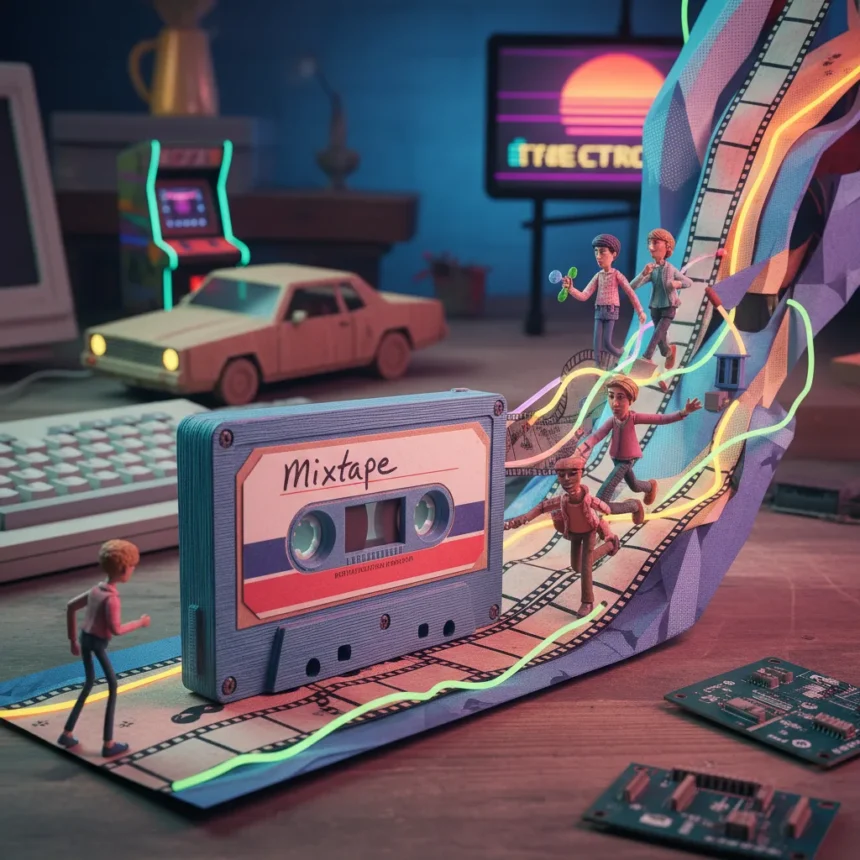
Mixtape is a stop-motion game aesthetic made playable, combining handcrafted animation inspired by 1980s John Hughes films, the fluid 2D-to-3D hybrid style of post-Spider-Verse animation, and the nostalgic visual language of MTV’s early era. The game transforms what could have been a static art gallery into an interactive experience where visual direction becomes the primary draw.
Key Takeaways
- Mixtape’s stop-motion game aesthetic draws directly from 1980s John Hughes teen cinema and A-ha’s “Take on Me” music video
- The visual style blends handcrafted charm with the fluid animation techniques popularized by Spider-Man: Into the Spider-Verse
- Stop-motion game aesthetic represents a growing trend of indie titles prioritizing distinctive art direction over photorealism
- The game successfully translates nostalgic, handcrafted elements into an interactive, playable format
- MTV’s 1980s aesthetic influences the overall tone and visual presentation throughout
What Makes the Stop-Motion Game Aesthetic Work Here
The stop-motion game aesthetic succeeds in Mixtape because it does not try to hide the handmade quality—it celebrates it. The game’s visual approach echoes the deliberate imperfection of John Hughes’ teen coming-of-age films, where awkwardness and authenticity mattered more than polish. That same philosophy runs through every frame. Unlike games that chase photorealism or slick 3D rendering, Mixtape leans into the tactile, slightly imperfect charm of stop-motion work, where you can almost feel the animator’s hands shaping each movement.
The stop-motion game aesthetic also borrows heavily from the animation revolution sparked by Spider-Man: Into the Spider-Verse, which proved that stylized, hand-drawn-influenced 3D animation could feel more alive than traditional motion capture. Mixtape takes that lesson and pushes it further by making the player an active participant in that aesthetic rather than a passive observer. You are not just watching handcrafted animation—you are controlling it, moving through it, making decisions within it.
How 80s Nostalgia Shapes the Stop-Motion Game Aesthetic
The stop-motion game aesthetic draws its emotional core from three specific visual touchstones: John Hughes’ filmmaking (The Breakfast Club, Ferris Bueller’s Day Off), A-ha’s “Take on Me” music video from 1985, and MTV’s visual language from that same era. Each of these sources shares a common thread—they value handmade, slightly rough-around-the-edges visual storytelling over technical perfection. A-ha’s rotoscoped animation, where live-action footage was traced and painted over by hand, created a unique hybrid that looked like nothing else on television. Mixtape channels that same DIY energy.


This nostalgic influence is not mere decoration. The stop-motion game aesthetic becomes the primary storytelling tool, communicating tone and character through visual style alone. When a game commits this fully to a singular aesthetic vision, every design decision reinforces the narrative. The player does not just see 1980s nostalgia—they experience it through every interaction, every color choice, every subtle movement.
Stop-Motion Game Aesthetic in a Crowded Indie Market
Mixtape arrives at a moment when indie developers increasingly recognize that distinctive art direction can compete with AAA production budgets. Other handcrafted games like Harold Halibut have demonstrated that stop-motion and clay-based aesthetics can sustain entire games, proving players will engage with unconventional visual styles if the execution is strong. The stop-motion game aesthetic represents a deliberate rejection of the homogenized, engine-default look that dominates mainstream gaming.

What sets Mixtape apart is its synthesis of multiple nostalgic influences into a cohesive stop-motion game aesthetic that feels neither derivative nor confused. The game does not just reference these sources—it distills their visual DNA into something playable. That distinction matters. Many games cite aesthetic inspiration without fully committing to it. Mixtape commits entirely, making the stop-motion game aesthetic inseparable from how the game actually plays.
Does the Stop-Motion Game Aesthetic Actually Enhance Gameplay
The stop-motion game aesthetic works only if it serves the game itself, not just the marketing materials. In Mixtape’s case, the handcrafted visual approach creates a unique sense of intimacy and personality that most games cannot achieve. When you control a character rendered in a stop-motion game aesthetic, every movement feels intentional and weighted. There is no illusion of photorealism to hide behind—the game’s success depends entirely on whether the animation reads clearly and feels responsive.
This is where the post-Spider-Verse influence becomes crucial. That animation style proved that stylized visuals can feel fluid and responsive without sacrificing character or charm. The stop-motion game aesthetic in Mixtape inherits that fluidity, avoiding the stiff, jerky movements that plagued earlier stop-motion games. The result is something that looks handmade but plays smoothly, a balance that few games achieve.
Is Mixtape worth playing for the art alone
If you value visual direction and artistic vision in games, the stop-motion game aesthetic in Mixtape justifies the experience on its own. The game makes a bold statement about what indie games can achieve when they prioritize distinctive aesthetics. Whether the underlying gameplay mechanics are equally compelling depends on what the full experience offers beyond the visuals, but the stop-motion game aesthetic itself represents a genuine achievement in interactive art direction.


How does Mixtape’s stop-motion game aesthetic compare to other handcrafted indie games
Mixtape’s stop-motion game aesthetic draws inspiration from the same well as other visually distinctive indie titles, but its synthesis of 1980s nostalgia with post-Spider-Verse animation techniques creates a specific flavor. Games prioritizing stop-motion or clay-based visuals have proven the market rewards bold aesthetic choices, and Mixtape enters that conversation with a clear voice rooted in MTV-era visual language and Hughes-film sensibilities.
What does post-Spider-Verse animation mean for games like Mixtape
Post-Spider-Verse animation, in the context of games like Mixtape, refers to the influence of that film’s hybrid 2D-3D aesthetic on interactive media. Spider-Man: Into the Spider-Verse demonstrated that audiences embraced stylized animation over photorealism, and that lesson has rippled through indie game development. Mixtape takes that permission and runs with it, creating a stop-motion game aesthetic that would have seemed commercially risky five years ago but now feels like a natural evolution of what games can be.
Mixtape proves that the stop-motion game aesthetic is not a novelty or a limitation—it is a legitimate artistic direction that can carry an entire game. The handcrafted approach, the 1980s nostalgia, the post-Spider-Verse fluidity—these elements converge to create something that feels both deeply personal and visually innovative. For a new publication covering games, this is the kind of distinctive artistic vision that separates memorable experiences from forgettable ones.
Edited by the All Things Geek team.
Source: Creativebloq




