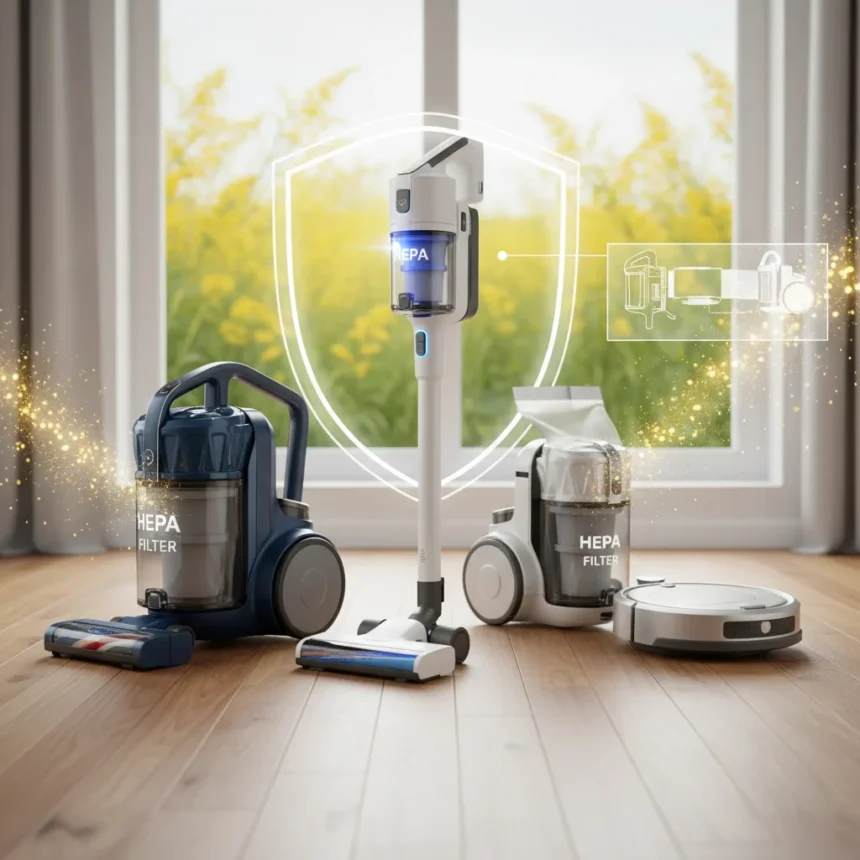
The best vacuums for seasonal allergies stop pollen and dust before they circulate through your home again. Rising pollen counts make the difference between a sneeze-free season and weeks of misery, and your vacuum choice matters far more than most people realize. A standard bagless vacuum releases trapped particles back into the air during emptying—exactly what allergy sufferers cannot afford. Purpose-built allergy vacuums flip this equation: sealed dust bags, true HEPA filtration, and powerful suction work together to trap 99.99% of allergens and keep them trapped.
Key Takeaways
- Bagged vacuums outperform bagless models for allergy control by sealing dust during disposal.
- True HEPA filters trap 99.97% of particles, making them essential for seasonal allergies.
- Shark PowerDetect models feature Detect mode, which auto-adjusts suction based on floor type and dirt level.
- AutoEmpty docks eliminate manual dust bin handling, reducing allergen re-exposure.
- Canister and upright designs both work for allergies—choice depends on home layout and mobility needs.
Best vacuums for seasonal allergies: What actually works
The best vacuums for seasonal allergies share three non-negotiable features. First, powerful suction extracts pollen and dust from carpet fibers and hard floors without requiring multiple passes. Second, true HEPA filtration—not marketing-speak HEPA-type filters—traps fine particles at 0.3 microns or smaller. Third, sealed dust bags prevent the moment of truth from becoming a disaster: when you empty the vacuum, allergens should stay trapped inside the bag, not explode into your breathing space. This combination directly addresses why standard vacuums fail allergy sufferers. A bagless vacuum with decent suction still loses when you empty it. A bagged vacuum without HEPA lets fine pollen particles escape through the exhaust. Only models with all three features genuinely reduce allergen levels in your home.
The Shark PowerDetect Upright Vacuum delivers on all three fronts with an unusual innovation: Detect mode adjusts suction power automatically based on floor type and dirt level, signaling clean floors through color-changing lights that shift from purple to white. This prevents the energy waste of running maximum suction on already-clean carpet while ensuring deep extraction where needed. The bulkier upright design generates stronger suction than stick vacuums, critical for pollen buried in carpet pile. Its Anti-Allergen Complete Seal and HEPA filtration trap 99.99% of dust, dander, and allergens, and the sealed dust bag prevents re-release when you dispose of it. The vacuum breaks apart into attachments for furniture, ceilings, and tight corners where pollen accumulates, plus a bendable wand reaches under furniture where vacuuming typically fails.
Cordless stick vacuums for allergies: A practical trade-off
Cordless stick vacuums sacrifice some suction power compared to upright models, but they win on convenience and daily use. The Shark PowerDetect Cordless Stick Vacuum pairs felt and washable foam filters with true HEPA filtration, meeting the basic allergen-trapping criteria. The significant shift for allergies is the optional AutoEmpty Dock: instead of manually opening the dust bin and releasing a cloud of particles, the dock automatically empties the vacuum into a sealed dust bag. This single feature can transform your allergy season. You never touch the collected dust directly, and the sealed bag prevents any re-circulation. For people who vacuum multiple times weekly—essential during high pollen season—removing the manual emptying step matters psychologically and physically.


The trade-off is real, though. Cordless stick vacuums run for a limited time per charge, typically 60 to 90 minutes depending on suction mode. For a small apartment, this works fine. For a three-bedroom house with heavy carpeting, you might need two charging cycles. Upright models plug in and deliver consistent power for as long as you can push them. Stick vacuums also generate less suction than upright equivalents, meaning you might need extra passes on deeply embedded pollen. If your home is primarily hard floors with light carpeting, a cordless stick with AutoEmpty is genuinely convenient. If you have extensive carpet or large spaces, the upright’s sustained power and stronger suction justify the bulkier footprint.
How sealed bags and HEPA filters trap allergens
A sealed dust bag is not a luxury—it is the difference between removing allergens and spreading them. When you empty a bagless vacuum, the sudden pressure change and movement of the dust cloud means fine particles escape into the air you breathe. Bagged vacuums contain this release because the bag itself is the seal. As long as you dispose of the full bag without tearing it, allergens stay contained. HEPA filtration works at the microscopic level, trapping particles as small as 0.3 microns—far smaller than pollen grains, which range from 10 to 100 microns. This layered approach means pollen gets caught by the main filter, fine dust gets caught by the HEPA layer, and the sealed bag ensures nothing escapes during emptying.


Bagged models consistently outperform bagless vacuums for allergy control, which is why allergy-focused recommendations emphasize bagged designs. The Shark models featured here use sealed dust bags as a core feature, not an afterthought. When comparing vacuums for seasonal allergies, ask whether the model uses a true sealed bag system and whether the HEPA filter is washable or replaceable. A non-replaceable HEPA filter that clogs after six months becomes useless. The Shark PowerDetect includes both felt and washable foam filters plus HEPA, meaning you can maintain filtration performance throughout the season without buying expensive replacements.
Upright versus cordless for allergy control
Choosing between upright and cordless depends on your home and cleaning habits. Upright vacuums generate stronger suction because they plug into wall power and do not sacrifice performance to battery limits. For homes with thick carpeting, high pollen counts, or multiple pets, the upright’s power advantage is worth the storage space and weight. The Shark PowerDetect Upright handles this role well, with Detect mode preventing wasted effort on already-clean areas while maximizing power where pollen hides. Cordless stick vacuums win on convenience, especially with AutoEmpty docks that eliminate allergen re-exposure during emptying. If you vacuum frequently but your home is smaller or primarily hard-floored, cordless makes sense. The real answer: if you have the space and budget, an upright handles deep cleaning during pollen season, and a cordless stick handles daily maintenance. Neither is objectively better—they solve different problems.
Frequently Asked Questions
What percentage of allergens do HEPA filters actually trap?
True HEPA filters trap 99.97% of particles at 0.3 microns or larger. This is a standardized measure, not marketing language. Shark’s claim of 99.99% trapping refers to their specific sealed system, which includes the HEPA filter plus the sealed dust bag working together. Do not confuse HEPA-type filters (which trap 85–90%) with true HEPA—read the specifications carefully.
Can a bagless vacuum work for allergies if it has a HEPA filter?
A bagless vacuum with HEPA filtration still fails allergy sufferers at the moment of emptying. When you open the dust bin and dispose of collected particles, fine allergens escape into the air. Bagged models with sealed disposal prevent this escape. If a bagless vacuum is your only option, it is better than nothing, but a bagged model with HEPA is significantly superior for seasonal allergies.



How often should I replace the HEPA filter?
Washable HEPA filters, like those in the Shark PowerDetect models, can be cleaned and reused throughout the season. Non-washable HEPA filters typically need replacement every 6–12 months depending on usage and allergen levels in your home. Check your vacuum’s manual for specific guidance, and replace sooner if you notice reduced suction.
Seasonal allergies do not have to mean sneezing through spring and early summer. The right vacuum—one with powerful suction, true HEPA filtration, and a sealed dust bag—genuinely reduces the allergen load in your home. The Shark PowerDetect models excel here, especially the cordless stick with AutoEmpty for people who want to eliminate the moment of allergen re-exposure entirely. Invest in a purpose-built allergy vacuum now, and you will spend the season breathing easier instead of reaching for tissues.
Where to Buy
$599.99 | No price information | $449.99 | No price information
Edited by the All Things Geek team.
Source: TechRadar