






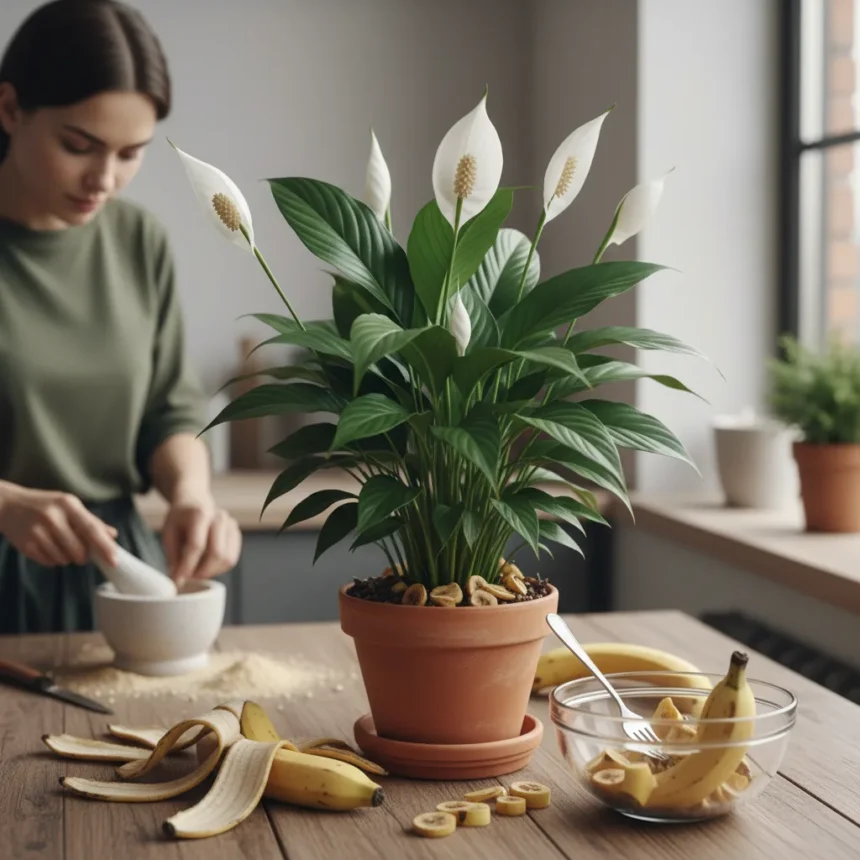
Banana peel fertilizer peace lily blooming is the zero-waste gardening hack that houseplant enthusiasts are raving about. Peace lilies (Spathiphyllum spp.) are among the most popular indoor plants, prized for their glossy foliage and elegant white flowers, yet many owners struggle with the frustrating reality that their plants refuse to bloom indoors. The culprit is often a potassium deficiency—and the solution sits in your kitchen waste bin.
Key Takeaways
- Banana peels contain potassium, phosphorus, and calcium—essential nutrients for flower production.
- Soak banana peels in water for 3-7 days to create a nutrient-rich fertilizer tea.
- Apply diluted banana peel tea every 2-4 weeks during spring and summer growing seasons.
- Peace lilies also need indirect light, consistent moisture, and temperatures between 65-85°F to bloom reliably.
- This free hack eliminates the cost of commercial bloom boosters like Miracle-Gro Bloom Booster.
Why Peace Lilies Stop Flowering Indoors
Indoor peace lilies fail to bloom for one primary reason: nutrient starvation. Unlike outdoor plants that receive natural mineral input from rainfall and decomposing organic matter, potted peace lilies depend entirely on what you feed them. Standard houseplant fertilizers often lack the potassium punch needed to trigger flowering. Most owners water their plants but skip feeding altogether, assuming soil nutrients last indefinitely. They don’t. Within months, the plant exhausts available potassium and redirects energy toward leaf production instead of flower formation.
Light and humidity also play supporting roles. Peace lilies prefer bright indirect light—not full sun, but not dim corners either. Low humidity (common in heated or air-conditioned homes) stresses the plant and suppresses blooming. Overwatering creates root rot, which prevents nutrient uptake entirely. All three conditions must align: adequate light, consistent but not soggy moisture, and nutrient availability. Fix the nutrient gap, and flowering often resumes within weeks.
How Banana Peel Fertilizer Works for Peace Lilies
Banana peels are nutrient powerhouses. A single peel contains potassium (essential for flower formation), phosphorus (root and bloom support), and calcium (cell structure). When steeped in water, these minerals leach into the liquid, creating a natural fertilizer tea that peace lilies absorb readily. Unlike synthetic fertilizers, banana peel tea releases nutrients slowly and won’t burn roots if applied too frequently. The method is simple, free, and aligns with the growing zero-waste gardening movement—why pay for Miracle-Gro Bloom Booster when banana waste works as effectively?



The science is straightforward. Potassium regulates water movement in plant cells and activates enzymes responsible for photosynthesis and flower bud formation. When a peace lily receives consistent potassium, it shifts from survival mode (grow leaves) to reproduction mode (make flowers). Phosphorus amplifies this effect by strengthening flower buds and extending bloom duration. Calcium prevents blossom-end rot and structural weakness. Together, these three nutrients create the exact chemical environment indoor peace lilies need to flower reliably.
Step-by-Step: Making and Using Banana Peel Tea
Start by collecting 2-3 ripe banana peels—organic peels are preferable to minimize pesticide residue, though conventional peels work fine. Chop the peels into small pieces (roughly 1-inch chunks) to maximize surface area and speed nutrient extraction. Place the chopped peels into a glass jar and cover with 1 liter (4 cups) of room-temperature water. Seal the jar loosely (or cover with a cloth) and leave it at room temperature for 3-7 days. Stir daily. The liquid will turn brown as minerals dissolve—this is the sign that extraction is complete.



After steeping, strain out all solid peel pieces and compost them (they’re excellent for outdoor gardens). Dilute the concentrated tea 1:1 with fresh water—this prevents nutrient overload and ensures even distribution. Pour the diluted solution into a watering can. Water your peace lily with the banana peel tea every 2-4 weeks during the active growing season (spring and summer). In fall and winter, reduce feeding to once monthly or skip entirely, as peace lilies enter dormancy and require fewer nutrients. Always ensure the pot has drainage holes; standing water combined with nutrient-rich tea invites root rot.
Safety note: Ensure your peace lily is already established and healthy before fertilizing. If the plant shows signs of root rot (mushy stems, foul odor), repot it into fresh soil and wait 2-3 weeks before applying any fertilizer. Feeding a diseased plant accelerates decline.
Creating the Ideal Blooming Environment
Fertilizer alone won’t trigger blooms if other conditions are wrong. Peace lilies demand bright indirect light—place yours within 3-6 feet of an east or west-facing window, or near a north-facing window. Direct afternoon sun scorches leaves and stresses the plant. If your peace lily sits in a dim corner, move it closer to a light source first; no amount of fertilizer will compensate for inadequate light.
Soil moisture must be consistent but not waterlogged. Check the top inch of soil daily; water when it feels dry to the touch. Overwatering is the most common mistake. Peace lilies will actually droop slightly when thirsty—this is their way of signaling water need. Wait for this signal rather than watering on a fixed schedule. Humidity matters too. Mist the leaves 2-3 times weekly or place the pot on a pebble tray filled with water (keep the pot above the water line to prevent root rot). Aim for 50% humidity or higher.



Temperature consistency is often overlooked. Peace lilies thrive in temperatures between 65-85°F (18-29°C). Cold drafts from windows or heating vents stress the plant and suppress flowering. Keep your plant away from air conditioning vents and cold glass in winter. If your home dips below 60°F at night, move the peace lily to a warmer spot. Combine banana peel fertilizer with these conditions, and blooming typically resumes within 4-8 weeks.
Banana Peels vs. Other Fertilizer Options
Commercial bloom boosters like Miracle-Gro Bloom Booster deliver fast results and precise nutrient ratios, but they cost money and introduce synthetic chemicals into your home. Banana peel tea is free, chemical-free, and just as effective for peace lilies—the only trade-off is a 3-7 day brewing window instead of instant application. Other kitchen scraps complement banana peels nicely. Eggshells add calcium (crush them finely and steep alongside peels), while coffee grounds contribute nitrogen for leaf vigor. However, banana peels remain the star ingredient for triggering blooms specifically.
The zero-waste angle resonates with modern gardeners. Instead of tossing banana peels into landfill, you’re converting kitchen waste into plant food. Over a year, a household that uses 2-3 bananas weekly generates enough peels to fertilize multiple peace lilies continuously. This approach saves money, reduces waste, and eliminates packaging waste from store-bought fertilizers. For budget-conscious plant parents or those committed to sustainable living, banana peel tea is unbeatable.
Troubleshooting: When Banana Peel Tea Isn’t Enough
If your peace lily still refuses to bloom after 8 weeks of banana peel fertilizer and improved light/moisture, suspect root rot or pest infestation. Check the soil for a sour smell or the roots for mushy texture—signs of rot. If present, repot the plant into fresh soil immediately and hold off fertilizing for 3 weeks. Inspect the undersides of leaves for spider mites or mealybugs, which weaken plants and suppress flowering. Treat infestations with neem oil or insecticidal soap before resuming fertilizer applications.
Another possibility is that the plant is rootbound—the roots have filled the entire pot and cannot absorb water or nutrients efficiently. If you see roots circling the drainage holes or poking through them, repot into a container 1-2 inches larger in diameter. Use fresh potting soil (not garden soil) and water thoroughly. Rootbound plants often respond dramatically to repotting, flowering within weeks as new soil space opens up nutrient availability.
FAQ: Banana Peel Fertilizer for Peace Lilies
Can I use banana peel fertilizer on other houseplants?
Yes. Any flowering houseplant benefits from the potassium boost. Orchids, African violets, and begonias respond especially well. Leafy plants like philodendrons and pothos also tolerate banana peel tea without issue, though they may not show dramatic flowering response. Always dilute 1:1 with water to avoid nutrient burn on sensitive species.
How long does banana peel tea stay fresh?
Use it within 1-2 weeks of straining. If you notice mold, fermentation smell, or discoloration, discard the batch and brew a fresh one. Storing the concentrated tea in the refrigerator extends shelf life to 3-4 weeks, but room-temperature storage limits viability. For convenience, brew a fresh batch every 2-4 weeks aligned with your feeding schedule.
What if I don’t have banana peels on hand?
Eggshell tea (calcium) or coffee grounds (nitrogen) work as alternatives, though neither delivers the potassium boost that banana peels provide. If you eat bananas regularly, save peels in a freezer bag until you have enough to brew. Frozen peels steep just as effectively as fresh ones and solve storage concerns.
Banana peel fertilizer peace lily success hinges on consistency. Brew the tea, apply it every 2-4 weeks during growing season, ensure bright indirect light and appropriate moisture, and your peace lily will reward you with abundant white blooms. It costs nothing, takes minimal effort, and transforms a frustratingly non-flowering plant into a reliable bloomer. In a houseplant market saturated with expensive fertilizers and complicated care regimens, this kitchen scrap hack proves that the simplest solutions often work best.
Where to Buy
Amazing StuffGarden Gloves$9.99shop now | 17% OFFFelco F2 Pruning Shears$71$86shop now | 19% OFFQilebiWatering Can for Indoor and Outdoor Plants$12.99$15.99shop now | 11% OFFGrampa's Weeder$39$44shop now
This article was written with AI assistance and editorially reviewed.
Source: Tom's Guide