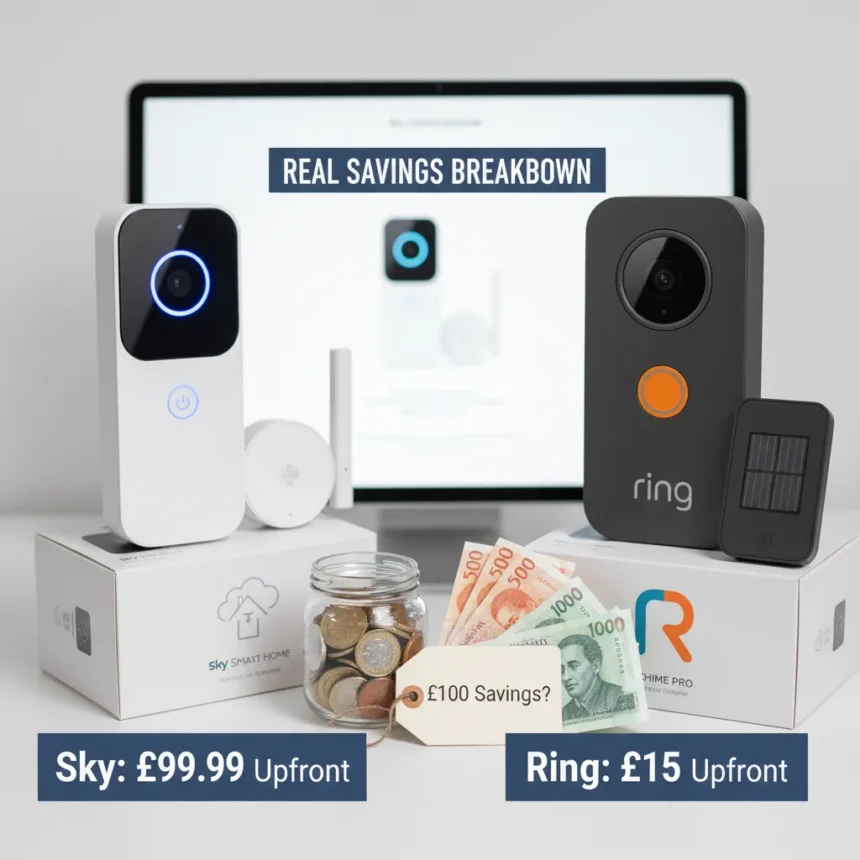
Sky Smart Home doorbell bundle is the company’s new video doorbell offering, announced around April 2026, that bundles cameras and alerts without requiring a subscription for basic features. The headline promise: save up to £100 versus Ring’s rival product. But the math gets messier once you account for upfront costs, subscription fees, and what each system actually delivers.
Key Takeaways
- Sky Smart Home doorbell costs £99.99 upfront with no mandatory subscription for basic features
- Ring Video Doorbell costs only £15 upfront but requires a subscription starting from £2.50 per month
- Sky’s bundle claim of £100 savings depends on comparing multiple devices and subscriptions together
- Ring lacks local storage and Apple HomeKit integration, while Sky emphasizes Wi-Fi direct connectivity
- Long-term cost comparison favors Sky only if you use the full bundle and keep the subscription for multiple years
The Upfront Cost Shock
The first thing that hits you is the price difference at the till. Sky Smart Home doorbell demands £99.99 upfront, while Ring Video Doorbell sits at just £15. That is a £84.99 gap right out of the box. For budget-conscious buyers, Ring wins immediately—you can grab one for less than a coffee and pastry. Sky’s premium entry point is the trade-off for skipping the subscription requirement on basic features.
But upfront cost tells only half the story. Ring’s low door price is a classic loss-leader strategy: get the hardware into homes, then monetize through recurring subscriptions. Sky is betting the opposite way—charge more upfront, offer no mandatory subscription for essential features, and let the bundle value proposition do the selling.
Subscriptions: Where the Real Money Flows
This is where Sky Smart Home doorbell bundle’s value case actually lands. Ring requires a subscription to unlock cloud video history, motion alerts, and other core features—starting from £2.50 to £3 per month depending on region. Over two years, that is £60 to £72 in subscription fees on top of the £15 hardware cost. Sky’s £4.99 monthly subscription is optional for basic doorbell use, meaning you can install and operate the device without paying monthly if you do not need extended cloud storage or advanced integrations.


The bundle claim of up to £100 savings assumes you are comparing Sky’s complete system (doorbell plus cameras plus alerts in one subscription) against buying Ring’s doorbell, cameras, and separate subscriptions for each device. That bundling advantage is real—but only if you actually use multiple devices. A single doorbell buyer will not see anywhere near £100 in savings.
Features and Ecosystem: What You Actually Get
Ring Video Doorbell has a critical weakness: no local storage and no direct integration with Apple HomeKit or Google Home. You are locked into Amazon’s ecosystem and forced to rely on cloud storage for any video history. Sky Smart Home doorbell bundle connects directly to Wi-Fi without requiring a hub, and the emphasis on local functionality suggests fewer cloud dependencies.



Arlo cameras, Ring’s wireless outdoor competitor, require their own Arlo Secure subscription starting from £2.79 per month and support Alexa, Google Assistant, and Apple HomeKit. That ecosystem flexibility matters if you have a mixed smart home setup. Sky’s approach is more proprietary but potentially simpler if you are starting from scratch and want everything under one subscription umbrella.
The real question is whether you trust Sky’s no-subscription-required promise to last. Companies frequently introduce “free” features and later paywall them as adoption grows. Ring’s subscription model is transparent: you know exactly what costs money. Sky’s model is less clear on what happens if you want features beyond the basics.
The Bundle Math Does Not Always Add Up
Sky’s £100 savings claim requires buying multiple devices and comparing total cost of ownership over time. If you buy just the doorbell and never add cameras, you are paying £99.99 upfront for a device that costs £15 elsewhere, with a subscription that may or may not be necessary depending on your storage needs. That is not a saving—that is a premium for the privilege of avoiding subscriptions on basic features.
The savings emerge only if you commit to Sky’s ecosystem long-term and use the bundle across multiple devices. For a single-device buyer, Ring’s lower entry price and optional subscription (you can skip it if you do not need cloud history) might actually cost less over two years. For a multi-device household, Sky’s bundled subscription could deliver genuine savings.



Who Should Buy Which?
Choose Ring if you want the lowest upfront cost, do not mind Amazon’s ecosystem, and are willing to pay monthly for cloud features. Choose Sky Smart Home doorbell bundle if you want to avoid recurring subscriptions on basic features, prefer Wi-Fi direct connectivity without a hub, and plan to add multiple devices under one subscription. Neither choice is objectively right—it depends on your budget timeline and ecosystem loyalty.
Does Sky Smart Home doorbell bundle really save £100?
Only if you compare a multi-device Sky bundle against multiple Ring devices with separate subscriptions over several years. A single doorbell comparison shows Sky costs more upfront. The savings claim is real but conditional on buying the full system and staying committed to Sky’s platform long-term.
Can you use Sky Smart Home doorbell without a subscription?
Yes. Sky Smart Home doorbell works without a mandatory subscription for basic features, unlike Ring which requires one for cloud video history and motion alerts. You will not have cloud backup or advanced features, but the doorbell will function as a doorbell.
Is Ring cheaper than Sky Smart Home over two years?
For a single doorbell: Ring costs £15 plus £2.50–£3 monthly (£60–£72 over two years) = £75–£87 total. Sky costs £99.99 upfront with optional subscription. If you skip Sky’s subscription, Sky is more expensive. If you subscribe to Sky for two years at £4.99 monthly, you pay £219.75 total—more than Ring. The £100 savings only materializes when comparing multi-device bundles.
Sky Smart Home doorbell bundle is a legitimate alternative to Ring, but the savings narrative is oversold for single-device buyers. The real advantage is architectural: no mandatory subscription on basics, direct Wi-Fi connectivity, and a cleaner bundle strategy if you want multiple devices. Ring remains the budget entry point, but Sky’s premium upfront cost buys you flexibility that Ring’s subscription model does not offer. Choose based on ecosystem preference and device count, not on vague savings claims.
Edited by the All Things Geek team.
Source: TechRadar