






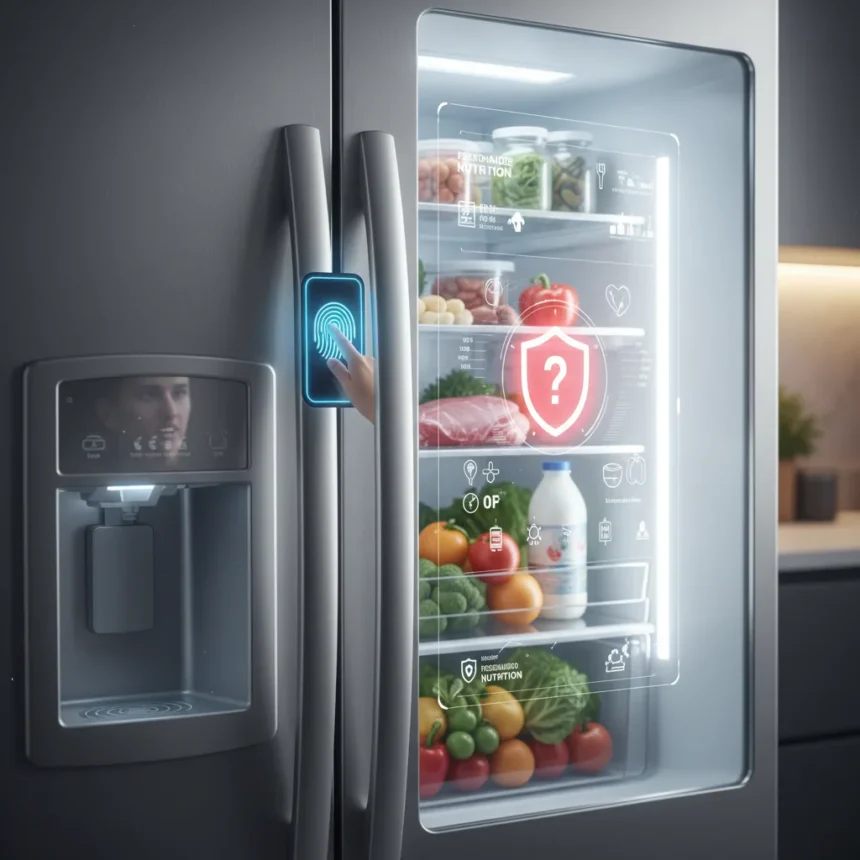
Smart fridge fingerprint scanning represents a troubling convergence of convenience and surveillance that may not belong in your kitchen. A new generation of intelligent refrigerators now combines food recognition, biometric identification, and robotic organization to deliver personalized nutrition advice—but the privacy implications deserve serious scrutiny before you invite this technology into your home.
Key Takeaways
- Smart fridges now scan food items and user fingerprints to provide personalized nutrition guidance tailored to individual health goals.
- Biometric data collection in household appliances raises significant privacy and data security concerns for consumers.
- Robotic arms inside smart fridges automatically organize and sort food to reduce waste and manual effort.
- The personalized nutrition market is projected to exceed $38 billion by 2030, driving rapid development of AI-powered food tracking solutions.
- Existing alternatives like food tracking apps and wearable glucose monitors offer nutrition insights without the privacy trade-offs of smart appliances.
How Smart Fridge Fingerprint Scanning Works
The technology combines three core capabilities into a single appliance. Food scanning identifies and catalogs items stored inside the fridge, creating a real-time inventory of what you have available. Fingerprint biometrics then link this food data to individual users, allowing the system to deliver personalized nutrition recommendations based on each person’s health profile, dietary restrictions, or metabolic goals. A robotic arm physically organizes items inside the fridge, sorting food by type or expiration date to minimize waste and improve accessibility. Together, these systems create a kitchen appliance that monitors not just what you own, but what you eat and who eats it.
The appeal is obvious: automatic inventory tracking eliminates the mental burden of meal planning, the robotic arm reduces food waste, and personalized advice could theoretically help you make healthier choices. But this convenience comes at a cost that manufacturers rarely emphasize clearly. Your fingerprints are among the most sensitive biometric identifiers you possess. Unlike a password that can be changed if compromised, your fingerprints are immutable. Storing them in a kitchen appliance connected to the internet creates a permanent record of your identity linked to your eating habits, dietary choices, and health status.
The Privacy Problem Nobody Wants to Discuss
Biometric data collection in household appliances represents a fundamental shift in how technology invades domestic privacy. Food tracking apps like MyFitnessPal or Eat This Much offer similar nutrition insights, but they require you to actively log your meals—you remain in control of what data is collected and when. Smart fridge fingerprint scanning eliminates that choice. Every time you open the door, your biometric data is captured and linked to your food choices. Over months and years, this creates an intimate portrait of your eating patterns, dietary preferences, health concerns, and household composition.



The real danger lies not in today’s manufacturers but in tomorrow’s data brokers. Appliance companies rarely maintain their own data infrastructure long-term. When a company is acquired, goes bankrupt, or pivots its business model, your biometric and nutritional data becomes a commodity. Insurance companies, employers, or health-related third parties could theoretically access this information to make decisions about your coverage, hiring, or treatment. Even with strong privacy policies today, there is no guarantee those policies will hold when ownership or regulations change. The fingerprint scanner is not just a convenience feature—it is a permanent surveillance tool in your home.
Existing Alternatives Offer Nutrition Insights Without the Privacy Trade-Off
If personalized nutrition guidance is your actual goal, better options already exist that do not require surrendering biometric data to an appliance manufacturer. Food tracking apps using AI photo recognition, such as Calorie Mama, can identify meals from smartphone photos and provide nutritional breakdowns without storing your fingerprints. Wearable glucose monitors, used by more than 10% of Americans with diabetes, deliver real-time feedback on how specific foods impact your body, offering insights far more sophisticated than any smart fridge could provide.



Apps like SideChef combine AI meal planning with biometric integration, allowing you to track nutrition and adapt recipes based on your health data—but critically, you control the data flow and can delete your account whenever you choose. These tools address the same underlying desire: understanding your body’s relationship with food. The personalized nutrition market is projected to surpass $38 billion by 2030, reflecting genuine consumer interest in this category. But that growth does not require smart appliances monitoring your kitchen in real-time. It requires tools you can use, pause, or delete without losing access to your home.
The Psychological Cost of Judgmental Appliances
Beyond the technical privacy concerns lies a subtler but equally important issue: the psychological impact of constant dietary monitoring. A smart fridge that tracks what you eat and judges it against your stated health goals becomes a silent critic in your kitchen. If you grab ice cream at midnight, the appliance knows. If you buy unhealthy snacks for your child, the data is recorded. Over time, this creates a chilling effect on behavior—not necessarily because the appliance enforces rules, but because you internalize the surveillance and begin to self-censor.
This matters for mental health. Disordered eating patterns, anxiety around food, and shame about dietary choices are serious clinical issues. An appliance that passively observes and judges your food intake could exacerbate these problems for vulnerable users. Teenagers negotiating their relationship with food, adults recovering from eating disorders, or anyone struggling with body image may find that constant surveillance makes their kitchen feel hostile rather than welcoming. The convenience of automatic inventory management does not justify that psychological cost.
Is a smart fridge with fingerprint scanning worth the privacy risk?
For most households, the answer is no. The convenience benefits—automatic inventory, robotic organization, personalized nutrition tips—can be achieved through less invasive tools. A simple smart inventory app, a wearable glucose monitor, and a food tracking app together cost far less than a smart fridge and preserve your privacy entirely. Unless you have a specific medical need to monitor your food intake with extreme precision, the privacy trade-off does not justify the purchase.


What data does a smart fridge fingerprint scanner actually collect?
A smart fridge with fingerprint scanning collects your biometric identifier, a complete log of food items in your home, timestamps of when items are added or removed, and aggregated nutritional data linked to your identity. This creates a comprehensive record of your eating patterns, household composition, dietary preferences, and health status. That data is typically stored on manufacturer servers and subject to their privacy policies, which can change.
Can you use a smart fridge without the fingerprint scanning feature?
Some smart fridges may allow you to disable biometric features and use food scanning alone, though this varies by model and manufacturer. However, if a fingerprint scanner is built into the appliance, disabling it does not delete the hardware or eliminate the temptation for future software updates to re-enable it. The safest approach is to avoid purchasing appliances with biometric sensors entirely and instead use standalone tools you can control.
The smart fridge with fingerprint scanning is a perfect example of technology solving a problem nobody asked for while creating far larger problems in exchange. Convenience is seductive, but not all convenience is worth the cost. Your kitchen should remain a private space where you make choices without an appliance watching, judging, and recording. Until manufacturers can guarantee absolute data security and permanent user control, smart fridge fingerprint scanning belongs on the shelf, not in your home.
This article was written with AI assistance and editorially reviewed.
Source: TechRadar