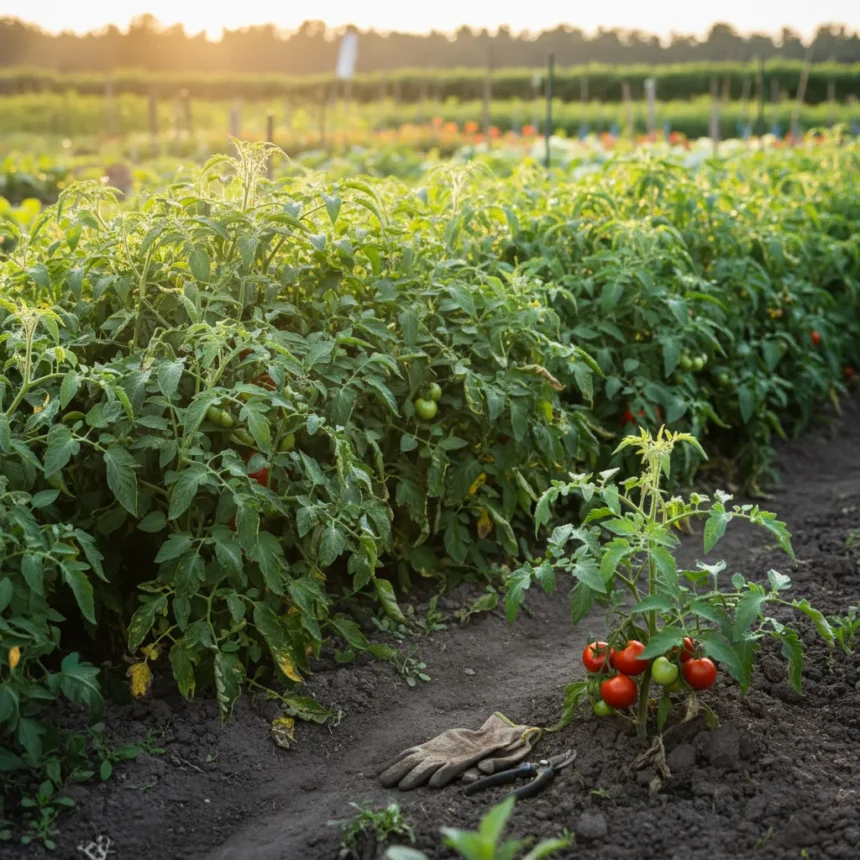
Tomato planting spacing is one of the most overlooked factors in home gardening, yet it directly determines whether your plants thrive or fail. Gardeners often cram tomato plants into tight spaces, thinking they can maximize yield in small areas. The opposite happens: crowding restricts airflow, invites disease, and stunts growth. Understanding proper spacing is the difference between a robust harvest and a disappointing one.
Key Takeaways
- Plant tomatoes up to 3 feet apart to ensure adequate airflow and prevent disease
- Crowding tomato plants causes stunted growth, unhealthy soil conditions, and smaller harvests
- Well-draining soil is essential; clay and compacted earth block root expansion and nutrient absorption
- Restricted airflow from tight spacing increases bacterial and fungal disease risk
- Root competition for space and nutrients intensifies when plants are planted too close together
Why Tomato Planting Spacing Matters More Than You Think
Tomato planting spacing directly controls airflow around foliage and stems. When plants sit too close, moisture lingers on leaves, creating an ideal breeding ground for bacteria and fungal diseases. Crowded tomatoes also compete fiercely for nutrients and water as their root systems expand underground. The result is weaker plants that produce smaller fruit and exhaust soil faster.
Gardeners with limited backyard space often assume they can work around this by planting densely. They cannot. Crowding in concentrated areas exacerbates stunted growth, depletes soil health, and reduces harvest quality. The mistake seems innocent—more plants in the same footprint should mean more tomatoes—but biology does not work that way. Airflow is not optional; it is essential for plant vigor.
The Ideal Spacing for Healthy Tomato Plants
The standard recommendation is up to 3 feet between tomato plants. This spacing allows roots to spread without competing for the same nutrients and water reserves. It also ensures enough distance between foliage to permit air circulation, reducing disease pressure. If nearby plants are present, keep tomatoes even further away to minimize resource competition.


Three feet may seem excessive in a small garden, but it is not negotiable if you want healthy plants. Gardeners who ignore this spacing almost always end up with weak growth and disease problems by mid-season. The initial temptation to pack more plants into less space costs far more in failed harvests than the space itself is worth.
Soil Quality Compounds the Spacing Problem
Even with proper spacing, poor soil sabotages tomato growth. Tomato plants require well-draining soil, not clay or hard, compacted earth. Hard, compacted soil hinders root spread and nutrient absorption, making plants more vulnerable to stress and disease. When crowding is combined with poor drainage or compacted soil, failure becomes almost certain.



Before planting, amend your soil with organic matter to improve drainage and structure. If your soil is clay-heavy or compacted, loosen it thoroughly. Blossom end rot—a calcium deficiency disorder—often appears in tomatoes grown in poorly draining or nutrient-depleted soil. Proper spacing alone cannot compensate for soil neglect. Both matter equally.
How to Plan Your Tomato Garden Layout
Start by measuring your available space and calculating how many tomato plants will fit with 3 feet between each one. This honest assessment often reveals you can fit fewer plants than you hoped. Accept this limit. A small number of healthy, vigorous tomato plants outproduces a large number of crowded, diseased ones every season.
Mark planting positions before you dig. Use stakes or string to visualize the 3-foot spacing, then adjust your layout if needed. Keep tomatoes away from other garden plants that might compete for resources or block airflow. Consider sun exposure as well—tomatoes need full sun, and crowding compounds shading issues. A thoughtful layout takes 15 minutes and prevents months of frustration.
Common Questions About Tomato Spacing
Can I plant tomatoes closer than 3 feet in a small garden?
Not if you want healthy plants. Three feet is the minimum for reliable airflow and root expansion. Planting closer invites disease and stunted growth. If space is truly limited, grow fewer plants in containers or raised beds instead of cramming more into the ground.



What happens if I ignore spacing recommendations?
Crowded tomatoes develop restricted airflow, leading to fungal and bacterial diseases. Roots compete for nutrients and water, stunting growth and reducing fruit size. Harvests shrink dramatically, and plants often fail mid-season. The time spent troubleshooting disease is far greater than the time saved by skipping proper spacing initially.
Does soil type affect spacing needs?
Soil quality cannot replace spacing, but it amplifies spacing problems. Poor drainage or compacted soil combined with crowding creates ideal conditions for disease and nutrient deficiency. Even with proper spacing, neglecting soil preparation will disappoint you. Invest in both spacing and soil health.
Tomato planting spacing is not a guideline to bend—it is a biological requirement. Three feet between plants ensures the airflow, root space, and nutrient availability that tomatoes need to produce abundantly. Combined with well-draining soil and thoughtful garden layout, proper spacing transforms a crowded, disease-prone mess into a thriving harvest. Stop fighting biology and give your tomatoes room to breathe.
Where to Buy
17% OFFFelco F2 Pruning Shears$71$86shop now | Amazing StuffGarden Gloves$9.99shop now | 17% OFFLegigo6-Pack Tomato Cage for Garden Plant Support- Up to 48inch $27.54$32.99shop now | 11% OFFGrampa's Weeder$39$44shop now
Edited by the All Things Geek team.
Source: Tom's Guide