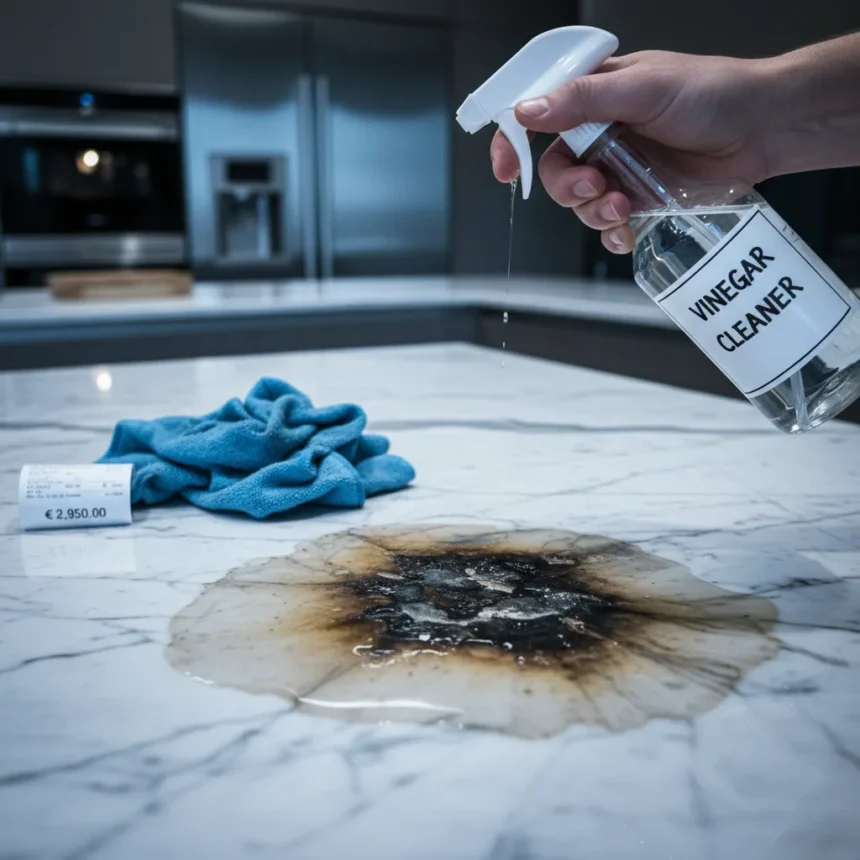
A vinegar cleaning mistake is costing homeowners thousands of dollars in kitchen repairs, and the culprit is far more common than most realize. The acidity in vinegar, while effective for cutting grease and mineral deposits, can wreak havoc on certain kitchen surfaces when used improperly, potentially leading to repair bills as high as $3,000.
Key Takeaways
- Vinegar’s acidity can damage specific kitchen surfaces if applied incorrectly or too frequently.
- Repair costs from vinegar-related damage can reach up to $3,000 depending on the affected surface.
- Many homeowners unknowingly use vinegar on surfaces that require gentler cleaning methods.
- Understanding which kitchen materials are vinegar-safe is essential to avoiding costly damage.
- Alternative cleaning products exist for surfaces that vinegar can harm.
Why vinegar cleaning mistake happens so often
The vinegar cleaning mistake occurs because vinegar has earned a reputation as a universal household cleaner. It’s cheap, readily available, and does work on many surfaces. This widespread approval has led homeowners to apply it indiscriminately throughout their kitchens without understanding the material-specific risks. The problem intensifies when vinegar is used repeatedly or in concentrated forms, which accelerates surface degradation on vulnerable materials.
Kitchen environments present unique challenges because surfaces there experience constant moisture exposure, temperature fluctuations, and heavy use. When vinegar’s acidic properties interact with certain finishes and materials over time, the damage compounds. What starts as a small etching or discoloration can evolve into structural failure requiring full replacement of countertops, backsplashes, or appliance finishes.
Which kitchen surfaces suffer from vinegar cleaning mistake
The vinegar cleaning mistake primarily affects natural stone surfaces, sealed wood, and certain metal finishes commonly found in kitchens. Stone countertops like marble, limestone, and granite contain calcium carbonate, which reacts chemically with acetic acid in vinegar. This reaction creates pitting and etching that cannot be reversed without professional refinishing. Sealed wood cabinets and cutting boards can also suffer when vinegar penetrates the protective coating, leading to warping and finish degradation.


Stainless steel appliances represent another major casualty of the vinegar cleaning mistake. While stainless steel sounds durable, its protective oxide layer can be compromised by repeated vinegar exposure, leaving streaks and encouraging rust formation. Grout lines in tile backsplashes are similarly vulnerable—vinegar can weaken the grout structure, making tiles loose and creating water infiltration pathways that damage underlying drywall and framing.
How to avoid the vinegar cleaning mistake
The first step in avoiding the vinegar cleaning mistake is identifying your kitchen’s material composition. Before applying any acidic cleaner, verify whether surfaces are natural stone, sealed wood, or specialty finishes. For countertops and backsplashes, check manufacturer documentation or consult a kitchen designer if you’re unsure. This single precaution prevents most costly mistakes.



For surfaces where vinegar is safe—such as glass, ceramic tile faces, and some laminate countertops—dilute the vinegar with water to reduce its acidity. A 1:1 ratio or even 1:3 (vinegar to water) maintains cleaning power while minimizing surface exposure. Avoid letting vinegar sit on any surface for extended periods. Spray, wipe immediately, and rinse thoroughly with clean water to prevent residual acid from continuing to work on the material.
Alternative cleaners exist for surfaces vulnerable to the vinegar cleaning mistake. PH-neutral cleaners, specially formulated stone cleaners, and gentle dish soap solutions are safer options for marble, granite, wood, and stainless steel. These alternatives clean effectively without the chemical aggression that causes irreversible damage. Many professional kitchen cleaners recommend keeping multiple products on hand rather than relying on vinegar as a one-size-fits-all solution.
FAQ: Understanding vinegar cleaning mistakes
Can vinegar damage all kitchen surfaces?
No. Vinegar is safe for glass, ceramic tile faces, and some laminate surfaces. The vinegar cleaning mistake occurs on natural stone, sealed wood, stainless steel, and grout. Always verify your specific materials before using vinegar anywhere in your kitchen.
How quickly does vinegar damage kitchen surfaces?
Damage varies by material and vinegar concentration. A single exposure rarely causes visible harm, but repeated use over weeks or months creates noticeable etching, discoloration, and structural weakening. The vinegar cleaning mistake becomes expensive when the damage is discovered only after months of regular use.



What’s the best way to clean kitchen counters safely?
Use pH-neutral cleaners or warm soapy water for most kitchen surfaces. For stone, use stone-specific products. For stainless steel, use microfiber cloths with minimal moisture. For sealed wood, use a damp cloth with minimal water. This approach eliminates the risk of the vinegar cleaning mistake entirely.
Protecting your kitchen from the vinegar cleaning mistake requires one simple habit: matching your cleaner to your surface. The few dollars saved by using vinegar universally pale in comparison to the thousands spent replacing damaged countertops, cabinets, or appliances. Before reaching for that bottle of vinegar, take thirty seconds to confirm your surface can handle it. That small pause prevents expensive regret.
Edited by the All Things Geek team.
Source: Tom's Guide