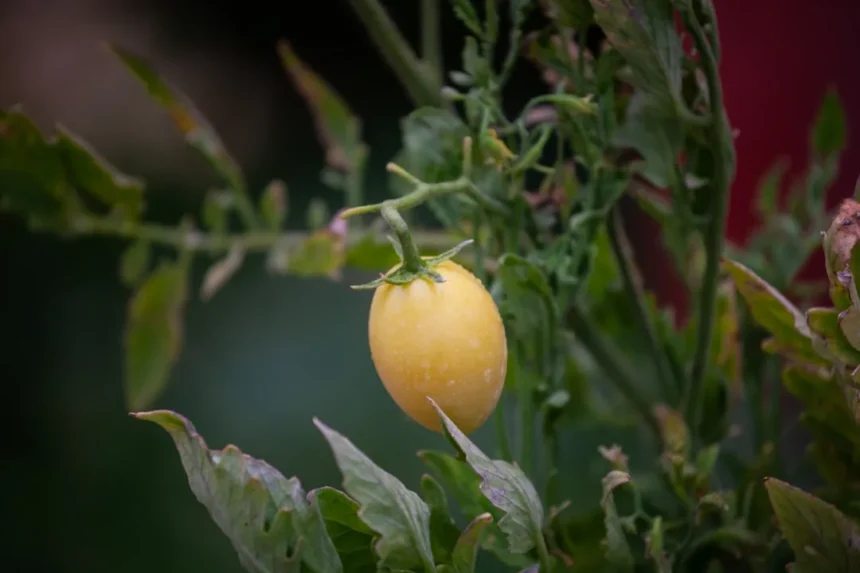
Yellow tomato plant leaves signal trouble—but the cause is not always obvious. Nutrient deficiencies, overwatering, underwatering, pests, diseases, and poor spacing all produce the same symptom: yellowing foliage that threatens your summer harvest. The good news is that most causes are preventable or reversible if you act quickly. Here’s how to diagnose yellow tomato plant leaves and restore your plants to health.
Key Takeaways
- Yellow leaves result from watering mistakes, nutrient deficiencies, pests, fungal disease, or crowded spacing.
- Overwatering causes root rot and yellowing; underwatering causes wilting and yellowing.
- Early blight and late blight start on lower leaves in cool, humid conditions with no cure—prevention is essential.
- Pruning lower leaves improves airflow, reduces disease risk, and redirects energy to fruiting.
- Tomato plants need 8+ hours of direct sun, well-draining soil, and consistent moisture to stay healthy.
Step 1: Assess Your Watering Habits
Watering mistakes are the most common cause of yellow tomato plant leaves. Both overwatering and underwatering damage the plant, though in different ways. Overwatering leads to root rot, stunted growth, and yellowing foliage; underwatering causes wilting and the same yellowing effect. The solution is simple but requires discipline: water only when the top inch of soil is dry. Stick your finger into the soil near the base of the plant. If it feels moist, wait. If it feels dry, water deeply.
How you water matters as much as how often. Overhead watering—spraying foliage from above—keeps leaves wet and creates ideal conditions for fungal disease. Instead, use drip irrigation or soaker hoses at the base of the plant. This delivers water directly to the roots while keeping foliage dry. In humid climates or after rain, wet leaves are a disease trap. Drip systems eliminate that risk entirely.
Step 2: Inspect for Pests and Fungal Disease
Fungal diseases are the second major culprit behind yellow tomato plant leaves. Early blight and late blight are the two most destructive, and both attack lower leaves first. Early blight thrives in cool, humid conditions—the kind that follow heavy rain. If conditions remain cool and humid for several days, spores take hold and spread rapidly. Late blight produces water-soaked spots that enlarge quickly and can kill entire leaves. Both diseases have no cure once established, so your goal is prevention, not treatment.


Look closely at the lower leaves. Early blight appears as yellow rings on lower foliage; late blight shows water-soaked spots with yellow rings that turn brown or purplish. If you spot either, remove the affected leaves immediately with clean shears to slow spread. More importantly, prevent blight from taking root in the first place. Rotate crops: avoid planting tomatoes, potatoes, or eggplants in the same spot for 2–3 years. These plants share the same fungal pathogens, so crop rotation breaks the disease cycle.
Step 3: Evaluate Soil Quality and Nutrient Levels
Nitrogen deficiency is a common nutritional cause of yellow tomato plant leaves. Nitrogen-starved plants show yellowing while the veins stay green. If your soil lacks nutrients, no amount of watering will fix the problem. Test your soil before planting to identify deficiencies. Once you know what is missing, amend the soil with compost or a balanced fertilizer. A 2–3 inch layer of mulch—straw or grass clippings—helps retain moisture and gradually improves soil structure as it breaks down.



Healthy soil is the foundation of healthy plants. Tomatoes are heavy feeders and demand rich, well-draining soil. If you planted in poor soil and are now seeing yellowing mid-season, side-dress the plant with compost around the base. This is not a quick fix—it takes weeks to show results—but it addresses the root cause rather than masking symptoms.
Step 4: Fix Spacing and Prune Aggressively
Crowded tomato plants create their own problems. When plants are too close together, airflow suffers and sunlight cannot reach lower leaves. Lower leaves then turn yellow and remain perpetually soggy. Poor air circulation also creates a microclimate where fungal spores thrive. Spacing plants adequately during planting prevents this entirely, but if your plants are already crowded, pruning is your corrective tool.
Prune lower leaves and branches regularly with clean shears. Remove any leaves within 12 inches of the soil line—these are the most vulnerable to fungal diseases and the least productive for fruiting. Also remove suckers (the shoots that grow between the main stem and branches) and any diseased or damaged foliage. This redirects the plant’s energy toward producing fruit rather than maintaining weak lower growth. Pruning also improves airflow, dries foliage faster after rain, and makes it harder for disease spores to establish.
Step 5: Optimize Light and Environment
Tomato plants require full sun—ideally 8 or more hours daily—to thrive. Insufficient light weakens the plant and increases susceptibility to disease. If your tomato patch is in partial shade, consider relocating plants next season or pruning nearby trees and shrubs to increase sunlight exposure. Good airflow is equally important. Prune to open up the canopy, allowing air to move freely through the plant. This dries foliage quickly and reduces fungal pressure.
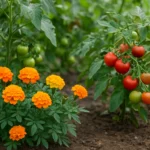


Environmental stress compounds other problems. Heat stress, cold snaps, and sudden changes in moisture trigger yellowing even in otherwise healthy plants. Mulching moderates soil temperature and maintains consistent moisture. Companion planting with pollinator-attracting plants like marigolds and basil boosts fruit yield and creates a healthier garden ecosystem without the need for pesticides.
Can yellow tomato plant leaves turn green again?
Leaves that are already yellow will not turn green again. However, new growth will be healthy and green once you fix the underlying cause—whether that is adjusting watering, improving soil, or removing diseased foliage. Focus on preventing further yellowing rather than reversing existing damage.
How long does it take to see improvement after fixing watering?
New growth typically appears within 1–2 weeks of correcting watering habits. If root rot is severe, recovery takes longer or may not occur at all. That is why catching the problem early is critical.
Should I remove all yellow leaves at once?
Remove lower leaves and any diseased foliage immediately, but avoid stripping the plant bare. Leave enough healthy foliage to photosynthesize and support fruit development. A gradual approach over several days is gentler on the plant than removing everything at once.
Yellow tomato plant leaves are a warning sign, not a death sentence. Most causes are preventable with consistent watering, proper spacing, good airflow, and crop rotation. If you catch the problem early and address the root cause—whether that is overwatering, poor soil, crowding, or fungal disease—your plants will recover and produce a full harvest. The key is acting fast and staying vigilant through the growing season.
Edited by the All Things Geek team.
Source: Tom's Guide