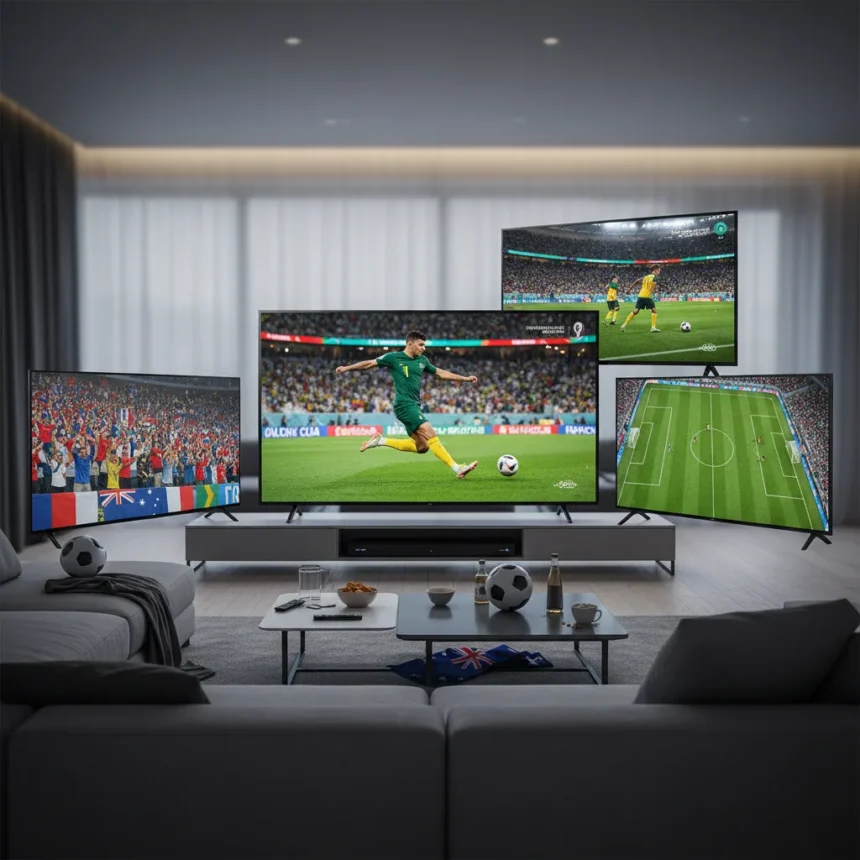
The FIFA World Cup 2026 kicks off in roughly 6 weeks, and if you’re planning to gather friends and family around a proper display, big-screen TVs from LG, Samsung, Hisense, and TCL deliver the immersive experience that tournament football demands.
Key Takeaways
- FIFA World Cup 2026 arrives in 6 weeks—the ideal window to upgrade your viewing setup.
- LG OLEDs and Samsung mini-LEDs lead the premium segment for World Cup viewing.
- Budget-conscious fans can turn to Hisense and TCL for solid big-screen performance.
- Group viewing around a giant screen transforms the World Cup experience.
- Professional testing identifies top 6 TV models specifically suited for tournament football.
Why Big-Screen TVs Matter for the FIFA World Cup
Watching the FIFA World Cup 2026 on a cramped display strips away the spectacle that makes the tournament the greatest show on Earth. A properly sized big-screen TV transforms the experience from passive viewing into an event. The scale of the pitch, the crowd energy, and the split-second decisions that decide matches all demand real estate. When you’re gathering friends and family with snacks and drinks, a genuine big-screen TV isn’t a luxury—it’s the difference between a forgettable evening and one people remember.
The technical demands of World Cup broadcasting are unforgiving. Fast-moving action, vibrant team colors, and rapid cuts between wide shots and close-ups expose weaknesses in mediocre displays. Panel technology matters. Refresh rates matter. Color accuracy matters. A TV that looks fine watching Netflix will struggle with live sports, especially at tournament scale.
LG OLEDs and Samsung Mini-LEDs Lead Premium Performance
LG OLEDs dominate the premium segment for World Cup viewing, delivering pixel-level brightness control and inky blacks that make stadium lighting and night matches pop with authority. The technology’s strength lies in its contrast ratio and response time—crucial for fast-moving sports where motion blur or ghosting can ruin a crucial replay. Samsung mini-LEDs offer a different approach, using thousands of independently controlled backlighting zones to achieve similar contrast without OLED’s burn-in risk. Both technologies excel at sports viewing, though they prioritize different strengths.



The choice between LG OLED and Samsung mini-LED comes down to viewing environment and tolerance for risk. OLED panels achieve perfect blacks and superior color volume in darker rooms, making them ideal for dedicated home theater setups. Mini-LED handles brighter rooms more gracefully and eliminates the burn-in concern that haunts OLED users who watch static graphics like scoreboards for hours during tournament coverage.
Budget-Friendly Options: Hisense and TCL
Not everyone needs a premium display to enjoy the FIFA World Cup 2026. Hisense and TCL deliver respectable big-screen performance at prices that don’t require financing. These brands have closed the gap with LG and Samsung in recent years, offering TVs with solid color reproduction, adequate brightness, and sufficient refresh rates for sports viewing. The trade-off is typically in peak brightness, local dimming zones, and long-term durability—but for casual World Cup watching with a crowd, they punch well above their price point.



The real advantage of Hisense and TCL models is size per dollar. You can often grab a significantly larger display from these brands than you’d afford from LG or Samsung at the same budget. For group viewing, where perceived immersion scales with diagonal inches, that size advantage matters more than marginal improvements in panel technology.
Setting Up for Group Viewing Success
A big-screen TV is only half the equation. Placement matters. Seating distance from the screen should follow the 1.5x rule—sit at a distance roughly 1.5 times the TV’s diagonal measurement for optimal viewing angles without eye strain. A 75-inch display works best at about 9 feet away; an 85-inch at roughly 10.5 feet. If your room is cramped, a smaller TV beats a massive one viewed from too close.
Sound is the forgotten element. Built-in TV speakers are uniformly terrible. A soundbar or small surround setup transforms the experience, especially for the roar of crowds and commentary clarity during World Cup matches. You don’t need a five-figure audio system—a quality soundbar in the $300-500 range handles live sports admirably.
How to Choose the Right Size for Your Space
The temptation is to buy the largest TV that fits in your room. Resist it. A 75-inch display is genuinely immersive for most living rooms. An 85-inch works in larger spaces. Beyond 85 inches, you’re fighting diminishing returns unless your room is genuinely cavernous. The FIFA World Cup 2026 broadcasts in 4K on many feeds, and 4K resolution only shows its advantage if you’re sitting close enough to see individual pixels—which means a properly scaled TV for your distance, not the biggest one available.



FAQ
What makes LG OLEDs better than other TVs for sports?
LG OLEDs deliver pixel-perfect contrast and near-zero response time, eliminating motion blur during fast-moving World Cup action. The technology excels at rendering vibrant team colors and stadium lighting with precision. The main trade-off is burn-in risk if static scoreboards remain on screen for extended periods during tournament coverage.
Are budget TVs from Hisense and TCL good enough for World Cup viewing?
Yes. Hisense and TCL have narrowed the performance gap with premium brands significantly. For casual group viewing with friends and family, these TVs deliver adequate color, brightness, and refresh rates. The advantage is often a larger screen size at your budget—and bigger usually feels better for sports.
What size big-screen TV should I buy for my living room?
A 75-inch display works for most living rooms, offering genuine immersion without overwhelming the space. An 85-inch suits larger rooms. Use the 1.5x rule: sit at a distance roughly 1.5 times the TV’s diagonal measurement. For the FIFA World Cup 2026, a properly sized display beats an oversized one viewed from too close.
The FIFA World Cup 2026 arrives in 6 weeks. If you’re serious about the Socceroos and global football action, a big-screen TV from LG, Samsung, Hisense, or TCL will transform the experience from background noise into an event worth gathering around. The choice between premium and budget depends on your room, your budget, and how much you want to future-proof your setup—but any of these brands will deliver a World Cup viewing experience infinitely better than what your current TV probably offers.
Where to Buy
13% OFFSonyX77L (75-inch)AU$1,299AU$1,499shop now
Edited by the All Things Geek team.
Source: TechRadar