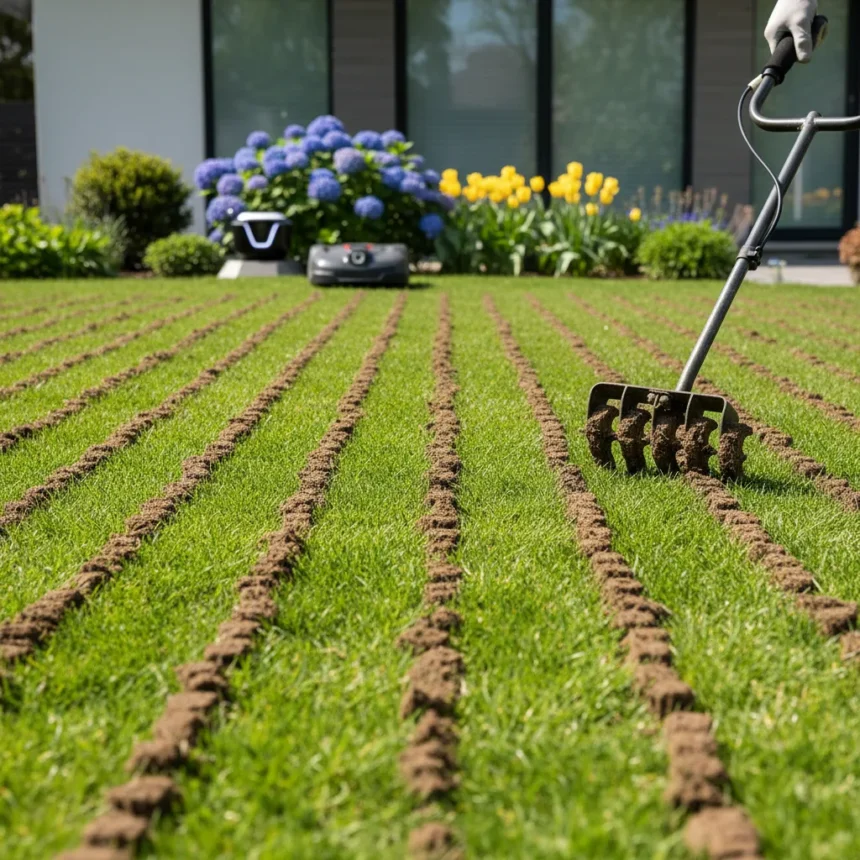
May lawn aeration is the single task that separates a patchy, struggling lawn from a thick green carpet by summer. While many homeowners focus on mowing, feeding, or quick seed patches, gardening experts consistently point to one spring priority that delivers results: aerating compacted soil before temperatures spike and foot traffic increases.
Key Takeaways
- May aeration reduces soil compaction, allowing air, water, and nutrients to reach grass roots.
- Spring timing leverages warming soil to maximize root recovery before summer stress.
- Two aeration methods exist: spike aerators (simpler) and core aerators (more effective at removing soil plugs).
- Thatch buildup suffocates lawns; aeration combined with raking removes dead grass layers.
- Post-winter cleanup of debris should precede aeration for optimal results.
Why May Lawn Aeration Matters More Than Other Spring Tasks
Soil compaction is invisible but devastating. Heavy winter snow, freeze-thaw cycles, and spring foot traffic compress soil so tightly that grass roots cannot access oxygen, water, or nutrients. May lawn aeration pierces or dislodges this compacted layer, restoring the pathways roots need to thrive. Unlike surface-level fixes—seed patches or quick cosmetic treatments—aeration addresses the root cause of summer decline.
Timing is critical. April and May offer ideal conditions: soil is warming, grass is actively growing, and you have two months before peak summer heat and drought stress arrive. One gardener notes that spending time on your lawn in April pays dividends: the effort translates directly into a healthy green carpet throughout summer. By June, feeding, mowing, and weeding take over the calendar; if you skip aeration in May, you’ve missed the seasonal window.
How to Aerate Your Lawn in May
May lawn aeration begins with post-winter cleanup. Clear accumulated debris—twigs, branches, fallen leaves—that blocks air and water from reaching soil and roots. Assess any damage from winter freeze-thaw cycles or heavy snow, then proceed to the aeration step itself.


Two main methods exist: spike aerators and core aerators. A spike aerator uses solid tines to pierce the soil, while a core aerator removes plugs of soil and thatch. For smaller lawns, a garden fork works effectively—push the tines into the ground at 12-inch intervals across the entire area. For larger lawns, hire a rolling hollow tine or slitter machine, which removes soil cores more efficiently. After aeration, brush sand into the holes with a stiff brush to improve drainage and aeration depth.
Combine aeration with a wire rake to remove thatch—the dead grass layer that suffocates new growth. Thatch removal and aeration work together: aeration breaks down compaction while raking removes the dead material blocking sunlight and air circulation.



Complementary May Lawn Care Steps
May lawn aeration is the foundation, but it works best alongside other spring tasks. Post-winter cleanup removes physical barriers to root health. Some gardeners also use Epsom salts—a $3 bathroom item available in most homes—to boost color and nutrient uptake, though this is a supplement, not a replacement for aeration. Coffee grounds offer slow-release nitrogen and phosphorus, making them a complementary fertilizer option.
The sequence matters: cleanup first, aeration second, then raking and supplemental feeding. By June, your focus shifts to mowing, weeding, and sustained feeding to maintain the foundation you’ve built in May.
Why Skip May Lawn Aeration and Regret It by July
Lawns that skip May lawn aeration struggle visibly by mid-summer. Compacted soil means roots cannot reach water during dry spells, leading to brown patches, thin coverage, and weed invasion. The problem compounds: weak grass invites moss and weeds, which then require more intensive treatment later. One season of proper aeration prevents months of damage control.
September offers a second aeration window for thicker lawns, but spring aeration is non-negotiable. May’s combination of warming soil, active growth, and time before summer stress creates conditions that September cannot replicate.



Is May the only time to aerate a lawn?
May is ideal for spring aeration in most climates, but September also works for thicker lawns needing additional rejuvenation. The key is choosing a season when soil is warm and grass is actively growing, not dormant or stressed.
Can I aerate my lawn myself or should I hire a professional?
For small lawns, a garden fork and manual effort work fine—push tines into the ground at 12-inch intervals. For larger areas, renting a rolling hollow tine machine or hiring a professional saves time and delivers more consistent results.
What’s the difference between aeration and dethatching?
Aeration pierces soil to reduce compaction and improve drainage. Dethatching uses a rake to remove dead grass layers. Both tasks complement each other and are often done together in spring.
May lawn aeration is not glamorous, but it is the difference between a lawn that survives summer and one that thrives. Skip it, and you’ll spend June through August fighting damage that one May afternoon could have prevented. Do it now, and your grass will repay the effort with the thick, green carpet every homeowner wants.
Where to Buy
Amazing Stuff for You! Garden Gloves (2-pack): | springbok rake
Edited by the All Things Geek team.
Source: Tom's Guide