





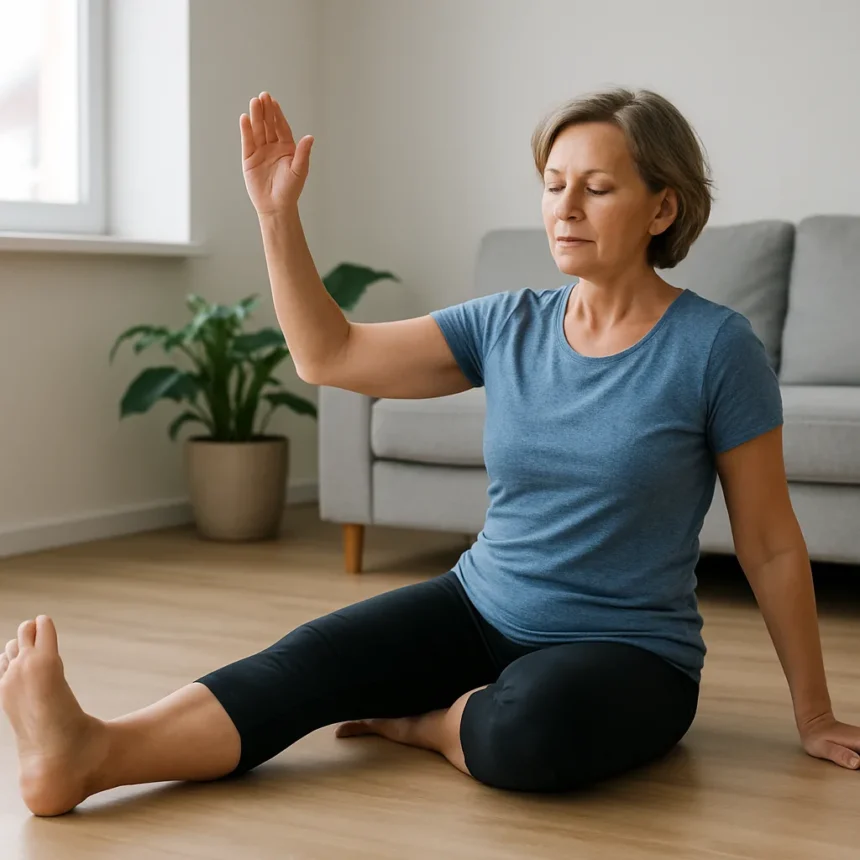
A 10-minute mobility routine for people in their 50s is a standing-based sequence designed to improve posture, reduce joint stiffness, and enhance everyday movement without requiring equipment or floor work. The routine takes just 10 minutes daily and produces noticeable improvements within 7 days of consistent practice. This approach addresses a critical gap for adults in their 50s who want to maintain mobility and functional strength but lack time for lengthy gym sessions.
Key Takeaways
- 10-minute daily routine with standing exercises targets mobility and posture for people in their 50s.
- No equipment or floor work required; entirely standing-based for accessibility.
- Consistency matters: practice daily for 7 days to notice meaningful improvements.
- Includes side leg lifts, cross-body stretches, and hip flexor engagement.
- Designed for beginners and those over 45 experiencing stiffness or reduced flexibility.
Why People in Their 50s Need Dedicated Mobility Work
As people age, muscle mass and metabolism naturally decline, making targeted mobility work essential for maintaining functional fitness. A 10-minute mobility routine for people in their 50s fills this need without demanding hours at the gym. Stiffness, reduced range of motion, and poor posture become increasingly common in this decade, but these issues are reversible with consistent, targeted movement.
The standing-based approach matters because it keeps participants engaged with real-world movement patterns. Unlike floor-based routines that require getting down and back up, standing exercises mirror everyday activities like reaching, turning, and stepping. This functional focus means the mobility gains translate directly into better daily movement and reduced joint discomfort.
The Core Exercises in This 10-Minute Mobility Routine for People in Their 50s
The routine combines four primary movement patterns repeated over 10 minutes. Side leg lifts with calf raises and abduction work the hips and legs while building stability. Perform 10 repetitions per side, lifting the back heel and extending the leg out to the side, holding each repetition to a count of 10. This combination targets hip abductors, calf muscles, and core stability simultaneously.

Cross-body stretches engage the hip flexors and core. Extend one leg back while reaching the opposite arm forward, holding the stretch across the body and hip flexors while engaging your core. Complete 10 repetitions per side. This movement opens the front of the hips—an area that tightens significantly from sitting—and reinforces core activation throughout the stretch.
Comparable routines emphasize similar standing work combined with marching in place, wall pushups, chair squats, hip abductions, and torso rotations. The consistency across different programs suggests that standing, weight-bearing movements form the foundation of effective mobility work for this age group. The key difference lies in execution: holding stretches to a count, maintaining control, and focusing on the muscles being activated separates effective routines from rushed ones.



How to Build the Habit and See Results
Consistency is the key to success with a 10-minute mobility routine for people in their 50s. The goal is not perfection but daily practice. Seven consecutive days of 10 minutes produces measurable improvements in stiffness and range of motion. After that foundation is established, continuing daily practice prevents regression and builds further gains.
The time commitment—just 10 minutes—removes the most common barrier to exercise adherence. Mornings work best for most people, as the routine can be completed before the day’s demands begin. Some practitioners find it helpful to anchor the routine to an existing habit, like doing it immediately after coffee or before showering. The standing format means you can perform it almost anywhere: bedroom, living room, or office.
Beginners and those over 45 experiencing stiffness or reduced flexibility benefit most from this approach. The routine does not require prior fitness experience, flexibility, or special equipment. If any movement feels uncomfortable, the standing format makes it easy to adjust range of motion or take a brief pause without needing to transition on and off the floor.
Frequently Asked Questions
How long does it take to feel improvements from a 10-minute mobility routine for people in their 50s?
Most practitioners notice reduced stiffness and improved range of motion within 7 days of daily practice. The improvements continue to build with sustained consistency. Long-term practice yields better posture, reduced joint discomfort, and enhanced everyday movement quality.



Do I need any equipment for this routine?
No. The entire 10-minute mobility routine for people in their 50s uses only your body weight and requires no props, weights, or floor space. A clear standing area is all you need.
Is this routine safe for beginners?
Yes. The routine is designed specifically for beginners and those over 45 experiencing stiffness. However, if you have a history of joint pain, injury, or medical conditions affecting your hips, knees, or back, consult a qualified healthcare provider or physical therapist before beginning any new exercise program. They can advise on modifications suited to your specific situation. If any movement causes sharp pain, stop immediately and seek professional guidance.
The 10-minute mobility routine for people in their 50s succeeds because it respects time constraints while delivering real results. Seven days of consistent practice proves whether the approach works for your body. From there, the decision to continue becomes obvious: a routine that takes less time than a coffee break and noticeably improves how you move and feel is worth maintaining indefinitely.
Edited by the All Things Geek team.
Source: Tom's Guide




