





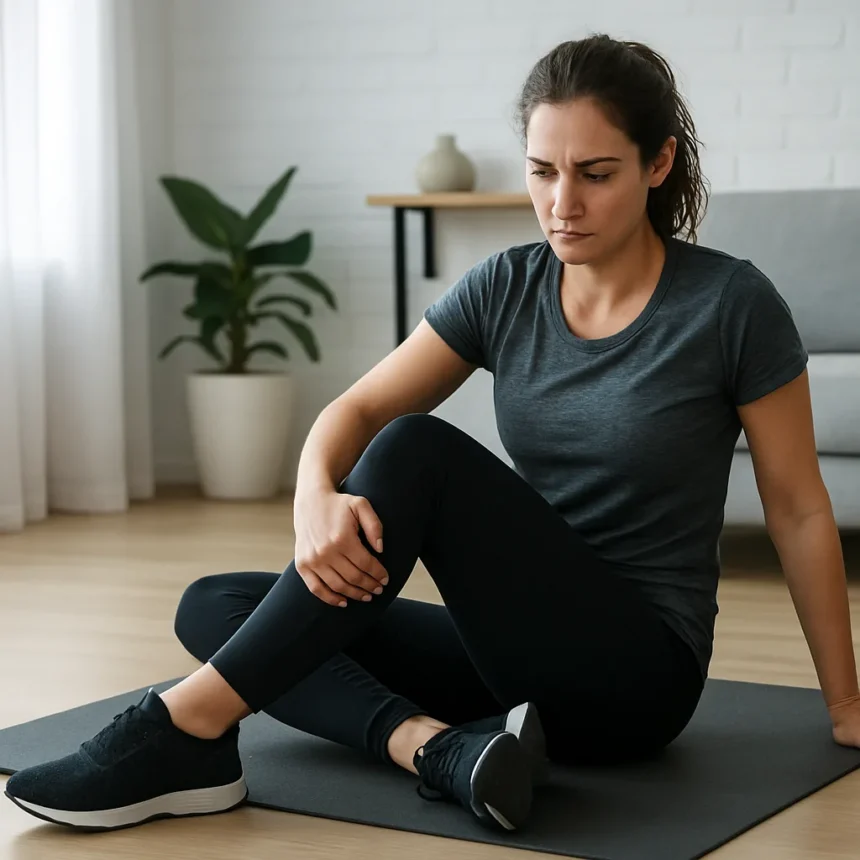
Hip stiffness relief doesn’t require hours of stretching or expensive equipment. According to a mobility coach, the real culprit behind tight hips isn’t fatigue—it’s monotony. “Your hips aren’t tired, they’re bored,” the coach explains, pointing to how repetitive sitting and limited movement patterns lock up the hip joint. A quick 60-second reset can unlock that tension and restore mobility.
Key Takeaways
- Tight hips result from boredom and repetitive movement patterns, not actual tiredness.
- A 60-second two-part reset—30 seconds of forward lean, 30 seconds of cross-body pull—unlocks hip stiffness.
- External hip rotation exercises recruit the gluteus medius and stretch the inner thighs and groin.
- Perform 2-3 sets of 6-8 reps per leg for sustained hip stiffness relief.
- The reset works best when repeated throughout the day, especially after prolonged sitting.
Why Hips Go Stiff: It’s Not Fatigue
Most people blame tiredness for tight hips, but mobility coaches know better. When you sit for three hours straight or repeat the same movement patterns daily, your hip joint becomes understimulated. The muscles surrounding the hip—particularly the glutes, hip flexors, and inner thighs—lose their natural range of motion. Boredom, in this sense, means the joint isn’t being asked to move through its full capacity. This is why a quick reset works: you’re reintroducing movement variety the hip craves.
The hip joint is one of the body’s most mobile joints, designed to rotate, flex, extend, and abduct. When confined to limited patterns, it stiffens defensively. A mobility coach who competes in Hyrox competitions—grueling obstacle course races requiring explosive hip mobility—understands this intimately. Athletes cannot afford stiff hips; they need fluid movement under load. The same principle applies to everyday life: your hips need stimulation, not rest.
The 60-Second Hip Stiffness Relief Reset
This reset combines two stretches, each held for 30 seconds, targeting different aspects of hip mobility. The sequence is straightforward and requires no equipment—just a floor and your body weight. Perform this routine whenever you notice stiffness, especially in the morning or after long periods of sitting.

Step 1: The Forward Lean (30 seconds). Take the leg of your stiff hip and rest your shin on your thigh, allowing your knee to drop away naturally. Place one hand on top of your leg, sit tall with an upright spine, and lean gently forward toward your knee. You should feel a stretch deep in the buttock and hip. Hold this position for the full 30 seconds, breathing steadily.
Step 2: The Cross-Body Pull (30 seconds). Without standing up, wrap your hands around the knee of the bent leg and pull it up and across toward your opposite shoulder. This transitions the stretch to a different area of the hip and glute. The change in angle deepens the release. Hold for 30 seconds.



Finishing the reset. Drop your leg down and repeat on the other side as needed. You can perform this reset multiple times throughout the day. If your knees are sensitive, place a cushion underneath them for comfort.
Beyond the Reset: Building Sustained Hip Stiffness Relief
While the 60-second reset provides immediate relief, a more comprehensive approach involves external rotation exercises that recruit the gluteus medius—the outer glute muscle critical for hip stability. These movements oil the joint and prevent stiffness from returning.
Perform external rotation by moving your leg away from your body’s midline, stepping your foot outside your mat to stretch the inner thighs and groin. Draw your knee back slightly, resting it on your knuckles to deepen the glute stretch. Complete 6-8 repetitions per leg, performing 2-3 sets total. Some coaches recommend adding a shimmy or hip circle at the end of each set to further mobilize the joint.
The key difference between this routine and passive stretching is engagement. You’re not forcing the hip into a stretch and holding it; you’re actively moving it through multiple planes of motion. This addresses the root cause—boredom—by reintroducing the variety the hip joint needs.



When to Use Hip Stiffness Relief Exercises
The best time to perform these routines is when you notice tightness, not as a preventative measure weeks in advance. Morning stiffness responds particularly well to the 60-second reset, especially if you sleep in a curled position that shortens the hip flexors overnight. After sitting for extended periods—whether at a desk, in a car, or on a flight—these exercises provide rapid relief.
Athletes and fitness enthusiasts benefit from incorporating hip mobility work into warm-ups before training. The reset takes just a minute, making it feasible to perform before strength training, running, or any sport requiring hip mobility. Consistency matters more than intensity; a daily 60-second reset beats occasional deep stretching sessions.
How does the 60-second reset compare to longer stretching routines?
The 60-second reset targets specific hip restrictions with precision, while longer routines address multiple muscle groups. The reset works because it combines two complementary stretches that address both the posterior hip (glutes) and the deep external rotators. For acute stiffness, the reset is faster and equally effective; for chronic tightness, combining it with the 6-8 rep external rotation exercises yields better results.
Can you perform this reset if you have knee pain?
Yes, but with modifications. Place a cushion or folded towel under your knee during the shin-on-thigh position to reduce pressure on the joint. If knee pain persists, consult a qualified physical therapist before continuing. The reset should never cause pain; discomfort in the hip and glute is normal, but knee discomfort signals you need to adjust your form or seek professional guidance.
How often should you do this hip stiffness relief routine?
Perform the 60-second reset as often as you feel tightness—there is no downside to repeating it multiple times daily. Many people benefit from doing it once in the morning, once after work, and once before bed. The external rotation exercises with 2-3 sets of 6-8 reps can be done daily or 4-5 times per week as part of a mobility routine.
Hip stiffness relief doesn’t require complicated stretches or expensive equipment. The real breakthrough is understanding that tight hips result from boredom, not fatigue. A 60-second reset twice daily, combined with occasional external rotation work, keeps your hips stimulated and mobile. Your hips will thank you—and you will notice improved movement quality in everything from walking to running to simply sitting comfortably.
Edited by the All Things Geek team.
Source: Tom's Guide




