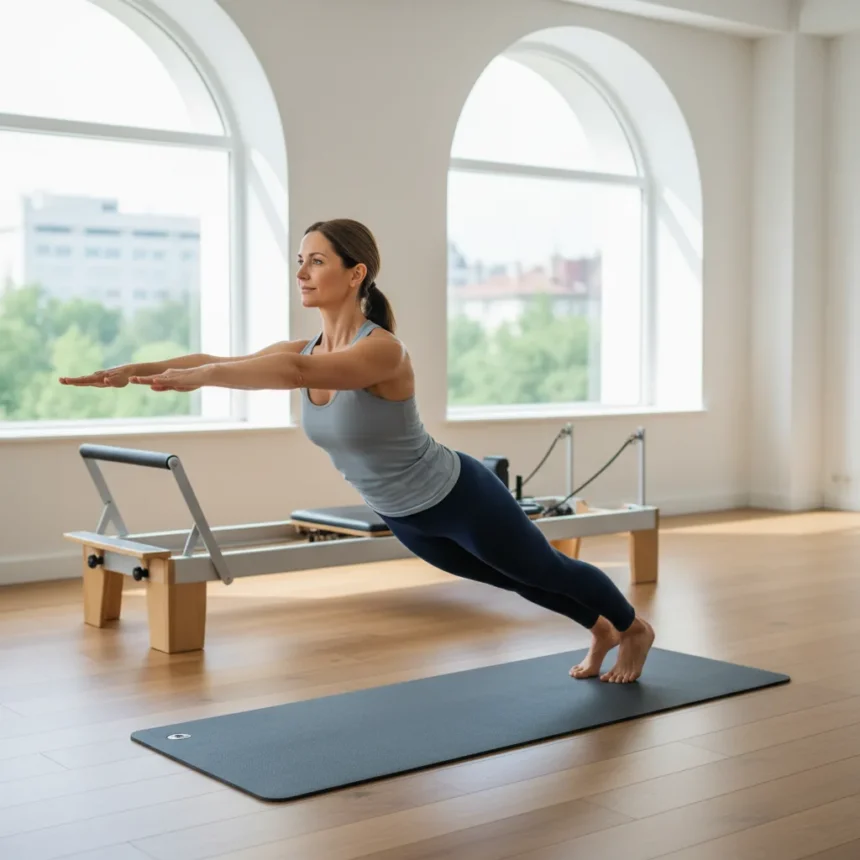
The best ab exercises for over 40 look nothing like the crunches and sit-ups you did in your twenties. A Pilates instructor approach prioritizes deep core activation, pelvic floor support, and spinal stability over high-impact repetitions that strain the lower back and neck. For people over 40 navigating muscle loss and postural decline, controlled Pilates-based movements offer safer, more effective alternatives to traditional abdominal work.
Key Takeaways
- Best ab exercises for over 40 target deep core muscles, not just surface abs, using controlled Pilates movements.
- Pelvic floor integration strengthens the entire core system and supports lower back stability.
- Avoid traditional crunches and planks; they strain the neck and spine in ways Pilates modifications prevent.
- All 8 exercises require no equipment and can be done at home immediately.
- Controlled movement tempo and proper breathing matter more than rep count for this age group.
Why Traditional Ab Work Fails After 40
Crunches and planks dominate mainstream fitness, yet they are precisely what people over 40 should avoid. Traditional crunches compress the spine and pull the neck forward, creating strain rather than strength. Planks demand shoulder and wrist stability that many over-40 bodies lack, especially after years of desk work. Pilates-based alternatives work because they target deep core muscles—the transverse abdominis and pelvic floor—without the joint stress. This distinction matters: surface abs mean nothing if your lower back hurts or your posture collapses.
The shift toward low-impact core training reflects a simple truth: after 40, muscle loss accelerates and flexibility declines. High-rep, high-impact exercises amplify these vulnerabilities rather than address them. Controlled Pilates movements, by contrast, build strength through stabilization, which is exactly what aging bodies need.
The 8 Best Ab Exercises for Over 40
These eight Pilates-based exercises form a complete core program designed for safety, posture improvement, and genuine strength gains. Each emphasizes controlled breathing, proper alignment, and deep muscle activation over speed or volume.

1. Pelvic Tilt & Deep Core Activation
Lie on your back with knees bent and feet flat on the floor. Tighten your abdominal muscles and press your lower back into the floor, creating a gentle posterior pelvic tilt. Hold this contraction for 3–5 seconds, then relax. Perform 10–15 repetitions. This foundational move awakens the deep core and teaches proper pelvic positioning, which cascades into better posture and spinal stability.



2. Heel Slides
Lie on your back with knees bent and feet flat. Engage your core and slowly slide one heel out until your leg is nearly straight, then slide it back to the starting position. Alternate sides, performing 8–12 repetitions per leg. Heel slides maintain a stable spine while strengthening the lower abdominals and hip flexors without strain.
3. Single-Leg Toe Taps
Begin in tabletop position with your knees directly over your hips at 90 degrees. Inhale and lower one foot to tap the mat lightly while keeping the knee bent at 90 degrees, then exhale and lift it back. Alternate sides, performing 10 repetitions per side. This exercise isolates core stabilizers and prevents the lower back from arching, a common mistake in traditional leg exercises.



4. Modified Roll-Up
Lie flat on your back with your arms overhead. Engage your core, then slowly roll your spine up one vertebra at a time until you reach a seated position, reaching your arms forward. Roll back down with control. Perform 6–8 repetitions. The roll-up builds spinal articulation and core endurance without the jarring impact of sit-ups.
5. Side-Lying Leg Lifts with Core Activation
Lie on your side with your bottom arm supporting your head. Lift your top leg while simultaneously engaging your core and stabilizing your torso. Lower slowly and repeat for 10 repetitions per side. This move targets the obliques and outer hip while preventing the torso from rolling backward—a stability challenge that strengthens the entire lateral core.
6. Seated Spine Twist
Sit tall with your knees bent and feet on the floor. Inhale and extend your arms out to the sides, then exhale and twist your torso to one side, reaching one arm back. Return to center and alternate sides. Perform 6–8 repetitions per side. Twists mobilize the spine, engage the obliques, and improve rotational stability—essential for everyday movement.
7. Pilates Hundreds (Modified)
Lie on your back in tabletop position with your head and shoulders lifted off the mat. Pump your arms vigorously in small, controlled movements, inhaling for 5 pumps and exhaling for 5 pumps. Continue for 50–100 total pumps, keeping your legs at 45 degrees if you have the stability. The hundreds build core endurance and breath control while maintaining spinal stability.
8. Bird-Dog
Begin on your hands and knees. Extend your opposite arm and leg, holding the position while pulsing 10 times, then bend the knee and pulse 10 times. Switch sides and repeat. Bird-dog strengthens the posterior chain, glutes, and deep stabilizer muscles while teaching the body to move opposite limbs independently—a skill that prevents falls and improves functional fitness.
Why Pelvic Floor Integration Matters for Women Over 40
Many core programs ignore the pelvic floor, yet it is foundational to the entire abdominal system, especially for women over 40. The pelvic floor muscles support the bladder, bowel, and reproductive organs; when they weaken, incontinence and pelvic pain follow. Pilates exercises that emphasize pelvic floor engagement—particularly pelvic tilts and toe taps—rebuild this critical support system. Integrating pelvic floor awareness into every repetition transforms a generic ab workout into a functional core program that addresses real-world concerns.
How to Progress These Exercises Safely
Progression does not mean adding reps mindlessly. Instead, focus on movement quality, breathing rhythm, and range of motion. Once you can perform all 8 exercises with proper form and controlled breathing, increase the hold duration on isometric moves like pelvic tilts (hold 8–10 seconds instead of 3–5). Add small pulses to leg lifts or extend your leg further in heel slides. For advanced progression, reduce rest periods between exercises rather than adding weight or impact.
If you are returning from injury, pregnant, postpartum, or experiencing back pain, consult a qualified healthcare provider or physical therapist before beginning any new exercise program. Form matters more than volume; a single perfect repetition builds more strength than ten sloppy ones.
FAQ
Can I do these exercises every day?
Yes, these Pilates-based core exercises are low-impact enough for daily practice. However, allow your body one or two rest days per week to recover. If you experience pain (not to be confused with muscle fatigue), stop and consult a healthcare professional.
How long before I see results?
Improved posture and core stability typically emerge within 2–3 weeks of consistent practice. Visible abdominal definition depends on overall body composition and diet, but functional strength and reduced back pain often improve faster than aesthetic changes.
Do I need any equipment for these exercises?
No. All 8 exercises are equipment-free and require only a mat or cushioned floor surface. You can perform them at home immediately without investing in machines, weights, or apps.
The best ab exercises for over 40 reject the myth that core strength requires high-impact, high-volume work. Pilates-based movements deliver genuine strength, improved posture, and pelvic floor support—outcomes that matter far more than a visible six-pack. Consistency, proper form, and patient progression are what separate results from injury. Start with these 8 exercises, master the movement patterns, and let your body adapt at its own pace.
Edited by the All Things Geek team.
Source: Tom's Guide