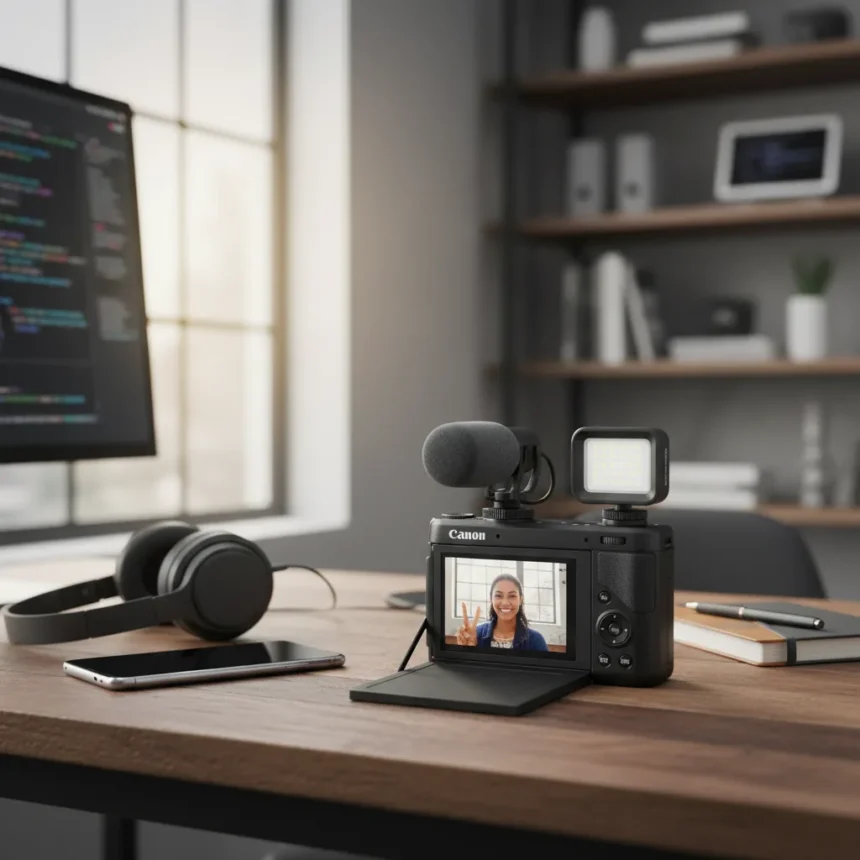
The Canon PowerShot V1 is a 1.4-inch 22MP compact camera launched in April 2025, designed as Canon’s flagship creator tool with fan-cooled unlimited 4K recording, optical image stabilization, and a fully articulating touchscreen. It weighs just 426 grams and fits in a jacket pocket, yet it sits awkwardly between smartphone upgrades and serious cinema gear—compelling for video work, less so for stills alone.
Key Takeaways
- 1.4-inch 22MP CMOS sensor with 5-stop optical IS and Subject Tracking stabilization for off-center subjects
- 16-50mm f/2.8-4.5 zoom lens (35mm equivalent) with excellent sharpness across the frame
- 4K video up to 60fps with C-Log3 support, unlimited recording via built-in cooling fan
- Dual Pixel CMOS AF II recognizes people, animals, dogs, cats, eyes, and faces with continuous tracking
- Fewer photo controls than older Canon G-series compacts, pricing described as awkward and high
Video Capabilities That Actually Matter
The PowerShot V1 is built for creators first. It shoots 4K at up to 60 frames per second with a slight crop at 50/60p, or full-sensor 4K at 30fps. The fan-cooled design means unlimited recording—no thermal shutdowns mid-shoot. Canon Log 3 support and a built-in ND filter give vloggers and indie filmmakers real color grading flexibility without external gear. The headphone socket lets you monitor audio live, and Canon includes a windscreen for the built-in microphones. Compare this to the Sony ZV-1 II, which lacks optical image stabilization, has a smaller sensor, and offers a more limited zoom range. For serious video work in a pocketable form, the V1 wins outright.
Subject Tracking Image Stabilization is the standout feature. Rather than stabilizing the center of the frame, it prioritizes the subject’s location even when off-center. For vlogging, this means your face stays steady even if you pan or move within the frame. Movie digital IS adds another layer for handheld work. The 5-stop optical IS specification comes from Canon, though real-world performance may vary.
Photo Performance: Capable But Compromised
The 1.4-inch sensor and 22MP resolution deliver solid image quality with good dynamic range and low-light capability across the ISO 100-3200 native range (expandable to 51200). Sharpness holds up well across the 16-50mm zoom, especially in the mid-range, and the f/2.8 wide-end aperture helps in dim conditions. One reviewer noted that in some cases, V1 images looked preferable to shots from the Canon R5 MkII for social media and website use—a surprising compliment for a compact.

But here’s the problem: the V1 strips away photo controls that defined older Canon compacts like the G1 X series. You get less manual control over exposure and focus than enthusiasts expect. The camera prioritizes video workflow over photographic flexibility. If your primary interest is stills, the V1 feels like a compromise. The Dual Pixel CMOS AF II with eye and face detection is excellent for both video and photography, but the camera’s architecture tilts decidedly toward motion.
Design and Usability: Pocketable but Quirky
At 426 grams, the V1 is genuinely pocketable—lighter than most mirrorless bodies. The fully articulating 1.04-million dot touchscreen rotates for vlogging, and the classic mode dial with front control ring and rear thumb dial feel familiar to Canon users. No electronic viewfinder means you’re relying on the rear screen, which works fine for video but feels limiting for stills in bright sunlight.



The fan adds visible bulk to the top plate, and the small strap lugs feel fragile for a camera this capable. The clickless rear dial is a missed opportunity—tactile feedback matters for manual exposure adjustment. Memory card compatibility is picky, and the Canon app requires login, adding friction to file transfer. The multi-function shoe lacks flash pins, so you cannot mount a traditional flash.
Positioning: Neither Fish Nor Fowl
The Canon PowerShot V1 occupies an uncomfortable middle ground. It costs more than a flagship smartphone with excellent video, yet offers less manual control than a used mirrorless body. For pure vlogging—unlimited 4K, subject tracking, compact form, and creator-friendly features—it is genuinely powerful. For photographers who want a pocketable travel camera, the lack of photo controls and the absence of an optical viewfinder make it feel half-finished.
The comparison to Sony’s ZV-1 II is instructive. Sony’s compact has a smaller sensor and no optical IS, but it costs less and targets the same vlogging audience. The V1 wins on image quality and versatility, but Sony’s tighter focus on the vlogging niche may appeal to creators who do not need the extra sensor real estate. For photographers upgrading from a smartphone, the V1 is tempting but demanding—you are paying for video features you may not need.
Should You Buy the Canon PowerShot V1?
Buy it if you create video content regularly—vlogging, short-form content, indie filmmaking—and want optical stabilization, unlimited 4K, and subject tracking in a pocket-sized body. The fan-cooled design and Log support justify the investment for creators. Skip it if you primarily shoot stills or want a camera that balances photo and video equally. The G7 X III had a folding pop-up flash and more photo controls; the V1 abandons that legacy.



What makes the PowerShot V1 different from older Canon compacts?
The V1 prioritizes video and creator features over photo controls. Older G-series compacts like the G1 X offered more manual exposure and focus options for photographers. The V1 trades that flexibility for unlimited 4K recording, subject tracking stabilization, and Log profiles—tools for video professionals, not photo enthusiasts.
Is the Canon PowerShot V1 better than the Sony ZV-1 II?
The V1 has a larger sensor, optical image stabilization, a longer zoom range, and better dynamic range. The ZV-1 II is smaller and less expensive, targeting the same vlogging audience but with fewer features. Choose the V1 for versatility and image quality; choose Sony for simplicity and price.
Does the Canon PowerShot V1 have a viewfinder?
No. The V1 relies entirely on the rear articulating touchscreen. There is no electronic viewfinder, which limits usability in bright sunlight and removes a tactile focusing aid for stills photographers.
The Canon PowerShot V1 is a genuinely capable vlogging tool that will appeal to creators who value unlimited 4K, subject tracking, and compact form over photographic versatility. For everyone else, it remains a compromise—powerful in one dimension, underdeveloped in another. Canon aimed for the creator economy and nailed the video side; the photo side feels like an afterthought.
Where to Buy
Edited by the All Things Geek team.
Source: T3