




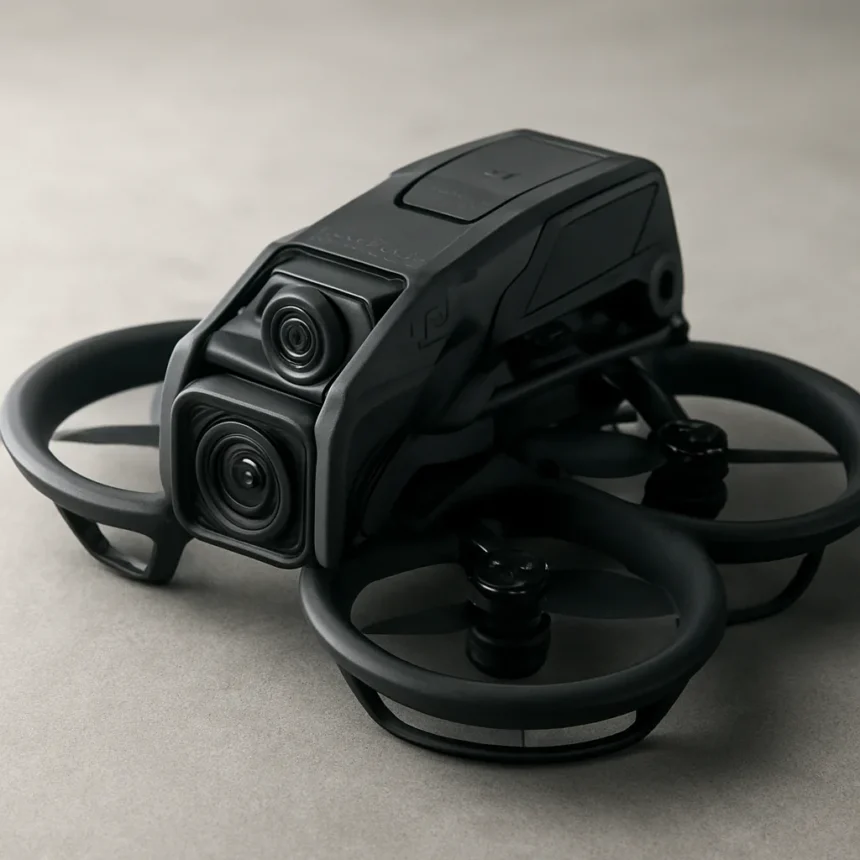
The DJI Avata 360 is DJI’s first-ever 360-degree FPV drone, featuring dual rotating cameras, 8K/60fps video, and a cinewhoop-style design that redefines what an FPV cinema drone can do. After three weeks of testing, it’s clear this isn’t just an incremental upgrade—it’s a fundamental shift in how FPV pilots can capture immersive footage without sacrificing real-time responsiveness or image quality.
Key Takeaways
- DJI Avata 360 captures 8K/50-60fps 360-degree video with dual 1/1.1-inch sensors, larger than typical action cameras
- Unique rotating gimbal switches between full 360-degree capture and forward-facing FPV mode without digital cropping
- Flight time reaches 23-25 minutes thanks to a 38.67Wh battery, 22% larger than the Avata 2’s 31.8Wh
- LiDAR obstacle avoidance and spherical guards enable safe indoor and close-proximity flying
- Launches March 26 with compatibility for existing DJI FPV ecosystem including Goggles N3 and RC Motion 3
The Rotating Camera System That Changes Everything
The DJI Avata 360’s most ingenious feature is its rotatable front module housing dual 360-degree cameras mounted top and bottom. This mechanical gimbal doesn’t just switch modes—it eliminates the digital cropping compromise that plagued earlier 360-degree drones. When you’re flying FPV, the module rotates to present the forward-facing camera; when you land, it rotates again to protect the bottom camera with landing pads. The result is a 2-in-1 system that delivers true 360-degree capture without quality loss or latency issues that would cripple real-time FPV control.
This is where the DJI Avata 360 pulls ahead of competitors like the Antigravity A1, which also offers 360-degree capability but forces pilots to choose between FPV responsiveness and immersive capture. With the Avata 360, you fly once in FPV mode, then reframe the entire 360-degree footage later using animated keyframes for dynamic movements that would normally require specialist FPV piloting skills. That workflow alone justifies the drone’s existence.
8K Resolution and Sensor Quality That Rival Cinema Cameras
The dual 1/1.1-inch sensors represent a significant jump from typical action camera sensors and bring the image quality closer to DJI’s Osmo line. At 8K/50fps or 8K/60fps, the DJI Avata 360 captures ultradetailed panoramic photos and hi-res images with a 200-degree field of view and F1.9 aperture. The single-axis mechanical gimbal tilts from -60 to +60 degrees and adds 360-degree digital stabilization for smooth footage even during aggressive FPV maneuvers.


For comparison, the DJI Avata 2 maxes out at 4K/60fps with a single 1/1.3-inch sensor. The resolution leap alone makes the Avata 360 a generational jump, especially for pilots who want to sell or license their footage. That extra resolution also gives colorists and editors far more latitude in post-production grading.
Flight Performance and Battery Life
The DJI Avata 360 weighs approximately 377 grams, the same as its predecessor, despite housing dual cameras and a larger battery. The new 38.67Wh battery is 22% larger than the Avata 2’s 31.8Wh cell, pushing flight time to 23-25 minutes. That’s a meaningful gain for pilots who need longer takes or multiple passes over a location.

Max speeds remain similar to the Avata 2—ascent reaches 6-9 meters per second, horizontal flight 8-27 meters per second—so the drone doesn’t sacrifice agility for battery capacity. The OcuSync 4.0 video transmission system delivers up to 20km range, giving pilots confidence in signal stability during extended flights. One caveat: manual mode is capped at 19 meters per second in the EU due to regional regulations, so European pilots will experience slightly different performance than their US counterparts.
Safety Features Built for Risky Flying
The DJI Avata 360 inherits the cinewhoop-style architecture with fully enclosed propeller guards, but adds LiDAR sensors for obstacle avoidance that the Avata 2 lacks. The downward-facing ToF sensor ranges from 0.3 to 20 meters with a 78-degree horizontal and vertical field of view, enabling precise hovering between 0.3 and 10 meters. The backward-facing sensor covers 0.5 to 20 meters. Spherical guards and landing pads protect the protruding bottom camera during rough landings.
This safety stack transforms the drone from a pure FPV racer into a genuine cinema tool capable of flying indoors, through tight gaps, and near obstacles without constant pilot intervention. The combination of propeller guards and LiDAR makes it far more forgiving than the Avata 2, which relies on visual obstacle avoidance and propeller guards alone.
Design and Build Quality
The DJI Avata 360 sports smoother rounded body lines compared to its angular predecessor, finished in matte silver-gray with orange motor accent rings for visibility. The design is slightly slimmer than the Avata 2 due to refined battery geometry, though the weight stays identical. It’s a subtle aesthetic upgrade that signals a more refined, production-ready product than earlier FPV drones.



Compatibility and Control Options
The DJI Avata 360 works with the existing DJI FPV ecosystem, including the Goggles N3, RC Motion 3, and RC 2 controllers. Pilots don’t need to buy new hardware to get started. The drone includes intelligent features like animated keyframes for dynamic movements, tracking modes to follow subjects, quick shots, active track, and return-to-home. These modes make it accessible to pilots who want cinematic results without mastering advanced FPV manual control.
Is the DJI Avata 360 worth the upgrade?
If you own an Avata 2 and shoot 360-degree content regularly, yes. The 8K resolution and dual rotating cameras deliver measurably better image quality and creative flexibility. If you’re new to FPV drones and want 360-degree capture, the Avata 360 is the only DJI option that combines real-time FPV control with immersive 360-degree video without quality compromise.
How does the DJI Avata 360 compare to the Antigravity A1?
Both are 360-degree FPV drones, but the Avata 360’s rotating dual-camera system and 8K resolution give it a significant advantage over the Antigravity A1 in image quality and workflow flexibility. The Avata 360 lets you fly in FPV mode and reframe 360 footage later; the A1 forces more of a trade-off between FPV responsiveness and immersive capture.
What’s the battery life on the DJI Avata 360?
Flight time reaches 23-25 minutes on a single charge, depending on flying conditions, wind, and pilot input. The 38.67Wh battery is 22% larger than the Avata 2’s cell, delivering meaningful gains for extended shoots.
The DJI Avata 360 isn’t just the best 360-degree FPV drone available—it’s a watershed moment for the category. By solving the mechanical problem of dual cameras through a rotating gimbal, DJI has created a tool that lets cinematographers fly like FPV pilots while capturing footage that demands to be viewed in 360 degrees. For anyone serious about immersive drone cinema, this is the drone to buy.
Where to Buy
This article was written with AI assistance and editorially reviewed.
Source: Tom's Guide