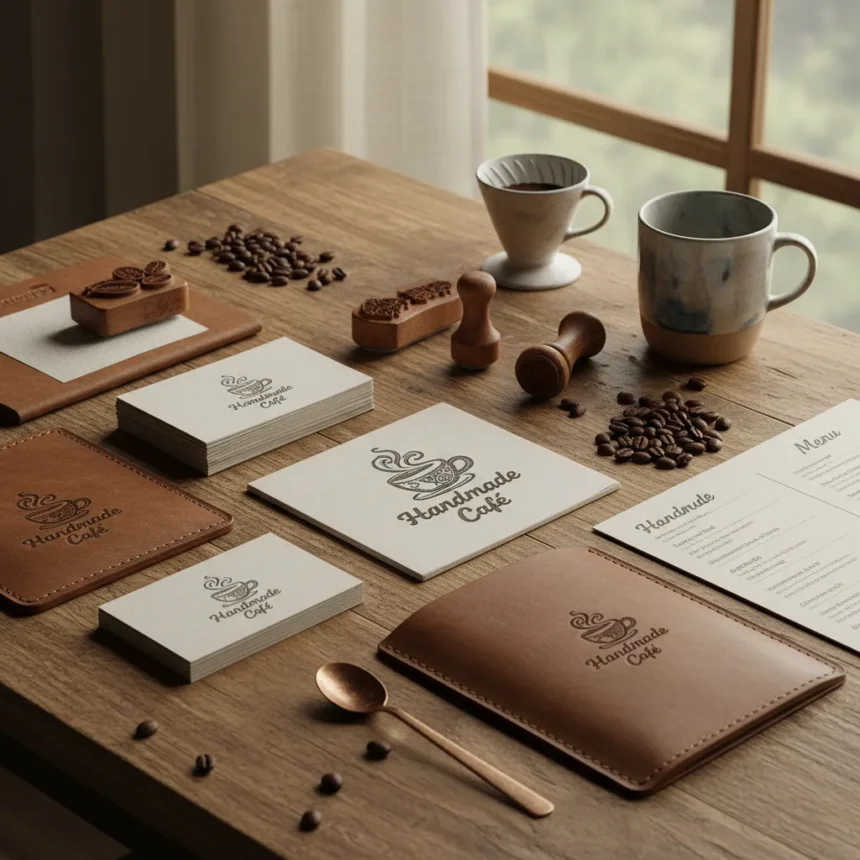
Handcrafted coffee shop branding has become increasingly rare in an era dominated by flat design and digital-first aesthetics. Handmade Café stands as a counterargument to that trend, proving that deliberate, artisan-focused visual identity can create genuine differentiation in the crowded coffee market.
Key Takeaways
- Handcrafted coffee shop branding emphasizes authentic, made-by-hand design elements over mass-produced aesthetics.
- Artisan-focused branding creates emotional connection with customers seeking quality and intentionality.
- Handmade Café demonstrates that detailed visual systems can compete with minimalist competitors.
- Handcrafted design requires consistency across all touchpoints—packaging, signage, and interior spaces.
- Coffee shop branding that celebrates craft attracts customers who value the story behind their beverage.
Why Handcrafted Coffee Shop Branding Matters Now
The coffee industry has splintered into two visual camps: corporate chains with algorithmic logos and independent shops chasing the same minimal aesthetic. Handcrafted coffee shop branding occupies a third space—one that refuses to choose between professionalism and personality. Handmade Café’s approach suggests that customers increasingly reward shops willing to invest in distinctive, intentional design rather than adopting whatever style feels currently safe.
This shift reflects a broader consumer fatigue with generic identity systems. When every café uses the same sans-serif font and muted color palette, standing out requires genuine conviction. Handcrafted coffee shop branding that visibly demonstrates care—through hand-drawn elements, custom typography, or material choices—signals that the business cares equally about what goes into the cup.
The Case for Artisan Visual Systems in Coffee Retail
Handmade Café’s branding showcases a principle often overlooked in modern design: constraint breeds creativity. Rather than unlimited digital tools and stock imagery, handcrafted coffee shop branding works within the limitations of manual craft—drawing, printing, carving, or painting. These constraints force designers to make intentional decisions about every element, resulting in cohesion that algorithmic systems struggle to achieve.

The advantage extends beyond aesthetics. Customers perceive handcrafted coffee shop branding as evidence of authenticity. If the logo was hand-drawn and the menu typography is custom, the reasoning goes, then the espresso machine probably receives the same attention. Branding becomes a proxy for quality control, even when the actual relationship is coincidental. Handmade Café leverages this psychology by making its craft-forward identity visible at every customer touchpoint.
Handcrafted Coffee Shop Branding vs. Minimal Competitors
The contrast between handcrafted coffee shop branding and minimal competitors reveals what each approach prioritizes. Minimal design optimizes for scalability, clarity, and digital reproduction—useful for chains expanding to multiple locations. Handcrafted coffee shop branding optimizes for distinctiveness, narrative, and local resonance. A minimal café can open a second location and maintain perfect brand consistency. A handcrafted café risks losing its character if it scales without careful attention to maintaining the hand-made quality that defined it originally.



Handmade Café appears to have chosen the harder path: building a brand system detailed enough to feel bespoke yet structured enough to function across multiple applications. This requires more design work upfront and more discipline during execution, but the payoff is a visual identity that competitors cannot easily replicate.
How Handcrafted Design Influences Customer Perception
Handcrafted coffee shop branding shapes customer expectations before they order. A shop with hand-lettered signage and custom packaging implicitly promises a different experience than one with templated graphics. Whether that promise is fulfilled depends on the actual product and service, but the branding sets a tone—one that says this business makes deliberate choices and respects the craft of coffee-making.
This perception advantage is real but fragile. If a handcrafted coffee shop branding system is inconsistently applied—if some materials look carefully made and others look rushed—the entire identity collapses. Customers notice. The craft-forward positioning only works if the craft is genuine throughout.
What Makes Handcrafted Coffee Shop Branding Sustainable
Long-term success for handcrafted coffee shop branding depends on systems, not artistry alone. A hand-drawn logo is worthless if it cannot be reproduced consistently across signage, menus, cups, and digital platforms. Handmade Café’s branding likely includes detailed guidelines specifying how hand-made elements should be applied, ensuring that each customer interaction reinforces the same identity rather than fragmenting it.



The sustainability question also extends to hiring and training. A minimal brand can be maintained by any designer following a simple guide. A handcrafted coffee shop branding system requires ongoing collaboration with craftspeople—hand-letterers, printmakers, or illustrators—who understand the original vision. This creates dependency but also defensibility: the brand becomes harder for competitors to copy because it requires specialized skill, not just design software.
Is handcrafted coffee shop branding worth the investment?
Yes, if the business is positioned as a destination rather than a convenience stop. Handcrafted coffee shop branding works best for independent shops where customers choose the café for its character, not its location. For a chain optimizing for foot traffic and quick transactions, minimal branding is more efficient. For a café that wants customers to stay, linger, and develop loyalty, handcrafted identity creates the atmosphere that justifies premium pricing.
How do I apply handcrafted design principles to my own café branding?
Start by identifying which elements can authentically be made by hand—your logo, menu headers, packaging labels, or interior signage. Do not fake handcrafted details with digital tools designed to mimic them; the difference is visible and undermines credibility. Collaborate with skilled craftspeople in your area: hand-letterers, printmakers, or illustrators. Build a detailed brand guide that specifies how hand-made elements scale and reproduce across different applications, ensuring consistency even as the work remains visibly handmade.
What’s the difference between handcrafted branding and vintage branding?
Handcrafted coffee shop branding is about the process and intentionality of creation, not the style. Vintage aesthetics reference the past; handcrafted identity emphasizes the present craft. A handcrafted café might use contemporary typography and color palettes while employing hand-made production methods. Vintage branding, by contrast, borrows visual language from specific eras. The two can overlap, but handcrafted branding is defined by how the work is made, while vintage branding is defined by what era it references.
Handmade Café demonstrates that in a market saturated with algorithmic design and template-based identity systems, the most distinctive branding often comes from the simplest principle: make it by hand. This approach requires more time, more skill, and more discipline than digital shortcuts, but it creates something competitors cannot easily replicate. For coffee shops competing on character rather than convenience, handcrafted coffee shop branding is not a luxury—it is the most practical choice available.
Edited by the All Things Geek team.
Source: Creativebloq