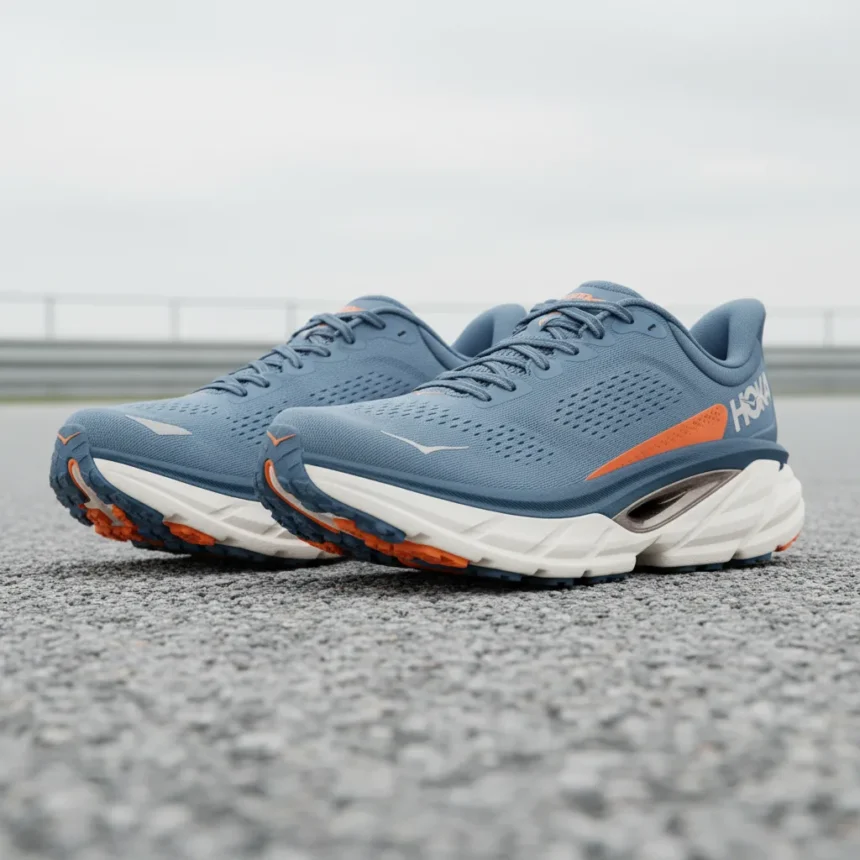
The Hoka Skyward X 2 is a premium super trainer designed for daily running, built by Hoka to deliver lighter, more responsive, and more comfortable daily miles. The update focuses on two core changes: new PEBA foam technology and a redesigned plate architecture that work together to improve both cushioning and energy return during extended training sessions.
Key Takeaways
- The Hoka Skyward X 2 integrates PEBA foam for improved comfort and responsiveness in a premium super trainer.
- A redesigned plate structure aims to make the shoe lighter while maintaining support for daily training.
- The update targets runners seeking a balance between cushioning and performance for high-mileage weeks.
- Premium super trainers compete on comfort longevity, making the Skyward X 2’s focus on daily-mile durability significant.
- The shoe positions itself as an upgrade path for runners outgrowing daily trainers but seeking more comfort than pure racing shoes.
What Makes the Hoka Skyward X 2 Stand Out
The Hoka Skyward X 2 redesign tackles a specific problem that daily runners face: balancing responsive energy return with the cushioning needed for high-volume training. Most premium super trainers force a compromise—either they prioritize speed and feel thin underfoot, or they emphasize comfort but feel sluggish. The introduction of PEBA foam addresses this tension by delivering both softness and rebound in a single material layer. PEBA (polyether block amide) is known in performance footwear for its ability to compress on impact and spring back with minimal energy loss, meaning runners get immediate feedback without sacrificing the cushioning that prevents impact fatigue.
The redesigned plate complements this foam upgrade by distributing forces more efficiently across the shoe’s midsole. A lighter plate structure reduces overall shoe weight without removing the structural support that keeps the foot stable during rapid direction changes or fatigue-induced form breakdown late in a run. For daily trainers, this matters because runners typically log 40–60 miles per week in these shoes, and even a 0.5-ounce weight reduction per shoe compounds into meaningful fatigue savings across a training block.
How the Skyward X 2 Compares to Previous Super Trainers
The Skyward X 2 builds on the lineage of premium daily trainers that sit between traditional cushioned trainers and lightweight racing shoes. The original Skyward X established Hoka’s position in this category, but the new version’s focus on comfort and responsiveness simultaneously suggests the market for super trainers is shifting toward runners who want racing-shoe feel without sacrificing the durability of a daily shoe. Competitors in this space typically choose one direction—brands like Nike emphasize speed in their super trainers, while others prioritize maximum cushioning for recovery runs. The Skyward X 2’s dual-upgrade approach (PEBA foam plus redesigned plate) suggests Hoka is betting that runners want both, not a trade-off.

The comfort-first positioning also reflects a broader trend in premium running shoes where performance is measured not just by speed but by how long a runner can maintain effort without degradation. A shoe that keeps a runner comfortable at mile 15 of a 18-mile run is arguably more valuable than one that feels sharp for the first 5 miles but fatigues the foot afterward.
Who Should Consider the Hoka Skyward X 2
The Skyward X 2 targets a specific runner profile: athletes logging significant weekly mileage who want a shoe that handles both easy runs and tempo work without switching shoes constantly. If your training plan includes a mix of 8-mile recovery runs, 12-mile long runs, and occasional tempo sessions, a premium super trainer eliminates the need for multiple shoes. The emphasis on comfort over pure speed also suits runners returning from injury who need responsive support but cannot tolerate the impact demands of racing shoes. Runners in their 30s and 40s, where recovery and injury prevention become central to training consistency, often gravitate toward super trainers for this reason—they deliver enough performance to feel engaging while protecting joints and connective tissue.



The shoe is less suited for runners who prioritize racing performance or those who run primarily easy miles and want maximum cushioning. A dedicated racing shoe will always feel faster, and a dedicated recovery trainer will always feel softer. The Skyward X 2 occupies the middle ground, which is exactly where most serious amateur runners spend their time.
Frequently Asked Questions
What is PEBA foam and why does it matter in running shoes?
PEBA foam is a high-performance material that combines softness with energy return, meaning it absorbs impact but bounces back quickly to propel you forward. For daily trainers, this reduces impact fatigue over long distances while keeping the shoe feeling responsive rather than sluggish, which is why premium brands increasingly use it in shoes designed for high mileage.
How does the redesigned plate improve performance?
A lighter, more efficient plate structure distributes forces across the midsole more effectively, reducing overall shoe weight while maintaining the structural support needed for stability during fatigue or rapid movements. This design philosophy allows runners to maintain form and comfort throughout longer training sessions without the weight penalty of traditional plate designs.
Is the Hoka Skyward X 2 good for marathon training?
The Skyward X 2’s focus on comfort and responsiveness makes it well-suited for marathon training, particularly for runners who log high weekly mileage and need a single shoe that handles both easy runs and tempo work. The PEBA foam and redesigned plate are engineered specifically to maintain comfort and support over extended distances, which is central to marathon preparation.



Closing Thoughts
The Hoka Skyward X 2 represents a clear evolution in premium super trainer design: lighter, more responsive, and explicitly engineered for the daily grind of high-mileage training. The combination of PEBA foam and a redesigned plate addresses the real tension that daily runners face between wanting speed and wanting comfort. If you log 40+ miles per week and find yourself constantly switching shoes to match different workout types, the Skyward X 2 is built exactly for that frustration. It does not claim to be the fastest shoe on the market or the most cushioned—it claims to be the most comfortable shoe that still feels responsive, and that is a claim worth testing if daily training is your priority.
Edited by the All Things Geek team.
Source: T3